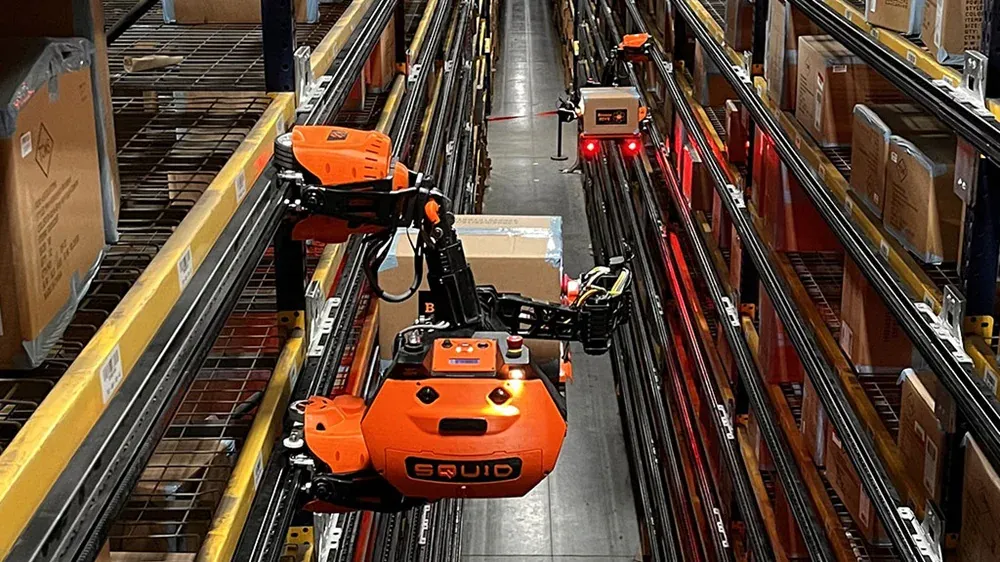
Warehouses play a critical role in modern supply chains. As e-commerce, retail distribution, and manufacturing expand, warehouses are under constant pressure to process orders faster, handle higher volumes, and maintain accuracy—all while managing labor shortages and rising operational costs. This is where warehouse automation systems come into focus. Warehouse automation systems use technology, machinery, and software to reduce or replace manual tasks such as storage, picking, sorting, and transportation of goods. These systems are not limited to large fulfillment centers; they are increasingly used by small and mid-sized warehouses looking to improve efficiency and consistency.
What Are Warehouse Automation Systems?
Warehouse automation systems are technologies designed to automate repetitive, labor-intensive tasks within a warehouse or distribution center. These systems combine mechanical equipment, robotics, sensors, and software to manage the movement, storage, and tracking of inventory.
Automation can range from simple conveyor belts to fully integrated robotic systems connected to warehouse management software. The level of automation depends on the warehouse size, order volume, product types, and operational goals.
Benefits of Warehouse Automation Systems
Warehouse automation offers several advantages when implemented appropriately.
1. Improved Efficiency and Throughput
Automated systems can operate continuously with consistent speed, allowing warehouses to process more orders in less time compared to manual operations.
2. Reduced Human Error
Automation helps minimize picking, packing, and inventory errors, which improves order accuracy and reduces returns.
3. Better Space Utilization
Automated storage systems often use vertical space more effectively, allowing warehouses to store more inventory within the same footprint.
4. Labor Optimization
Automation reduces dependence on manual labor for repetitive tasks, allowing workers to focus on supervision, maintenance, and exception handling.
5. Enhanced Inventory Visibility
Most automation systems integrate with digital inventory tools, providing real-time stock visibility and improved demand planning.
Limitations and Challenges of Warehouse Automation
While automation offers clear benefits, it is not without limitations.
1. High Initial Investment
Automated systems require upfront costs for equipment, software, and integration, which may not be suitable for all businesses.
2. Complexity of Implementation
Installation and integration can take time and may disrupt existing operations during transition.
3. Maintenance Requirements
Automated systems require regular maintenance, technical expertise, and spare parts to operate reliably.
4. Limited Flexibility for Certain Products
Irregular, fragile, or highly customized products may not be suitable for certain automation technologies.
Types of Warehouse Automation Systems
Warehouse automation systems can be categorized based on their function and level of complexity.
1. Conveyor and Sortation Systems
These systems move products between locations using belts, rollers, or chutes. They are commonly used for transportation and sorting tasks.
2. Automated Storage and Retrieval Systems (AS/RS)
AS/RS solutions use cranes, shuttles, or robots to store and retrieve goods from high-density storage locations.
3. Robotic Picking Systems
Robotic arms or mobile robots are used for picking, packing, and palletizing tasks, often guided by vision systems.
4. Automated Guided Vehicles (AGVs) and AMRs
These vehicles transport pallets or cartons across the warehouse without fixed paths, using sensors and navigation software.
5. Vertical Lift Modules and Carousel Systems
These systems bring stored items to operators, reducing walking time and improving picking efficiency.
Comparison Table: Common Warehouse Automation Systems
| System Type | Primary Function | Best For | Complexity Level |
|---|---|---|---|
| Conveyor Systems | Product transport | High-volume flow | Low to Medium |
| AS/RS | Storage & retrieval | Space optimization | High |
| Robotic Picking | Order fulfillment | Mixed SKUs | Medium to High |
| AGVs/AMRs | Material transport | Flexible layouts | Medium |
| Carousel Systems | Goods-to-person picking | Small items | Medium |
Latest Trends and Innovations in Warehouse Automation
Warehouse automation continues to evolve with advancements in technology.
1. Artificial Intelligence and Machine Learning
AI-driven systems improve picking accuracy, demand forecasting, and route optimization.
2. Collaborative Robots (Cobots)
Cobots are designed to work alongside humans, assisting with repetitive tasks while maintaining safety.
3. Modular Automation Solutions
Scalable systems allow warehouses to automate gradually rather than investing in full-scale automation upfront.
4. Cloud-Based Warehouse Management Systems
Modern automation increasingly integrates with cloud software for better visibility and remote monitoring.
5. Energy-Efficient Automation
New systems focus on reducing power consumption and improving sustainability.
Key Features to Consider When Evaluating Automation Systems
Before selecting a warehouse automation system, several factors should be evaluated.
Checklist: Key Evaluation Criteria
-
Compatibility with existing warehouse layout
-
Integration with warehouse management software
-
Scalability for future growth
-
Maintenance and technical support requirements
-
Safety features and compliance standards
-
Adaptability to product types and order volumes
Top Warehouse Automation Companies and Solutions
The warehouse automation market includes a wide range of established and emerging solution providers. Examples include:
-
Daifuku – Known for large-scale automated storage and material handling systems
-
Dematic – Offers integrated automation solutions and warehouse software
-
SSI Schaefer – Provides modular automation and racking systems
-
Vanderlande – Specializes in logistics automation for distribution centers
-
AutoStore – Focuses on cube-based automated storage systems
Public information and solution overviews are available on each company’s official website, where users can explore system types and case studies.
How to Choose the Right Warehouse Automation System
Choosing the right automation solution depends on operational needs rather than technology trends.
Step-by-Step Decision Approach
-
Assess current warehouse challenges and bottlenecks
-
Define measurable goals such as speed, accuracy, or space utilization
-
Evaluate budget and return expectations realistically
-
Consider phased or modular automation options
-
Ensure compatibility with existing systems and processes
Best Practices for Using and Maintaining Automation Systems
Proper usage and maintenance are essential for long-term performance.
Practical Tips
-
Train staff on system operation and safety procedures
-
Schedule routine inspections and preventive maintenance
-
Monitor system performance metrics regularly
-
Keep software and firmware updated
-
Maintain spare parts inventory for critical components
Frequently Asked Questions (FAQs)
Are warehouse automation systems suitable for small warehouses?
Yes, many modular and scalable solutions are designed specifically for small and mid-sized warehouses.
How long does it take to implement warehouse automation?
Implementation timelines vary but can range from a few months to over a year depending on system complexity.
Do automated warehouses still require workers?
Yes. Automation reduces manual tasks but still requires personnel for supervision, maintenance, and decision-making.
Can automation handle different product types?
Some systems are flexible, while others are better suited for standardized products. Product characteristics should be evaluated beforehand.
Is warehouse automation customizable?
Most modern systems can be customized or configured based on layout, workflow, and business requirements.
Conclusion: A Practical Takeaway
Warehouse automation systems are tools designed to improve efficiency, accuracy, and scalability in modern warehousing operations. While they offer significant benefits, successful automation depends on selecting the right system for the right purpose.
Rather than viewing automation as a one-size-fits-all solution, it should be approached as a strategic investment aligned with operational needs, budget, and long-term goals. By understanding the available technologies and evaluating them carefully, businesses can make informed decisions that support sustainable warehouse operations.