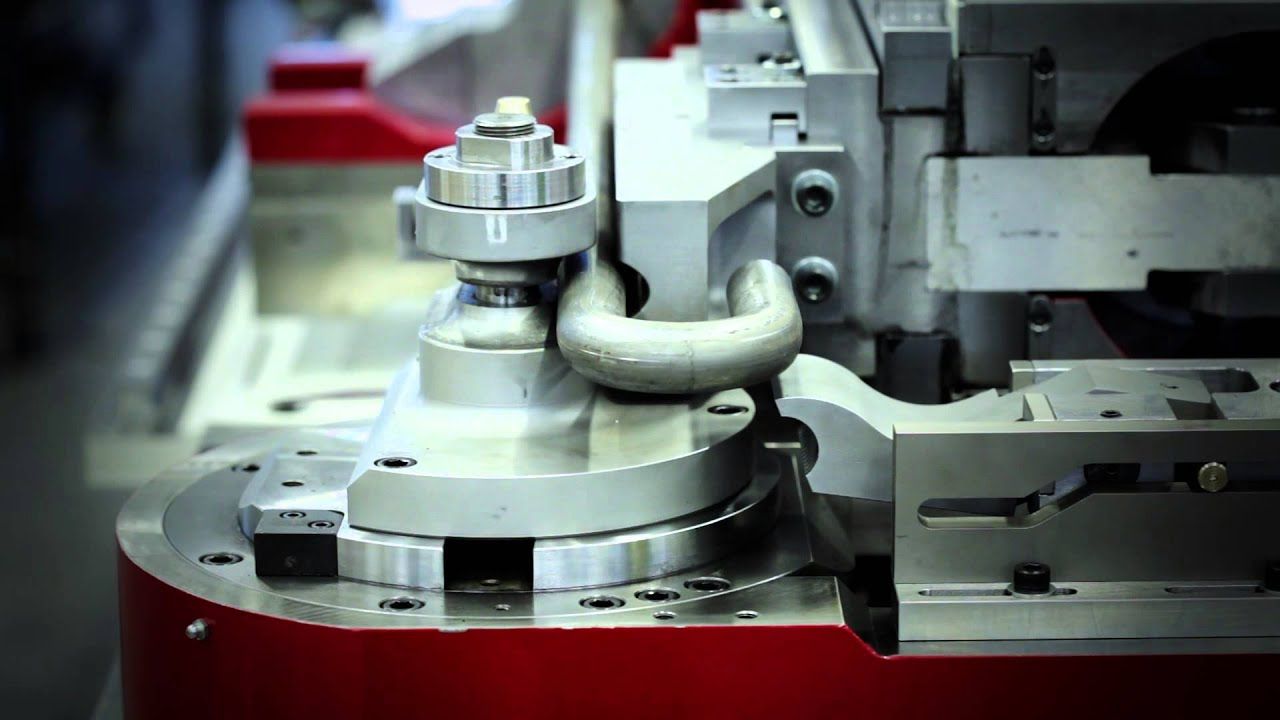
Tube bending machines play an important role in modern manufacturing and metal fabrication. These machines are used to shape metal tubes and pipes into specific angles, curves, and complex geometries required for many industries. From automotive exhaust systems to construction frameworks and industrial pipelines, bent tubes are widely used in structural and mechanical applications.
What Are Tube Bending Machines?
Tube bending machines are industrial devices designed to bend metal tubes or pipes without significantly damaging the material or altering its structural integrity. The bending process typically involves applying controlled force to the tube while supporting it with dies or rollers.
Common materials used in tube bending include:
-
Steel
-
Stainless steel
-
Aluminum
-
Copper
-
Brass
Tube bending machines are widely used in industries such as:
-
Automotive manufacturing
-
Aerospace engineering
-
Furniture production
-
HVAC systems
-
Shipbuilding
-
Construction and infrastructure
The level of automation and control can vary significantly depending on the machine type.
Benefits and Limitations of Tube Bending Machines
Benefits
Tube bending machines offer several advantages for manufacturing and fabrication processes.
1. Improved Precision
Modern automated machines use computer controls to ensure consistent bending angles and radii, reducing variation in production.
2. Higher Production Efficiency
Automatic and robotic machines can perform multiple bending operations quickly, allowing for large-scale manufacturing.
3. Reduced Material Waste
Accurate bending minimizes errors and helps reduce scrap materials.
4. Consistent Product Quality
Programmable systems allow manufacturers to replicate complex bending sequences repeatedly with minimal variation.
5. Capability for Complex Shapes
Advanced machines can create multi-plane bends and intricate geometries that are difficult to achieve manually.
Limitations
Despite their advantages, tube bending machines also have certain limitations.
1. Initial Equipment Cost
Automated and robotic bending machines often require significant investment.
2. Setup Complexity
Programming and configuring machines may require specialized knowledge.
3. Material Constraints
Certain materials or wall thicknesses may require specific tooling or machine types.
4. Maintenance Requirements
Regular maintenance and calibration are necessary to maintain accuracy and machine performance.
Types of Tube Bending Machines
Tube bending machines are available in several configurations depending on the level of automation and the bending method used.
Automatic Tube Benders
Automatic tube bending machines are designed to perform bending operations with minimal manual input. Once configured, these machines automatically feed, rotate, and bend the tube according to programmed instructions.
Features of automatic tube benders include:
-
Automated tube feeding
-
Controlled bending angles
-
Repeatable bending sequences
-
Reduced operator intervention
These machines are commonly used in high-volume production environments.
Robotic Tube Benders
Robotic tube bending systems combine traditional bending machines with robotic arms or automated handling systems. Robots assist with tasks such as:
-
Loading and unloading tubes
-
Positioning components
-
Handling complex multi-step bending operations
Robotic bending solutions are commonly used in automotive and aerospace manufacturing, where production lines require high flexibility and precision.
Programmable Tube Benders
Programmable tube bending machines allow operators to store and run multiple bending programs using computer controls. These machines are often equipped with digital interfaces and software that enable precise configuration.
Key capabilities include:
-
Programmable bending sequences
-
Adjustable bending speed
-
Memory storage for multiple designs
-
Automated error detection
Programmable machines are particularly useful for manufacturers producing multiple part designs.
Hydraulic Roll Benders
Hydraulic roll benders use rollers and hydraulic pressure to gradually bend tubes into curved shapes or large-radius bends. These machines are commonly used for structural components such as:
-
Architectural frames
-
Industrial piping
-
Circular metal structures
Roll bending typically produces smooth, continuous curves rather than sharp bends.
Comparison of Common Tube Bending Machine Types
| Machine Type | Automation Level | Typical Use | Key Advantage |
|---|---|---|---|
| Automatic tube bender | High | Mass production | Consistent output |
| Robotic tube bender | Very high | Advanced manufacturing | Flexible automation |
| Programmable tube bender | High | Multi-product fabrication | Adjustable programs |
| Hydraulic roll bender | Medium | Large radius bends | Smooth curves |
Latest Trends and Innovations in Tube Bending
Tube bending technology continues to evolve as manufacturers seek improved efficiency and flexibility.
Integration with CNC Technology
Computer numerical control (CNC) systems allow precise control of bending angles, rotation, and feed lengths. CNC tube benders are increasingly common in modern fabrication facilities.
Smart Manufacturing and Industry 4.0
Some machines now integrate sensors and monitoring systems that track machine performance and production data. These systems help improve maintenance planning and operational efficiency.
Advanced Simulation Software
Modern tube bending software can simulate bending processes before production begins. This helps manufacturers identify potential issues such as material deformation or collisions.
Hybrid Automation Systems
Combining robotic arms with programmable bending machines allows flexible manufacturing cells capable of handling multiple tube sizes and designs.
Key Features to Consider in Tube Bending Machines
When evaluating tube bending machines, several technical features should be considered.
Bending Capacity
Machines are designed to handle specific tube diameters and wall thicknesses. Selecting a machine with suitable capacity is essential.
Control System
The type of control system affects usability and accuracy. Options may include manual controls, digital interfaces, or CNC systems.
Tooling Compatibility
Different bending operations require specific dies, mandrels, or rollers. Machines should support the necessary tooling for intended applications.
Automation Level
The required level of automation depends on production volume and process complexity.
Machine Footprint
Space requirements may influence machine selection, particularly in smaller workshops.
Examples of Tube Bending Machine Manufacturers
Several companies manufacture tube bending machines and automated bending systems used globally. Examples include:
-
BLM Group – Known for CNC tube processing systems and automation technologies.
-
AMOB – Produces tube and pipe bending machines for various industrial applications.
-
Schwarze-Robitec – Specializes in CNC bending machines and automated production systems.
-
SOCO Machinery – Develops automated tube bending equipment for manufacturing industries.
-
Transfluid – Provides tube forming and bending machines used in metalworking.
Information about these companies and their machine technologies can be found on their official websites and product documentation.
How to Choose the Right Tube Bending Machine
Selecting the appropriate tube bending machine depends on several operational factors.
Production Volume
High-volume manufacturing often benefits from automated or robotic systems.
Tube Material
Different metals require different bending forces and tooling configurations.
Bend Complexity
Complex geometries may require programmable or CNC-controlled machines.
Available Budget
Cost considerations should include not only the machine price but also tooling, installation, and training.
Facility Layout
The physical size of the machine and supporting equipment must fit within the workspace.
Tube Bending Machine Selection Checklist
When evaluating machines, consider the following:
-
Required tube diameter range
-
Maximum bending radius
-
Level of automation needed
-
Programming capabilities
-
Tooling compatibility
-
Maintenance requirements
-
Operator training needs
Tips for Effective Operation and Maintenance
Proper operation and maintenance help ensure consistent machine performance and longer service life.
Regular Inspection
Check machine components such as rollers, dies, and hydraulic systems for wear.
Tooling Maintenance
Clean and maintain bending dies to avoid surface defects on bent tubes.
Lubrication
Proper lubrication reduces friction and prevents premature component wear.
Calibration
Periodic calibration ensures that bending angles remain accurate over time.
Operator Training
Trained operators can reduce setup errors and improve overall production efficiency.
Frequently Asked Questions
What materials can tube bending machines handle?
Most machines can bend materials such as steel, stainless steel, aluminum, and copper. The specific capability depends on machine power and tooling.
What is the difference between tube bending and pipe bending?
Although similar, pipes are generally thicker and used for fluid transport, while tubes are often used for structural or mechanical purposes. Bending methods may vary depending on wall thickness and application.
Are robotic tube benders suitable for small workshops?
Robotic systems are typically used in larger manufacturing environments due to their cost and complexity, though smaller automated systems are becoming more accessible.
How accurate are automated tube bending machines?
Modern CNC and programmable machines can achieve high levels of accuracy, often within small tolerances depending on material properties and machine calibration.
What factors influence bending quality?
Several factors affect bending quality, including material type, wall thickness, bending radius, tooling design, and machine setup.
Conclusion
Tube bending machines are essential tools in modern metal fabrication and manufacturing industries. Advances in automation, robotics, and programmable control systems have significantly improved the precision, efficiency, and flexibility of bending processes.
Automatic, robotic, and programmable tube bending machines allow manufacturers to produce complex tube geometries with consistent accuracy. While these technologies require investment and proper setup, they can support a wide range of industrial applications.
Understanding the different types of machines, their capabilities, and the factors that influence performance helps engineers and manufacturers make informed decisions. As manufacturing technologies continue to evolve, tube bending systems will likely play an increasingly impo