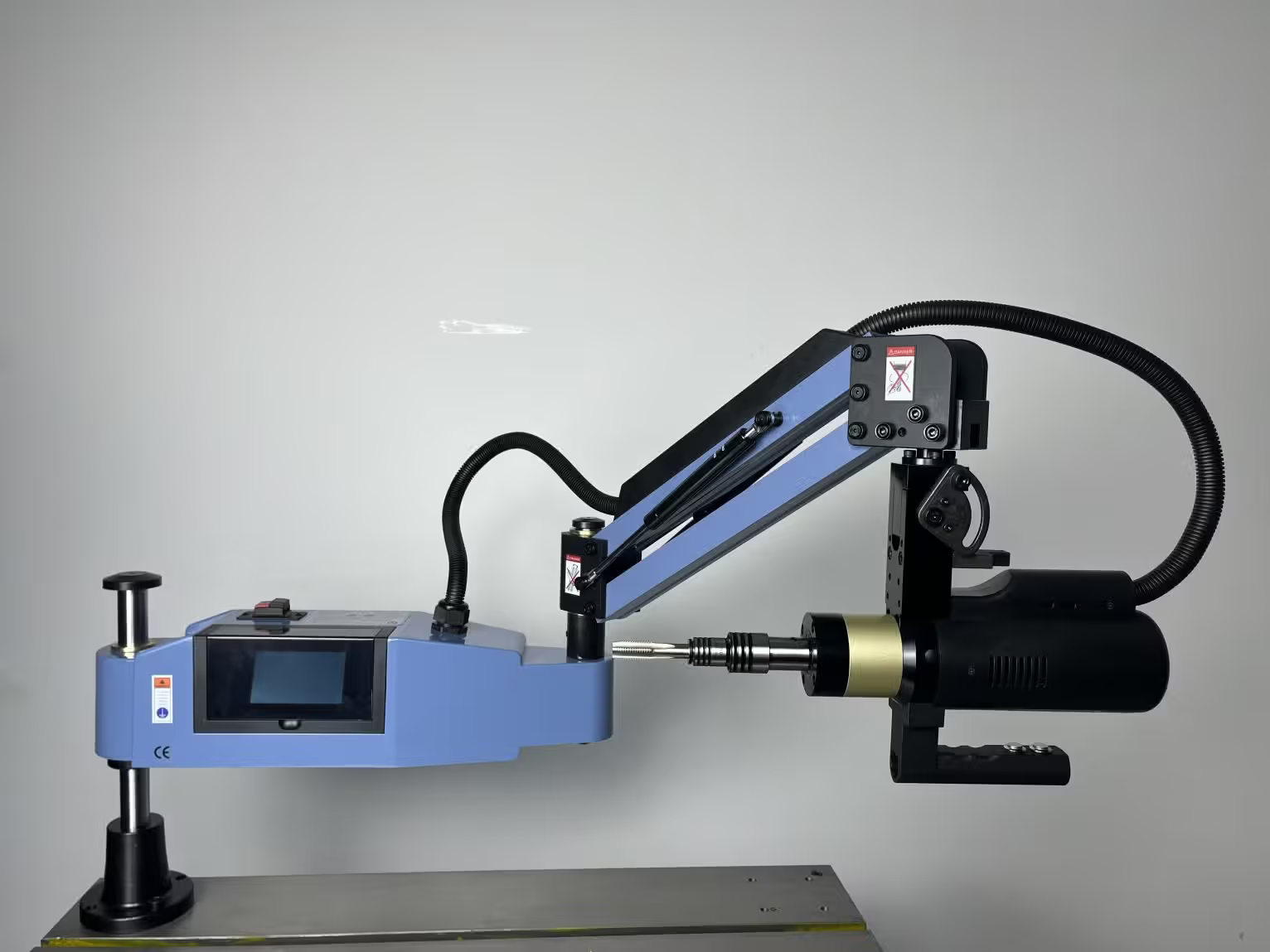
Threaded holes are essential in mechanical assembly. From automotive engines and aerospace components to consumer electronics and heavy equipment, internal threads allow parts to be fastened securely and disassembled when needed. The process of creating internal threads inside a drilled hole is known as tapping.
What Is a Tapping Machine?
A tapping machine is a device used to create internal threads in pre-drilled holes using a tool called a tap. Unlike a standard drill press, which only removes material to create a hole, a tapping machine rotates a tap at a controlled speed and feeds it into the hole with synchronized motion to produce threads.
Tapping machines can be:
-
Standalone units dedicated to threading
-
Attachments for drill presses
-
Integrated into CNC machining centers
-
Specialized systems such as hot tapping machines used in pipeline work
Their core purpose is consistent thread quality with minimal tool breakage.
Working Principle of Tapping Machines
The basic working principle of a tapping machine involves synchronized rotation and axial movement.
Step-by-Step Process
-
A hole is drilled to the correct tap drill size.
-
The tap is aligned with the hole.
-
The spindle rotates at a calculated speed.
-
The tap advances into the hole at a feed rate equal to the thread pitch.
-
After reaching the desired depth, the machine reverses rotation.
-
The tap exits the hole cleanly.
The key technical factor is synchronization between spindle speed and feed rate. If feed does not match the thread pitch, the tap can break or produce damaged threads.
Important Technical Parameters
Cutting Speed for Tapping
Cutting speed depends on:
-
Material type
-
Tap material (HSS, carbide)
-
Thread size
It is usually expressed in meters per minute (m/min). Harder materials require lower cutting speeds.
Spindle Speed for Tapping
Spindle speed (RPM) can be calculated using:
RPM = (Cutting Speed × 1000) / (π × Tap Diameter)
Correct spindle speed helps reduce tool wear and improves thread finish.
Types of Tapping Machines
Different applications require different machine designs. Below are the main categories.
1. Manual Tapping Machines
These are operator-driven systems often used in workshops or small production settings.
Features:
-
Lever or hand-feed mechanism
-
Lower cost
-
Suitable for small batch work
Best for:
-
Maintenance workshops
-
Repair operations
-
Small-scale fabrication
2. Bench or Standalone Tapping Machines
These are dedicated machines with motorized spindles and automatic feed control.
Features:
-
Adjustable spindle speed
-
Reversible motor
-
Vertical configuration
Best for:
-
Medium production runs
-
General industrial use
3. Tapping Drill Press
A tapping drill press combines drilling and tapping operations. It may include a tapping attachment or a reversible motor.
Advantages:
-
Dual functionality
-
Space-saving
-
Suitable for job shops
Limitations:
-
Less specialized than dedicated tapping machines
-
May require skilled operation to avoid tap breakage
4. CNC Tapping Machines
CNC machines integrate tapping into automated machining processes.
Features:
-
Programmable spindle speed and feed
-
Rigid tapping capability
-
High repeatability
Best for:
-
Automotive
-
Aerospace
-
High-volume production
Rigid tapping ensures exact synchronization between spindle rotation and feed movement.
5. Pneumatic and Electric Portable Tapping Machines
Portable tapping machines are used for large workpieces that cannot be moved easily.
Features:
-
Adjustable arm systems
-
Electric or air-powered
-
Flexible positioning
Common in:
-
Fabrication shops
-
Structural steel work
-
On-site industrial repair
6. Hot Tapping Machines
Hot tapping machines are specialized systems used to create threaded connections in pressurized pipelines without shutting down operations.
Applications:
-
Oil and gas
-
Water distribution
-
Industrial utilities
These systems are more complex and involve sealing mechanisms to prevent leakage.
Comparison Table: Major Types of Tapping Machines
| Type | Automation Level | Best For | Advantages | Limitations |
|---|---|---|---|---|
| Manual | Low | Repairs, small jobs | Low cost, simple | Slow, operator-dependent |
| Bench/Standalone | Medium | Medium production | Consistent threads | Limited automation |
| Tapping Drill Press | Medium | Job shops | Dual use | Not specialized |
| CNC Tapping | High | Mass production | Precision, repeatability | Higher cost |
| Portable | Medium | Large structures | Flexible positioning | Limited heavy-duty capacity |
| Hot Tapping | Specialized | Pipelines | No shutdown required | Complex, high cost |
Benefits of Tapping Machines
-
Improved accuracy and consistency
-
Faster production compared to manual tapping
-
Reduced operator fatigue
-
Better control over spindle speed and feed
-
Lower risk of cross-threading
-
Suitable for different materials (steel, aluminum, brass, cast iron)
Limitations of Tapping Machines
-
Tap breakage risk if parameters are incorrect
-
Requires proper hole preparation
-
Higher upfront cost for CNC systems
-
Not suitable for extremely thin materials without reinforcement
-
Requires maintenance to ensure spindle alignment
Understanding these limitations helps in selecting the right machine and operating conditions.
Industrial Applications
Tapping machines are widely used in:
Automotive Industry
-
Engine blocks
-
Transmission housings
-
Chassis components
Aerospace
-
Precision threaded holes in aluminum and titanium parts
Electronics
-
Small threaded enclosures
-
Mounting hardware
Construction and Structural Fabrication
-
Steel beams and plates
Oil and Gas
-
Pipeline hot tapping operations
Thread quality is critical in these industries because mechanical failure can result from poor threading.
Latest Trends and Innovations
1. Rigid Tapping Technology
Modern CNC machines use rigid tapping, eliminating the need for floating tap holders.
2. Servo-Driven Tapping Systems
Provide better torque control and programmable parameters.
3. Quick-Change Tooling
Reduces downtime during tap replacement.
4. Smart Monitoring Systems
Sensors detect torque spikes and prevent tap breakage.
5. Thread Forming Taps
Instead of cutting, these taps displace material to form threads, reducing chip formation.
These innovations focus on productivity, safety, and thread reliability.
Key Features to Consider
When evaluating a tapping machine, consider the following:
Technical Checklist
-
Spindle speed range
-
Torque capacity
-
Thread size compatibility
-
Feed synchronization system
-
Reversing capability
-
Mounting configuration (bench, portable, CNC)
-
Cooling/lubrication system
-
Compatibility with thread forming taps
-
Safety guards and emergency stop
Top Companies and Solutions
Several manufacturers are known globally for tapping and threading solutions. Some also provide integrated machining systems.
-
Haas Automation – CNC machines with rigid tapping features
-
DMG MORI – Advanced CNC machining centers
-
Yamawa – Tap manufacturing and threading tools
-
Roscamat (part of Llambrich Group) – Portable tapping arms
-
Ridgid – Industrial pipe threading and tapping tools
These companies offer different types of tapping systems, from manual to advanced CNC configurations. Selection depends on application scale and technical requirements rather than brand preference alone.
How to Choose the Right Tapping Machine
Choosing the right tapping machine requires understanding your production needs.
Step 1: Define Thread Requirements
-
Thread size range
-
Material type
-
Tolerance requirements
Step 2: Determine Production Volume
-
Low volume → manual or bench machine
-
Medium volume → standalone tapping machine
-
High volume → CNC with rigid tapping
Step 3: Evaluate Workpiece Size
-
Small parts → bench systems
-
Large structures → portable tapping machines
Step 4: Consider Budget and Maintenance
-
Initial cost
-
Tooling cost
-
Maintenance availability
Quick Decision Guide
| Requirement | Recommended Option |
|---|---|
| Occasional repair | Manual tapping machine |
| Medium workshop production | Bench tapping machine |
| High precision mass production | CNC rigid tapping |
| Large fixed structures | Portable tapping arm |
| Pressurized pipelines | Hot tapping machine |
Tips for Best Use and Maintenance
Proper operation reduces tap breakage and extends machine life.
Operational Tips
-
Always use correct tap drill size.
-
Calculate spindle speed properly.
-
Use appropriate lubrication.
-
Avoid excessive feed pressure.
-
Reverse tap smoothly after reaching depth.
Maintenance Checklist
-
Inspect spindle alignment regularly.
-
Clean chips after each operation.
-
Check reversing mechanism.
-
Lubricate moving components.
-
Replace worn tap holders.
Preventive maintenance ensures consistent thread quality and minimizes downtime.
Frequently Asked Questions
1. What is the difference between tapping and threading?
Tapping creates internal threads inside a hole. Threading often refers to creating external threads on rods or pipes.
2. Can a drill press be used for tapping?
Yes, with a tapping attachment or reversible motor. However, dedicated tapping machines provide better synchronization and reduce tap breakage risk.
3. Why does my tap keep breaking?
Common reasons include:
-
Incorrect spindle speed
-
Improper drill hole size
-
Lack of lubrication
-
Misalignment
4. What is rigid tapping?
Rigid tapping is a CNC feature where the spindle rotation and feed are electronically synchronized without a floating holder.
5. What materials can be tapped?
Steel, aluminum, brass, copper, cast iron, and some plastics. Cutting speed must be adjusted based on material hardness.
6. Is hot tapping the same as workshop tapping?
No. Hot tapping is used for pressurized pipelines and requires specialized equipment.
Practical Takeaway
Tapping machines play a crucial role in modern manufacturing. From small workshops to advanced CNC production lines and industrial pipeline systems, they ensure accurate, repeatable internal threads that support reliable assembly.
Understanding the working principle, correct cutting speed, spindle speed calculation, and machine type helps prevent tool breakage and improve productivity. Selecting the right tapping machine depends on thread size, material, production volume, and application environment.