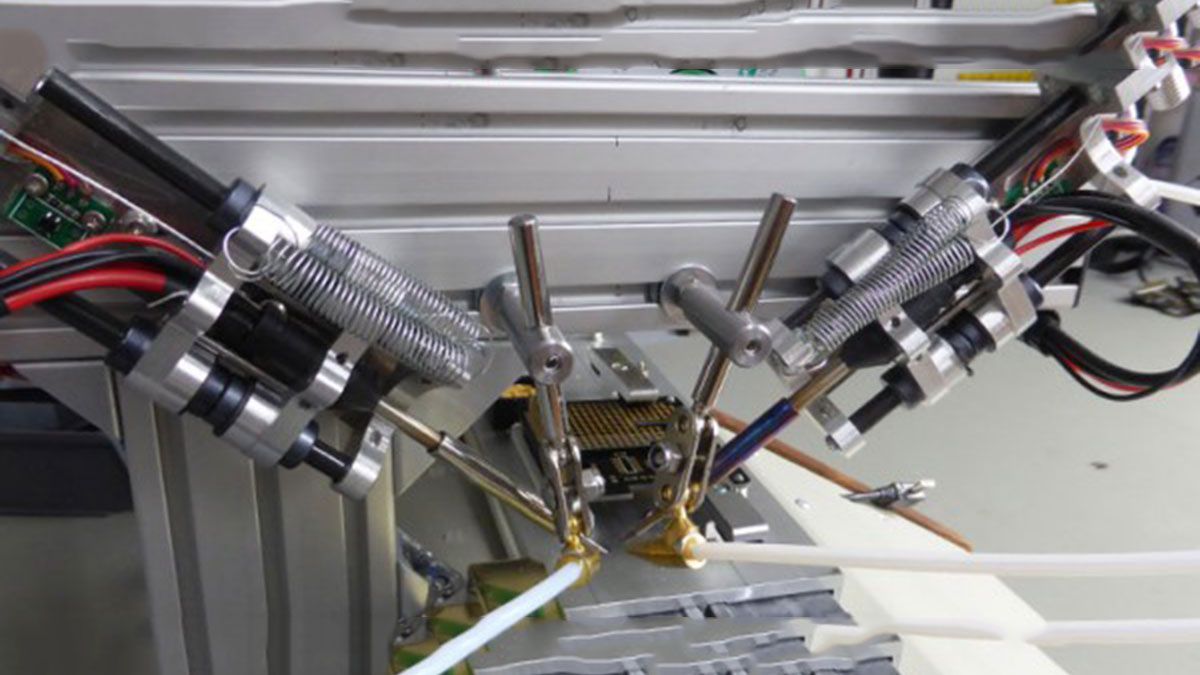
Soldering is a fundamental process in electronics manufacturing, used to join components to circuit boards and create reliable electrical connections. As production volumes and precision requirements have increased, many industries have adopted automated solutions to improve consistency and efficiency. Soldering robots are one such advancement, designed to perform repetitive soldering tasks with controlled accuracy.
What Is Automated Soldering?
Automated soldering refers to the use of machines or robotic systems to perform soldering tasks with minimal manual intervention. These systems follow programmed instructions to apply heat and solder material at precise locations.
Common automated soldering methods include:
- Contact soldering using heated tips
- Laser soldering using focused light energy
- Selective soldering for specific areas on a circuit board
Automation reduces variability and helps maintain consistent quality, especially in high-volume production.
Benefits of Soldering Robots
1. Consistent Quality
Robots follow programmed paths and parameters, reducing variations in solder joints.
2. Increased Productivity
Automated systems can operate continuously, improving throughput.
3. Precision and Accuracy
They are capable of handling small components and complex assemblies.
4. Reduced Labor Dependency
Automation minimizes the need for manual soldering, which can be time-consuming and skill-dependent.
5. Improved Safety
Operators are less exposed to heat, fumes, and repetitive tasks.
Limitations to Consider
- Initial setup and programming effort
- Higher upfront investment compared to manual tools
- Limited flexibility for highly customized or low-volume tasks
- Maintenance and calibration requirements
- Need for skilled operators for setup and troubleshooting
Understanding these limitations helps in selecting the right level of automation.
Types of Soldering Robots
1. Desktop Soldering Robots
Desktop soldering robots are compact systems designed for small-scale or semi-automated production.
Key characteristics:
- Small footprint
- Programmable movement
- Suitable for repetitive tasks
Applications:
- Electronics assembly
- Prototyping
- Small production lines
Advantages:
- Cost-effective compared to larger systems
- Easy to integrate into existing workflows
Limitations:
- Limited capacity for large-scale production
2. Automated Soldering Stations
Automated soldering stations combine robotic movement with soldering tools in a structured setup.
Key characteristics:
- Integrated control systems
- Adjustable temperature and timing
- Consistent solder application
Applications:
- Medium-scale manufacturing
- Standardized production tasks
3. Laser Soldering Robots
Laser soldering systems use focused laser beams to heat solder joints without direct contact.
Key characteristics:
- Non-contact heating
- High precision
- Minimal thermal impact on surrounding components
Applications:
- Sensitive electronics
- Micro-scale components
- High-precision industries
Advantages:
- Reduced risk of damage
- Clean and नियंत्रled process
Limitations:
- Higher cost
- Requires specialized setup
4. Robotic Soldering Systems (Industrial)
These systems are used in large-scale manufacturing environments.
Key characteristics:
- Multi-axis robotic arms
- Integration with production lines
- High-speed operation
Applications:
- Automotive electronics
- Consumer electronics manufacturing
- Industrial equipment production
Comparison Table: Soldering Robot Types
| Type | Best For | Key Advantage | Limitation |
|---|---|---|---|
| Desktop Robot | Small-scale tasks | Compact and flexible | Limited capacity |
| Automated Station | Medium production | Consistent output | Moderate setup complexity |
| Laser Soldering Robot | Precision work | Non-contact accuracy | Higher cost |
| Industrial Robotic System | Large-scale manufacturing | High productivity | Complex integration |
Latest Trends and Innovations
1. Integration with Smart Manufacturing
Soldering robots are increasingly connected to digital systems for monitoring and data analysis.
2. Improved Vision Systems
Advanced cameras help robots identify components and adjust positioning in real time.
3. AI-Assisted Programming
Machine learning tools are being explored to simplify programming and optimize soldering parameters.
4. Energy Efficiency
Modern systems are designed to reduce energy consumption while maintaining performance.
5. Miniaturization Support
New technologies enable soldering of smaller and more complex components.
Key Features to Consider
When evaluating soldering robots, consider the following:
- Precision and repeatability
- Type of soldering method (contact or laser)
- Ease of programming and operation
- Compatibility with components and materials
- Production volume requirements
- Maintenance and support needs
- Integration with existing systems
Top Companies and Solutions
Several manufacturers are known for soldering automation technologies:
- Japan Unix
- Apollo Seiko
- Quick Intelligent Equipment
- Kurtz Ersa
- JBC Tools
These companies offer a range of solutions, from compact desktop systems to advanced industrial robots.
How to Choose the Right Soldering Robot
Step-by-Step Checklist
- Identify the type of components to be soldered
- Determine production volume and speed requirements
- Evaluate precision and quality standards
- Consider available space and layout
- Assess budget and long-term costs
- Check compatibility with existing processes
Practical Tips for Use and Maintenance
- Regularly clean soldering tips and components
- Calibrate systems to maintain accuracy
- Monitor temperature settings to avoid defects
- Inspect joints for consistency and quality
- Train operators for proper system handling
- Schedule preventive maintenance
FAQs
What is the main advantage of soldering robots?
They provide consistent, repeatable results and reduce manual effort in production.
Are desktop soldering robots suitable for large-scale production?
They are generally better suited for small to medium-scale operations.
When is laser soldering preferred?
Laser soldering is useful for high-precision applications and sensitive components.
Do soldering robots require skilled operators?
Yes, especially for programming, setup, and maintenance.
Can automated soldering improve product quality?
Yes, by reducing variability and ensuring consistent solder joints.
Conclusion
Soldering robots have become an important part of modern manufacturing, offering improved precision, efficiency, and consistency. From compact desktop systems to advanced laser-based solutions, each type serves specific operational needs.
Understanding the differences between these systems helps in selecting the right approach based on production requirements, component complexity, and available resources. While automation requires careful planning and investment, it can support long-term improvements in quality and productivity.
A thoughtful approach to choosing and maintaining soldering robots ensures reliable performance and better alignment with evolving manufacturing demands.