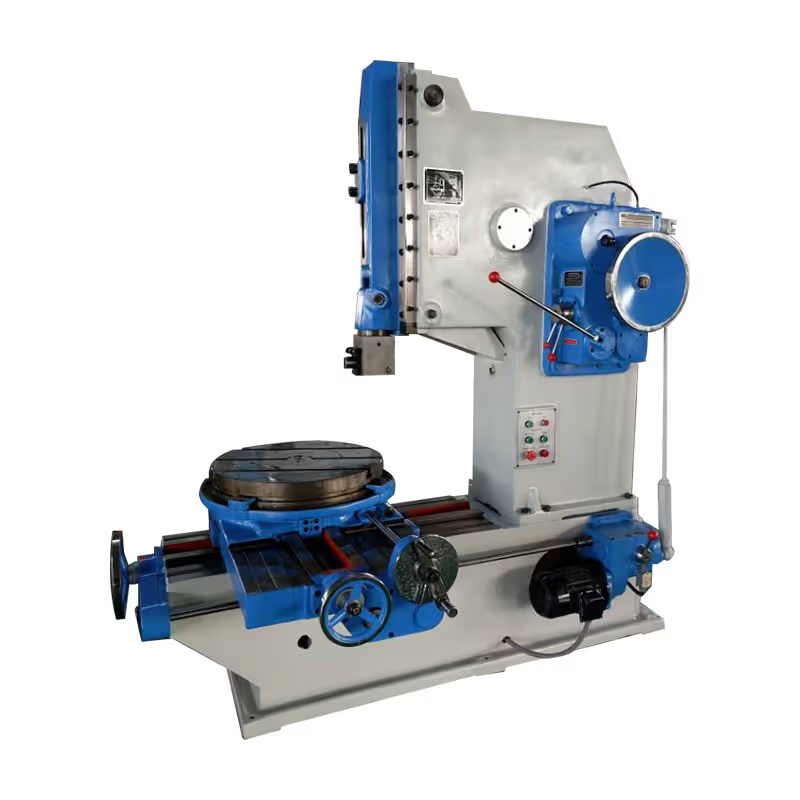
Slotting machines are an important part of traditional machining and metalworking processes. While modern manufacturing often relies on CNC systems, slotting machines continue to play a valuable role in creating precise internal slots, keyways, grooves, and complex shapes that are difficult to produce using other tools.
What Is a Slotting Machine?
A slotting machine is a reciprocating machine tool used to cut slots, grooves, and keyways in a workpiece. It operates using a single-point cutting tool that moves up and down in a vertical or horizontal direction while the workpiece is held stationary or moved incrementally.
These machines are especially useful for:
- Internal keyways
- Grooves and splines
- Flat and irregular surfaces
- Precision shaping tasks
Slotting machines are often described as vertical shapers because of their similar working mechanism.
Benefits of Slotting Machines
1. High Precision
Slotting machines provide accurate cuts, making them suitable for detailed machining tasks.
2. Versatility
They can handle a wide range of operations, including internal and external shaping.
3. Suitable for Complex Shapes
These machines are particularly useful for creating internal features that are difficult to machine using rotating tools.
4. Cost-Effective for Small Batches
Slotting machines are well-suited for single-piece or small production runs.
Limitations and Considerations
1. Slower Production Speed
Compared to modern CNC machines, slotting machines are relatively slower.
2. Limited Automation
Many traditional slotting machines require manual operation.
3. Not Ideal for Mass Production
They are better suited for custom or low-volume work rather than large-scale manufacturing.
4. Tool Wear
The reciprocating cutting process can lead to faster tool wear if not properly maintained.
Types of Slotting Machines
Slotting machines can be categorized based on design, size, and application.
1. Vertical Slotting Machines
Vertical slotting machines are the most commonly used type.
Working:
- The cutting tool moves vertically up and down
- The workpiece is mounted on a table that can move in multiple directions
Applications:
- Internal keyways
- Grooves and slots
- Gear shaping
These machines are widely used in engineering workshops and manufacturing industries.
2. Portable Slotting Machines
Portable slotting machines are designed for mobility and on-site operations.
Key features:
- Lightweight and compact
- Easy to transport
- Suitable for maintenance and repair work
Applications:
- On-site machining
- Repair jobs
- Small-scale fabrication
3. Mini Slotting Machines
Mini slotting machines are smaller versions of standard slotters.
Advantages:
- Compact size
- Lower cost
- Easy to operate
Best suited for:
- Educational institutions
- Small workshops
- Light-duty machining tasks
4. Horizontal Mortiser Machines
Horizontal mortiser machines are similar to slotting machines but operate in a horizontal direction.
Working:
- The cutting tool moves horizontally
- Used primarily for cutting slots in wood or softer materials
Applications:
- Woodworking
- Furniture manufacturing
- Specialized machining
Comparison Table of Slotting Machine Types
| Type | Tool Movement | Best Use Case | Mobility | Precision |
|---|---|---|---|---|
| Vertical slotting machine | Vertical | General machining | Low | High |
| Portable slotting machine | Vertical | On-site work | High | Medium |
| Mini slotting machine | Vertical | Small tasks | High | Medium |
| Horizontal mortiser machine | Horizontal | Woodworking | Medium | Medium |
Working Principles of Slotting Machines
Slotting machines operate on a simple yet effective principle.
- The cutting tool moves in a reciprocating motion
- The cutting action occurs during the downward stroke
- The return stroke is idle and does not remove material
Step-by-Step Process
- The workpiece is fixed on the table
- The tool is aligned with the cutting area
- The ram moves the tool vertically or horizontally
- Material is removed gradually with each stroke
This controlled movement allows for precise shaping and slot creation.
Industrial Applications
Slotting machines are used in various industries.
Manufacturing and Engineering
Used for machining metal parts and components.
Automotive Industry
Used for creating internal keyways and gear components.
Tool Rooms and Workshops
Ideal for repair work and custom machining.
Woodworking
Horizontal mortiser machines are commonly used in furniture production.
Latest Trends and Innovations
Integration with CNC Systems
Modern slotting machines are increasingly integrated with CNC technology for better accuracy and automation.
Hydraulic Drive Systems
Hydraulic slotters provide smoother operation and better control.
Improved Tooling Materials
Advanced cutting tools offer longer life and improved performance.
Compact and Portable Designs
Newer machines are designed for flexibility and mobility.
Key Features to Consider
| Feature | Importance |
|---|---|
| Stroke length | Determines cutting depth |
| Motor power | Affects cutting capability |
| Table movement | Enables complex operations |
| Automation level | Impacts productivity |
| Machine size | Affects workspace requirements |
| Build quality | Ensures durability |
Major Manufacturers and Industry Solutions
Several companies produce slotting machines for industrial and workshop use, including:
- Bhavya Machine Tools
- Esskay Machine Tools
- HMT Machine Tools
- Ajax Machine Tools
- Pathak Industries
These manufacturers offer a variety of slotting machines, from small workshop models to heavy-duty industrial systems.
When comparing solutions, users typically evaluate:
- Precision and accuracy
- Machine durability
- Ease of operation
- Maintenance requirements
How to Choose the Right Slotting Machine
Selecting the right machine depends on your specific needs.
Step 1: Define the Application
Identify whether you need the machine for metalworking, woodworking, or repair tasks.
Step 2: Consider Workpiece Size
Choose a machine that can handle the required dimensions.
Step 3: Evaluate Production Volume
For low-volume work, manual or mini machines may be sufficient.
Step 4: Check Mobility Needs
Portable machines are better for on-site applications.
Step 5: Assess Budget
Balance cost with features and long-term efficiency.
Selection Checklist
- Type of material to be machined
- Required slot size and depth
- Machine capacity
- Level of automation
- Available workspace
- Maintenance requirements
Tips for Best Use and Maintenance
Regular Lubrication
Ensure all moving parts are properly lubricated.
Tool Maintenance
Keep cutting tools sharp to maintain accuracy.
Proper Alignment
Check alignment before starting operations.
Clean Work Area
Remove debris to prevent machine damage.
Routine Inspection
Inspect components regularly to avoid breakdowns.
Frequently Asked Questions
What is the main function of a slotting machine?
It is used to cut slots, grooves, and keyways in a workpiece with high precision.
How is a slotting machine different from a shaping machine?
A slotting machine uses vertical tool movement, while a shaping machine typically uses horizontal motion.
Can slotting machines be used for mass production?
They are generally more suitable for small batch or custom work.
What materials can be processed?
Slotting machines can work with metals, wood, and some plastics.
Are portable slotting machines effective?
Yes, they are useful for on-site and repair applications, though they may have limited capacity.
Conclusion
Slotting machines remain an important tool in machining and manufacturing, particularly for tasks that require precision and control. Whether it is a vertical slotting machine for general use, a portable unit for fieldwork, a mini machine for small workshops, or a horizontal mortiser for woodworking, each type serves a specific purpose.
Understanding the working principles, types, and features of slotting machines helps users make informed decisions based on their requirements. While newer technologies continue to evolve, slotting machines still offer practical value in many industrial and workshop settings.
Choosing the right machine, combined with proper operation and maintenance, can improve efficiency and ensure consistent machining results over time.