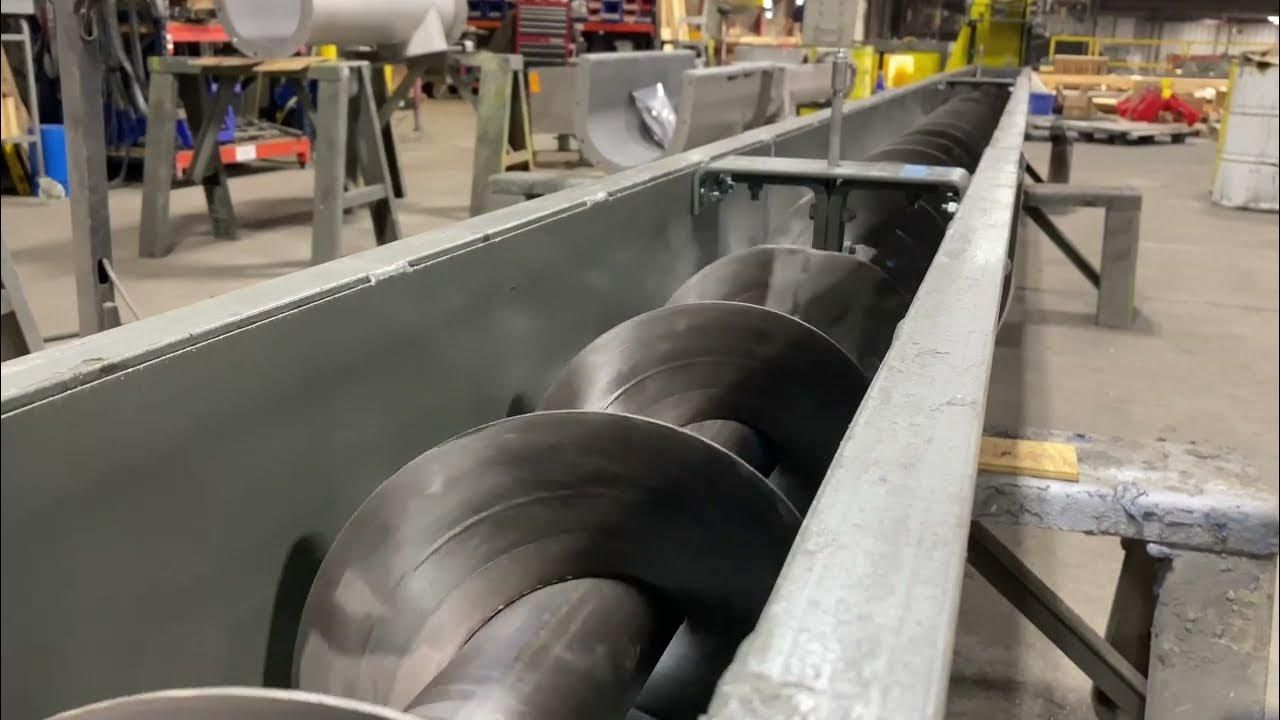
Screw conveyors are widely used in industries to move bulk materials efficiently from one point to another. Whether handling powders, grains, or semi-solid materials, these systems provide a simple and reliable method of conveying materials through a rotating helical screw inside a casing or tube.
How Screw Conveyors Work
A screw conveyor consists of a rotating helical blade (also known as an auger) housed inside a tube or trough. When the screw rotates, it pushes material along the conveyor path.
Basic working principle:
- Material enters through an inlet
- The rotating screw moves material forward
- The material exits through an outlet
The design can be horizontal, inclined, or vertical depending on the application.
Benefits of Screw Conveyors
1. Simple Design
Screw conveyors have relatively few moving parts, making them easy to understand and operate.
2. Versatility
They can handle a wide range of materials, including powders, granules, and semi-solids.
3. Controlled Material Flow
They allow consistent and controlled movement of materials.
4. Compact Options Available
Small screw conveyors are ideal for limited spaces and localized operations.
5. Enclosed System
The enclosed design reduces material loss and contamination.
Limitations to Consider
- Wear and tear due to continuous friction
- Limited distance capability compared to other conveyor systems
- Not ideal for very fragile materials
- Energy consumption may increase with longer or inclined systems
- Potential clogging with sticky or irregular materials
Understanding these limitations helps in choosing the right configuration.
Types of Screw Conveyors
1. Small Screw Conveyors
Small screw conveyors are designed for compact spaces and lower capacity requirements.
Key features:
- Compact design
- Easy installation
- Suitable for short-distance transport
Applications:
- Small-scale manufacturing
- Laboratory setups
- Food processing units
2. Small Auger Conveyors
Auger conveyors use a helical screw mechanism similar to standard screw conveyors but are often used for more specific or smaller-scale applications.
Key features:
- Precision material handling
- Suitable for granular materials
Applications:
- Agriculture
- Feed systems
- Controlled material dosing
3. Small Diameter Screw Conveyors
These conveyors use a narrower screw design for applications requiring precise flow control.
Key features:
- Narrow design
- Controlled throughput
Applications:
- Fine material handling
- Specialized production lines
4. Tube Screw Conveyors
Tube screw conveyors are enclosed within a cylindrical tube, offering better protection and containment.
Key features:
- Fully enclosed system
- Reduced dust and spillage
- Suitable for hygienic applications
Applications:
- Food and pharmaceutical industries
- Powder handling
5. Flexible Screw Conveyors
Flexible screw conveyors use a flexible spiral inside a tube, allowing movement along curved paths.
Key features:
- Flexible routing
- Can handle complex layouts
Applications:
- Facilities with space constraints
- Multi-point material transfer
6. Flexible Screw Augers
Flexible screw augers are a variation of flexible conveyors, designed for smooth and continuous material flow.
Key features:
- Adaptable design
- Efficient for irregular layouts
7. Screw Conveyor Belt (Conceptual Term)
While technically different from traditional belt conveyors, this term is sometimes used to describe systems combining screw movement with belt-like transport concepts.
Key characteristics:
- Hybrid understanding of conveying
- Used in broader discussions of material handling systems
Comparison Table: Screw Conveyor Types
| Type | Best Use Case | Key Advantage | Limitation |
|---|---|---|---|
| Small Screw Conveyor | Compact operations | Space-saving | Limited capacity |
| Small Auger Conveyor | Precision handling | Controlled flow | Lower throughput |
| Small Diameter Conveyor | Fine material handling | Accuracy | Limited volume |
| Tube Screw Conveyor | Enclosed transport | Clean operation | Less flexibility |
| Flexible Screw Conveyor | Complex layouts | Routing flexibility | Slightly lower efficiency |
| Flexible Screw Auger | Adaptive systems | Versatility | Maintenance needs |
Latest Trends and Innovations
1. Automation Integration
Screw conveyors are increasingly integrated with automated systems for better process control.
2. Improved Materials
Advanced materials reduce wear and increase durability.
3. Energy Efficiency
Modern designs aim to reduce power consumption while maintaining performance.
4. Modular Designs
Systems are becoming more modular, allowing easier customization and expansion.
5. Smart Monitoring
Sensors and monitoring systems help track performance and detect issues early.
Key Features to Consider
When selecting a screw conveyor, consider:
- Material type and properties
- Required capacity and speed
- Length and layout constraints
- Environmental conditions
- Maintenance requirements
- Level of enclosure needed
Top Companies and Solutions
Several manufacturers are known for screw conveyor systems:
- Flexicon Corporation
- Spiroflow Systems
- Hapman
- Screw Conveyor Corporation
- WAMGROUP
These companies offer a variety of screw conveyor solutions for different industries.
How to Choose the Right Screw Conveyor
Step-by-Step Checklist
- Identify the type of material (powder, granular, etc.)
- Determine required capacity
- Assess space and layout constraints
- Choose the appropriate conveyor type
- Consider environmental conditions
- Evaluate maintenance and durability needs
Practical Tips for Use and Maintenance
- Regularly inspect screws and casings for wear
- Clean the system to prevent buildup
- Ensure proper alignment of components
- Monitor motor performance
- Use appropriate materials for specific applications
- Schedule routine maintenance
FAQs
What is the difference between a screw conveyor and an auger conveyor?
Both use a rotating helical screw, but auger conveyors are often used for smaller or more specific applications.
When should a flexible screw conveyor be used?
It is suitable when the conveyor path requires bends or non-linear routing.
Are screw conveyors suitable for long distances?
They are generally better for short to medium distances.
Can screw conveyors handle different materials?
Yes, they can handle a variety of bulk materials depending on design.
How often should maintenance be performed?
Regular inspections and scheduled maintenance help ensure consistent performance.
Conclusion
Screw conveyors offer a practical and efficient solution for material handling across many industries. With options ranging from small and compact designs to flexible and enclosed systems, they can be adapted to suit different operational needs.
Understanding the differences between types such as small screw conveyors, tube systems, and flexible designs helps in selecting the most suitable option. By considering factors like material type, layout, and maintenance requirements, users can ensure reliable performance and long-term efficiency.
A thoughtful approach to choosing and maintaining screw conveyors can contribute to smoother operations and better overall system performance.