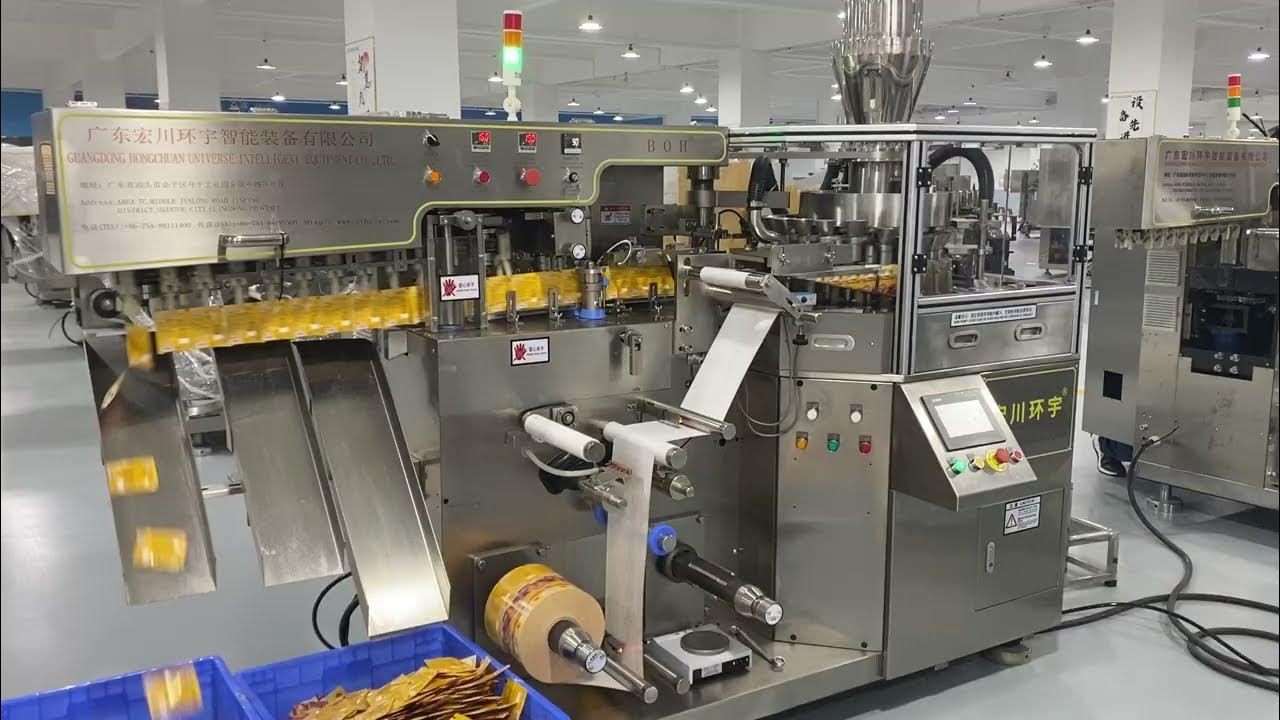
Small, single-use packaging has become common across industries such as food, pharmaceuticals, cosmetics, and household products. From shampoo sachets to sauce packets and powdered drink mixes, these compact packages offer convenience, portion control, and extended shelf life. Behind this packaging format are sachet filling machines—specialized systems designed to fill and seal small quantities of products efficiently.
What Are Sachet Filling Machines?
Sachet filling machines are packaging systems designed to fill pre-measured quantities of liquid, powder, or semi-solid products into small flexible pouches known as sachets. These machines typically integrate multiple functions into a single system:
- Forming the sachet from packaging film
- Filling the product
- Sealing the sachet
- Cutting and separating individual units
They are widely used for products such as:
- Liquid items (shampoo, oils, sauces)
- Powder products (spices, detergents, drink mixes)
- Semi-solid materials (creams, gels, pastes)
Benefits of Sachet Filling Machines
1. High Production Efficiency
Sachet machines can produce hundreds or thousands of units per hour, making them suitable for large-scale operations.
2. Consistent Filling Accuracy
Automated systems ensure each sachet contains a precise amount of product, reducing waste and maintaining quality.
3. Versatility
Modern machines can handle different product types, including liquids, powders, and viscous materials.
4. Reduced Labor Requirements
Automation minimizes manual work, improving productivity and reducing human error.
5. Compact Packaging Format
Sachets use less material compared to larger packaging, making them cost-effective for certain applications.
Limitations and Considerations
1. Initial Investment
Advanced machines, especially automated ones, may require a significant upfront cost.
2. Maintenance Requirements
Regular servicing is needed to maintain accuracy and avoid downtime.
3. Product Compatibility
Different machines are required for liquids, powders, and viscous substances.
4. Film and Packaging Constraints
The type of packaging film must be compatible with the machine’s sealing mechanism.
Types of Sachet Filling Machines
Sachet filling machines can be categorized based on product type and level of automation.
1. Liquid Sachet Filling Machines
These machines are designed for free-flowing liquids such as water, oils, sauces, and shampoos.
Key features:
- Pump-based or gravity-based filling systems
- Leak-proof sealing mechanisms
- Adjustable filling volumes
Common applications:
- Food industry (sauces, condiments)
- Personal care products (shampoo, lotion)
2. Powder Sachet Filling Machines
Powder filling machines handle dry, granular materials such as spices, coffee, and detergents.
Key features:
- Auger or volumetric dosing systems
- Dust control mechanisms
- High filling accuracy
Common applications:
- Food packaging
- Chemical and detergent industries
3. Multi-Function Sachet Machines
These machines can handle both liquid and powder products with interchangeable systems.
Advantages:
- Flexible production
- Suitable for diverse product lines
4. Manual and Semi-Automatic Machines
These machines require operator involvement for certain steps.
Suitable for:
- Small-scale production
- Startups or limited output requirements
5. Fully Automatic Sachet Packaging Machines
Fully automated machines perform all operations, from forming to sealing.
Benefits:
- High-speed production
- Minimal manual intervention
- Consistent output quality
Comparison Table of Sachet Filling Machine Types
| Machine Type | Product Type | Automation Level | Best Use Case | Output Speed |
|---|---|---|---|---|
| Liquid filling machine | Liquids | Medium to high | Food and cosmetics | High |
| Powder filling machine | Powders | Medium to high | Dry product packaging | High |
| Multi-function machine | Multiple | High | Flexible production | High |
| Manual machine | Various | Low | Small-scale use | Low |
| Automatic machine | All types | Very high | Industrial production | Very high |
Working Principles of Sachet Filling Machines
Although designs vary, most sachet filling machines follow a similar process:
1. Film Feeding and Forming
A roll of packaging film is fed into the machine and shaped into a tube or pouch.
2. Product Filling
The product is dispensed into the formed sachet using a dosing system.
- Liquids: pumps or gravity systems
- Powders: augers or volumetric fillers
3. Sealing
Heat or pressure is applied to seal the sachet securely.
4. Cutting
The machine separates individual sachets from the continuous film.
This process is repeated continuously for high-speed production.
Industrial Applications
Sachet filling machines are used in various industries.
Food and Beverage
Packaging sauces, sugar, spices, and drink mixes.
Pharmaceuticals
Single-dose packaging for powders and liquids.
Cosmetics and Personal Care
Packaging creams, shampoos, and lotions.
Household Products
Detergents, cleaning liquids, and chemical powders.
Latest Trends and Innovations
Automation and Smart Controls
Modern machines include programmable controls for precise operation and reduced manual setup.
Multi-Lane Production
Machines with multiple lanes can produce several sachets simultaneously, increasing output.
Improved Sealing Technologies
Advanced sealing systems improve package integrity and reduce leakage.
Eco-Friendly Packaging Integration
Some systems support biodegradable or recyclable films.
Key Features to Consider
| Feature | Importance |
|---|---|
| Filling accuracy | Ensures consistent product quantity |
| Speed and output | Determines production capacity |
| Machine compatibility | Matches product type (liquid or powder) |
| Ease of operation | Simplifies training and usage |
| Maintenance requirements | Affects long-term costs |
| Safety features | Protects operators and equipment |
Major Manufacturers and Industry Solutions
Several companies produce sachet filling and packaging machines. Some widely recognized names include:
- Nichrome India Ltd
- Viking Masek
- IMA Group
- Bossar Packaging
- Triangle Package Machinery
These companies offer a range of solutions, including automatic, multi-lane, and customized machines for different industries.
When comparing machines, users typically consider:
- Production speed
- Machine durability
- Flexibility for different products
- Maintenance and support availability
How to Choose the Right Sachet Filling Machine
Selecting the right machine depends on operational requirements.
Step 1: Identify Product Type
Choose a machine designed for liquids, powders, or semi-solids.
Step 2: Determine Production Volume
High-volume operations benefit from automatic machines, while small setups may use manual systems.
Step 3: Consider Packaging Material
Ensure the machine supports the required film type.
Step 4: Evaluate Budget
Balance upfront cost with long-term efficiency and maintenance.
Step 5: Check Available Space
Ensure the machine fits within the production area.
Selection Checklist
- Product type (liquid, powder, semi-solid)
- Required output capacity
- Machine automation level
- Available power supply
- Maintenance requirements
- Safety features
Tips for Best Use and Maintenance
Regular Cleaning
Keep the machine clean to prevent contamination and maintain hygiene.
Monitor Filling Accuracy
Check calibration regularly to ensure consistent output.
Inspect Sealing Components
Ensure proper sealing to avoid leaks or product loss.
Lubricate Moving Parts
Reduce wear and improve machine lifespan.
Train Operators
Proper training helps prevent operational errors and equipment damage.
Frequently Asked Questions
What is the difference between sachet and pouch packaging?
Sachets are small, single-use packets, while pouches are generally larger and may be resealable.
Can one machine handle both liquids and powders?
Some multi-function machines can handle both, but most machines are specialized for a specific product type.
How accurate are sachet filling machines?
Accuracy depends on the machine type and calibration, but modern systems provide highly consistent results.
Are sachet filling machines suitable for small businesses?
Yes, manual and semi-automatic machines are suitable for small-scale operations.
What maintenance is required?
Routine cleaning, lubrication, and inspection of parts are necessary to ensure smooth operation.
Conclusion
Sachet filling machines play a vital role in modern packaging by enabling efficient, accurate, and high-speed production of small, single-use packages. They support a wide range of industries, from food and pharmaceuticals to cosmetics and household products.
Understanding the different types of machines, their working principles, and key features helps in selecting the right equipment for specific needs. Whether for small-scale production or large industrial operations, choosing the appropriate machine and maintaining it properly can improve productivity, reduce waste, and ensure consistent packaging quality.
As technology advances, sachet filling machines continue to evolve with better automation, improved efficiency, and greater flexibility. For businesses and manufacturers, staying informed about these systems can support more effective decision-making and long-term operational success.