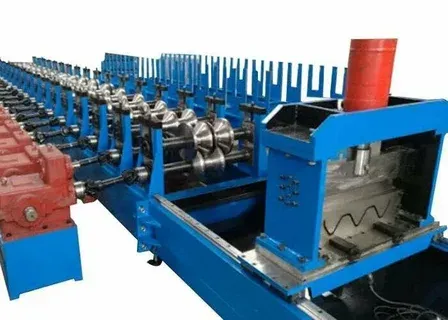
Roll forming machines are widely used in modern manufacturing to produce long, consistent metal profiles efficiently. From construction materials to automotive components, many everyday products are shaped using roll forming technology. This process is especially valued for its ability to create uniform shapes at high speed while maintaining material strength.
What Are Roll Forming Machines?
A roll forming machine is a piece of equipment that shapes metal sheets or strips into specific cross-sectional profiles using multiple sets of rollers arranged in sequence.
Instead of bending metal in one step, the machine gradually forms the material through several stages. This progressive approach reduces stress on the material and allows for precise and complex shapes.
Key Components
- Uncoiler (feeds metal coil)
- Roll stations (forming rollers)
- Drive system (controls movement)
- Cutting system (cuts finished profiles)
- Run-out table (collects output)
Benefits of Roll Forming Machines
1. High Production Efficiency
Roll forming operates continuously, making it ideal for producing large quantities of uniform parts.
2. Consistent Quality
Each part has the same cross-section, ensuring uniformity across production.
3. Ability to Form Complex Shapes
The gradual forming process allows creation of intricate profiles not easily achieved by other methods.
4. Material Strength Retention
Because the process is incremental, the material retains much of its original strength.
5. Long-Length Production
Roll forming can produce very long components without interruption.
Limitations and Considerations
1. High Initial Tooling Cost
Custom roll dies are required for each profile, which can be expensive.
2. Limited Flexibility
Changing product design requires new roller sets.
3. Not Ideal for Small Batches
Best suited for high-volume production.
4. Setup Complexity
Machine setup and calibration require technical expertise.
Types of Roll Forming Machines
Roll forming machines can be categorized based on application and design.
1. Sheet Metal Roll Forming Machines
These are the most common machines used to shape flat metal sheets into profiles such as panels, channels, and frames.
Applications:
- Roofing sheets
- Wall panels
- Structural components
2. Tube Roll Forming Machines
Tube roll forming machines are designed to create round, square, or rectangular tubes.
Key features:
- Precision shaping of hollow sections
- Consistent wall thickness
- High production efficiency
Applications:
- Furniture frames
- Automotive parts
- Structural tubing
3. Slip Roll Forming Machines
Slip roll machines are used for bending metal sheets into curved shapes rather than straight profiles.
Working:
- Uses three rollers to bend metal into arcs or cylinders
Applications:
- Cylindrical tanks
- Pipes
- Curved panels
4. Roll Forming Die Systems
Roll forming dies are critical components that determine the final shape of the product.
Features:
- Custom-designed for each profile
- Arranged in stages
- Developed using engineering calculations or simulations
The design often follows a “flower pattern,” which maps each stage of deformation.
Comparison Table of Roll Forming Types
| Type | Material Form | Output Shape | Best Use Case | Production Speed |
|---|---|---|---|---|
| Sheet metal roll forming | Flat sheet | Panels, channels | Construction materials | High |
| Tube roll forming | Strip/coil | Tubes | Structural and automotive | High |
| Slip roll forming | Sheet | Curved shapes | Cylinders and tanks | Medium |
| Roll forming die systems | Component | Custom profiles | Specialized production | High |
Working Principle of Roll Forming Machines
Roll forming machines operate on a continuous and progressive forming principle.
Step-by-Step Process
-
Material Feeding
A metal coil is fed into the machine. -
Progressive Forming
The strip passes through multiple roller stations, each applying a small bend. -
Profile Formation
The material gradually takes the final shape as it moves through the rollers. -
Cutting
The formed profile is cut to the desired length. -
Output
Finished parts are collected for further use.
This gradual deformation ensures precision and reduces material stress.
Industrial Applications
Roll forming machines are used across multiple industries.
Construction
- Roofing panels
- Wall cladding
- Structural frames
Automotive
- Body panels
- Reinforcement components
Manufacturing
- Storage racks
- Metal channels
Energy Sector
- Solar mounting structures
- Cable trays
Latest Trends and Innovations
Automation and CNC Integration
Modern machines include automated controls for precise operation and reduced human error.
Multi-Profile Capability
Some systems can produce different profiles with adjustable tooling.
Advanced Simulation Design
Computer-aided design improves die accuracy and reduces setup time.
Inline Processing
Additional operations like punching and cutting can be integrated into the production line.
Key Features to Consider
| Feature | Importance |
|---|---|
| Number of roll stations | Affects precision and complexity |
| Material compatibility | Ensures proper forming |
| Production speed | Determines output capacity |
| Automation level | Impacts efficiency |
| Tooling design | Critical for product accuracy |
| Maintenance requirements | Affects long-term performance |
Major Manufacturers and Industry Solutions
Several companies are known for producing roll forming machines and solutions:
- Roll Forming Corporation
- Samco Machinery
- Bradbury Group
- Formtek Group
- GASPARINI Industries
These manufacturers offer a range of systems for sheet metal, tube forming, and customized applications.
When comparing solutions, users often consider:
- Machine reliability
- Production capacity
- Flexibility of tooling
- Technical support
How to Choose the Right Roll Forming Machine
Step 1: Identify Product Type
Determine whether you need sheet metal, tube, or curved forming.
Step 2: Evaluate Production Volume
High-volume production favors fully automated systems.
Step 3: Consider Material Type
Ensure compatibility with steel, aluminum, or other metals.
Step 4: Assess Tooling Requirements
Custom profiles require specialized dies.
Step 5: Review Budget and Space
Balance machine capabilities with available resources.
Selection Checklist
- Type of product (sheet, tube, curved)
- Required production speed
- Machine size and capacity
- Automation level
- Tooling complexity
- Maintenance needs
Tips for Best Use and Maintenance
Regular Inspection
Check rollers and components for wear.
Proper Alignment
Ensure material is correctly aligned before processing.
Lubrication
Maintain moving parts to reduce friction and wear.
Clean Operation
Remove debris to prevent defects in output.
Operator Training
Skilled operation improves efficiency and reduces errors.
Frequently Asked Questions
What is roll forming used for?
It is used to create long metal parts with consistent cross-sections, commonly in construction and manufacturing.
How is roll forming different from bending?
Roll forming is continuous and gradual, while bending is typically done in a single step.
Can roll forming handle different materials?
Yes, it can process materials such as steel, aluminum, and copper.
Are roll forming machines suitable for small production?
They are more efficient for large-scale production.
What determines the final shape of the product?
The design of the roll dies and the sequence of forming stages.
Conclusion
Roll forming machines play a crucial role in modern manufacturing by enabling efficient, high-volume production of consistent metal profiles. Whether used for sheet metal, tube formation, or specialized die-based shaping, these machines offer a reliable solution for creating complex components with precision.
Understanding the different types, working principles, and key features helps users make informed decisions when selecting a machine. While the initial setup and tooling can require investment, the long-term benefits in efficiency and consistency make roll forming a valuable process in many industries.
As technology continues to evolve, roll forming machines are becoming more advanced, flexible, and efficient, supporting a wide range of industrial applications and production needs.