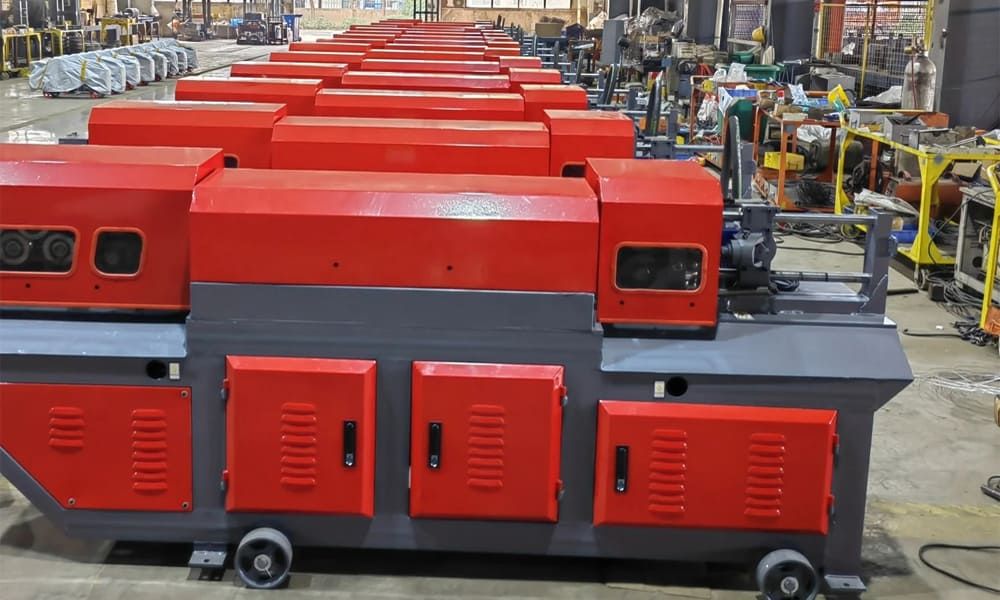
Reinforced concrete is widely used in construction because of its strength and durability. However, concrete alone is weak in tension, which is why steel reinforcement bars—commonly known as rebar—are used to improve structural performance. Before rebar can be used in construction, it must be cut to precise lengths and sometimes processed further. This is where rebar cutting machines play a key role
What Is a Rebar Cutting Machine?
A rebar cutting machine is a mechanical or hydraulic device used to cut steel reinforcement bars into required lengths. These machines are essential in construction projects such as buildings, bridges, tunnels, and infrastructure development.
Instead of manual cutting methods, which are slower and less precise, these machines provide clean and accurate cuts, improving both productivity and safety.
Benefits of Rebar Cutting Machines
1. High Efficiency
Rebar cutting machines can process large volumes of steel bars quickly, making them suitable for both small and large projects.
2. Precision and Consistency
They deliver uniform cuts, which is important for structural accuracy and proper alignment during construction.
3. Reduced Labor Effort
Automated cutting reduces the need for manual tools, lowering worker fatigue and improving productivity.
4. Improved Safety
Machines minimize the risks associated with manual cutting, such as uneven cuts or injuries.
5. Versatility
Modern machines can handle different rebar diameters and materials, including mild steel and high-tensile steel.
Limitations and Considerations
1. Initial Investment
Industrial-grade machines can be expensive, especially fully automatic or hydraulic models.
2. Maintenance Needs
Cutting blades, motors, and hydraulic systems require regular inspection and maintenance.
3. Power Dependency
Most machines rely on electricity or hydraulic systems, limiting use in remote areas without power supply.
4. Size Constraints
Each machine is designed for a specific range of bar diameters and may not be suitable for all applications.
Types of Rebar Cutting Machines
Rebar cutting machines can be classified based on power source, operation method, and level of automation.
1. Hydraulic Rebar Cutting Machines
Hydraulic cutters use pressurized fluid to generate high cutting force. These machines are commonly used in large construction projects.
- Suitable for thick rebars
- High cutting force with minimal effort
- Ideal for heavy-duty applications
2. Electric Rebar Cutting Machines
Electric machines use motors to drive cutting blades.
- Consistent performance
- Lower maintenance compared to hydraulic systems
- Suitable for medium-scale operations
3. Manual and Semi-Automatic Machines
These machines require partial or full manual operation.
- Lower cost
- Suitable for small projects
- Less efficient for large-scale production
4. Portable Rebar Cutters
Portable machines are designed for on-site flexibility.
- Lightweight and mobile
- Useful for remote or small construction sites
- Limited cutting capacity
5. Automatic Rebar Cutting Machines
Automatic machines are used in industrial production lines.
- High productivity
- Minimal manual intervention
- Consistent output quality
Comparison Table of Rebar Cutting Machines
| Type | Power Source | Best Use Case | Precision | Mobility |
|---|---|---|---|---|
| Hydraulic | Hydraulic system | Heavy-duty cutting | High | Low |
| Electric | Electric motor | Medium-scale projects | High | Medium |
| Manual | Manual force | Small projects | Moderate | High |
| Portable | Electric/Battery | On-site work | Moderate | High |
| Automatic | Electric/Hydraulic | Industrial production | Very High | Low |
Working Principles of Rebar Cutting Machines
Rebar cutting machines operate using mechanical or hydraulic force to shear steel bars.
Basic Working Process
- The rebar is placed in a fixed position.
- A motor or hydraulic system generates force.
- The cutting blade moves toward the fixed blade.
- The steel bar is sheared cleanly.
In many machines, the system uses gears, pulleys, or hydraulic pressure to drive the cutting blade.
Mechanical Cutting Principle
In mechanical systems:
- An electric motor drives a crankshaft or eccentric shaft
- The motion is converted into a reciprocating movement
- The moving blade cuts against a fixed blade
Hydraulic Cutting Principle
In hydraulic systems:
- A pump generates high-pressure fluid
- The fluid pushes a piston
- The piston drives the cutting blade forward to shear the rebar
Industrial Applications
Rebar cutting machines are widely used across multiple industries.
Construction Industry
Used to cut reinforcement bars for buildings, bridges, and foundations.
Infrastructure Projects
Essential in highways, tunnels, dams, and power plants.
Precast Concrete Manufacturing
Used to prepare reinforcement structures before casting.
Fabrication Workshops
Used for custom metal fabrication and structural steel work.
Latest Trends and Innovations
Automation and CNC Integration
Modern machines are increasingly automated, allowing higher precision and reduced manual effort.
Multi-Function Machines
Some machines combine cutting, bending, and straightening in a single system.
Improved Safety Features
Advanced safety mechanisms such as emergency stops and overload protection are becoming standard.
Energy Efficiency
New designs focus on reducing power consumption while maintaining performance.
Key Features to Consider
| Feature | Importance |
|---|---|
| Cutting capacity | Determines maximum bar size |
| Motor power | Affects performance and speed |
| Blade quality | Influences cutting precision |
| Automation level | Impacts productivity |
| Portability | Important for site work |
| Safety features | Ensures safe operation |
Major Manufacturers and Industry Solutions
Several manufacturers produce rebar cutting machines for industrial and construction use. Some widely recognized names include:
- Schnell Group
- Jaypee Group
- TJK Machinery
- Ellsen Machinery
- KRB Machinery
These companies offer various types of machines, including automatic, hydraulic, and portable models. When comparing solutions, users typically evaluate durability, cutting accuracy, and maintenance requirements.
How to Choose the Right Rebar Cutting Machine
Selecting the right machine depends on several factors.
1. Project Size
- Small projects: manual or portable machines
- Large projects: hydraulic or automatic machines
2. Material Type
Ensure the machine can handle the required steel grade and diameter.
3. Production Volume
High-volume operations require automated systems.
4. Budget
Balance initial cost with long-term operational efficiency.
5. Workspace Requirements
Consider machine size and installation space.
Checklist for Selection
- Required cutting capacity
- Type of operation (manual or automatic)
- Power source availability
- Maintenance requirements
- Safety features
Tips for Best Use and Maintenance
Proper Machine Setup
Ensure correct alignment before cutting to avoid inaccurate results.
Regular Blade Inspection
Replace or sharpen blades to maintain cutting efficiency.
Lubrication
Keep moving parts well-lubricated to reduce wear.
Clean Work Area
Remove debris and metal scraps regularly.
Follow Safety Guidelines
Use protective equipment and follow operating procedures.
Frequently Asked Questions
What is the main purpose of a rebar cutting machine?
It is used to cut steel reinforcement bars to precise lengths for construction and fabrication.
Can one machine handle different rebar sizes?
Yes, most machines support a range of diameters, depending on their capacity.
What is the difference between hydraulic and electric cutters?
Hydraulic machines provide higher force for heavy-duty cutting, while electric machines are suitable for lighter tasks.
Are portable machines effective?
Yes, but they are best suited for small-scale or on-site applications.
How often should maintenance be performed?
Routine maintenance should be done regularly, depending on usage frequency.
Conclusion
Rebar cutting machines are essential tools in modern construction and metal fabrication. They provide a reliable and efficient way to cut reinforcement bars, improving accuracy, productivity, and safety.
With a wide range of machine types available—from manual cutters to advanced automatic systems—users can select equipment based on their specific needs and project scale. Understanding how these machines work and what features to consider helps ensure better decision-making and long-term efficiency.
As construction technology continues to evolve, rebar cutting machines are becoming more advanced, integrating automation and improved safety features. Choosing the right machine and maintaining it properly can contribute to smoother workflows and more consistent results in any project.