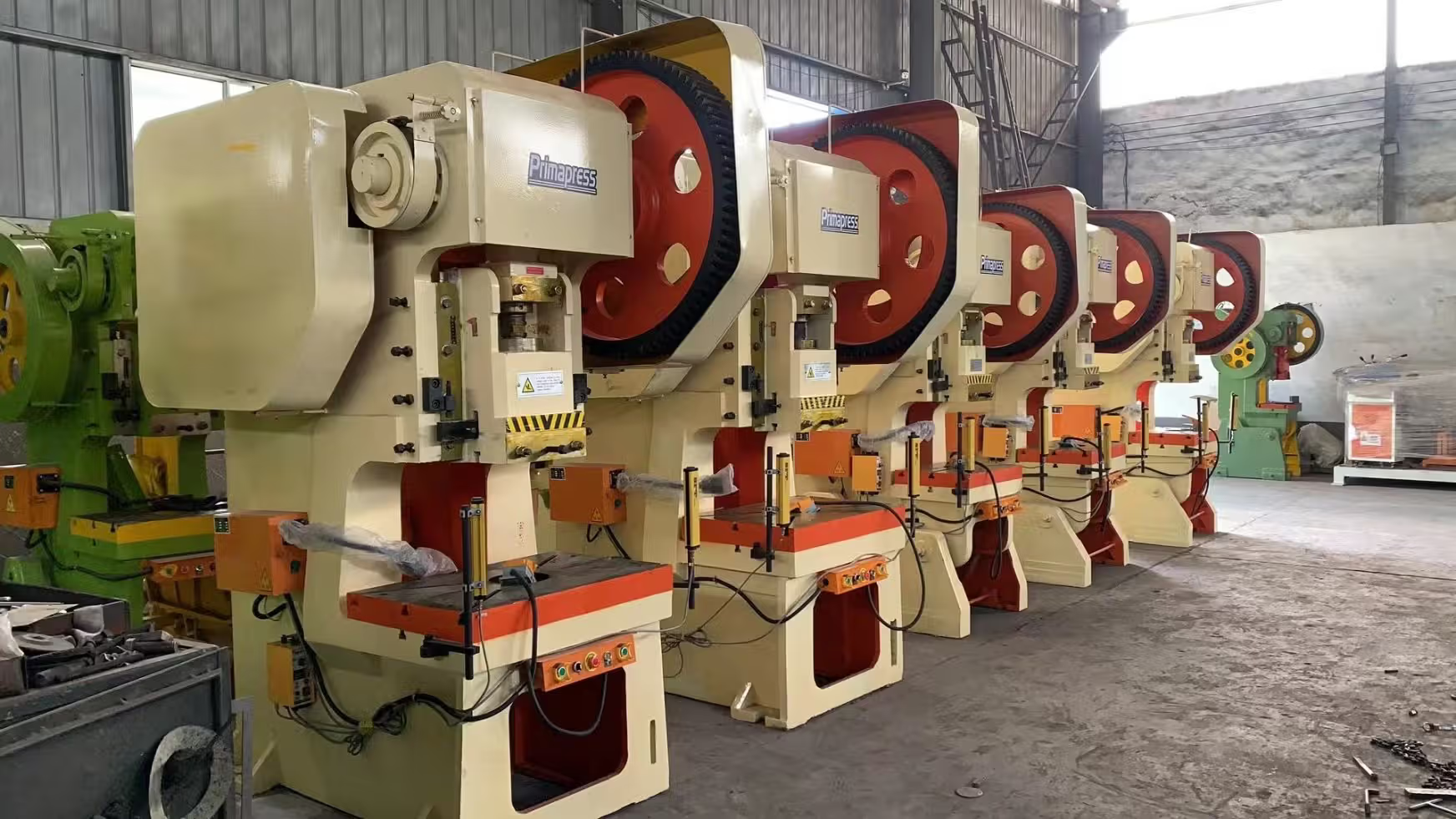
Punch press machines are widely used in manufacturing industries where sheet metal needs to be cut, shaped, or perforated into precise forms. From automotive components and electrical enclosures to appliance panels and construction hardware, many everyday products depend on sheet metal fabrication processes that rely on punch press technology.
What Is a Punch Press Machine?
A punch press machine is a metalworking device designed to cut holes or shapes into sheet metal using a punch and die set. The punch tool presses into the material with force, shearing it against the die to produce the desired shape.
The process is commonly used in industries such as:
-
Automotive manufacturing
-
Electronics and electrical equipment production
-
HVAC system fabrication
-
Aerospace component manufacturing
-
Appliance and equipment manufacturing
Punch presses can operate manually or through automated control systems, and they vary widely in size, speed, and force capacity.
Benefits of Punch Press Machines
Punch press machines remain a core tool in metal fabrication because they offer several practical advantages.
High Production Speed
Punch presses can perform repetitive cutting and shaping operations quickly. Mechanical punch presses, in particular, can operate at very high stroke rates, making them suitable for mass production.
Consistent Precision
With proper tooling and calibration, punch press machines produce consistent shapes and holes across large production runs.
Efficient Material Processing
Punch presses allow manufacturers to produce complex hole patterns and cutouts without removing large amounts of material, helping reduce waste compared to some machining processes.
Versatility
Different punch and die combinations allow a single machine to perform multiple tasks, such as:
-
Hole punching
-
Slotting
-
Notching
-
Embossing
-
Forming
Automation Compatibility
Modern punch press machines, especially CNC models, can integrate with automated production lines, robotic loading systems, and digital design software.
Limitations of Punch Press Machines
Despite their advantages, punch press machines also have certain limitations that manufacturers must consider.
Tooling Requirements
Each shape or hole size typically requires a specific punch and die set. Tooling costs can increase when producing many different shapes.
Material Thickness Limits
Punch presses are best suited for sheet metal within certain thickness ranges. Very thick materials may require other processes such as laser cutting or machining.
Setup Time
Changing tooling and configuring the machine can take time, especially for small production batches.
Noise and Vibration
Mechanical punch presses can generate significant noise and vibration during operation, which may require noise control measures in manufacturing facilities.
Types of Punch Press Machines
Several punch press designs exist, each suited to different manufacturing needs.
C-Frame Punch Press
C-frame punch presses are named for their frame shape, which resembles the letter "C." This design leaves the front of the machine open, allowing easier access to the work area.
Common characteristics include:
-
Compact design
-
Easy access for tooling changes
-
Suitable for smaller parts and moderate workloads
C-frame punch presses are often used in small to medium fabrication operations or for precision component production.
Mechanical Punch Press
Mechanical punch presses operate using a flywheel connected to a crankshaft. The rotating motion converts into vertical force that drives the punch.
Key features include:
-
High speed operation
-
Efficient for repetitive tasks
-
Consistent stroke length
Mechanical punch presses are widely used in high-volume production environments such as automotive manufacturing.
However, they typically offer less flexibility in force control compared to hydraulic systems.
Hydraulic Punch Press
Hydraulic punch presses generate force using hydraulic cylinders powered by pressurized fluid.
This system allows operators to adjust force, speed, and stroke length more precisely.
Advantages include:
-
Adjustable tonnage
-
Better control for thicker materials
-
Smooth and quieter operation
Hydraulic punch presses are often used in applications requiring higher force or more controlled pressing action.
CNC Punch Press
CNC (Computer Numerical Control) punch presses represent a modern evolution of punch press technology. These machines use computer programming to control punching operations automatically.
Key features include:
-
Automated tool positioning
-
High precision hole placement
-
Integration with CAD/CAM software
CNC punch presses can perform complex sheet metal fabrication tasks with minimal manual intervention.
They are commonly used in industries producing custom sheet metal components or complex patterns.
Electric Servo Punch Press
Electric punch presses use servo motors instead of hydraulic or mechanical drive systems. These motors provide precise control of movement and energy efficiency.
Benefits include:
-
Reduced energy consumption
-
High positioning accuracy
-
Lower maintenance requirements
Electric systems are becoming more common in modern automated fabrication environments.
Comparison of Major Punch Press Types
| Feature | Mechanical Punch Press | Hydraulic Punch Press | CNC Punch Press | Electric Punch Press |
|---|---|---|---|---|
| Power Source | Flywheel and crank | Hydraulic fluid pressure | Computer controlled | Servo motor |
| Speed | Very high | Moderate | High with automation | High precision |
| Force Control | Limited | Highly adjustable | Programmable | Highly controlled |
| Best Use | Mass production | Thick or high-force applications | Complex designs | Energy-efficient operations |
| Automation | Limited | Moderate | High | High |
Key Features to Consider in Punch Press Machines
When evaluating punch press machines, manufacturers often compare several technical factors.
Tonnage Capacity
Tonnage refers to the maximum force the machine can apply during punching. The required tonnage depends on the material type, thickness, and size of the punched hole.
Stroke Length
Stroke length determines how far the punch travels during operation. Adjustable stroke lengths provide greater flexibility for different tasks.
Tooling System
The design of the punch and die tooling system affects how quickly tools can be replaced and how versatile the machine is.
Control System
Modern machines often feature digital control systems that allow operators to store programs, adjust parameters, and monitor performance.
Work Table Size
The size of the machine's work area determines the maximum sheet size that can be processed.
Automation Options
Some machines support:
-
Automatic sheet feeders
-
Robotic loading systems
-
Integrated production lines
Automation can improve efficiency and reduce manual labor.
Latest Trends and Innovations
Punch press technology continues to evolve as manufacturing becomes more automated and data-driven.
Smart Manufacturing Integration
Modern punch presses increasingly integrate with Industry 4.0 systems. These systems allow machines to communicate production data, track performance, and schedule maintenance automatically.
Hybrid Fabrication Systems
Some fabrication facilities now combine punch press operations with laser cutting in a single machine. These hybrid systems allow manufacturers to handle a wider range of designs.
Energy-Efficient Servo Systems
Electric servo punch presses reduce energy consumption by using motors that operate only when needed rather than continuously.
Advanced Tooling Technology
Modern tooling systems allow faster tool changes and longer tool life through improved materials and coatings.
Leading Companies in Punch Press Technology
Several global manufacturers produce punch press machines used across the metal fabrication industry.
Amada
Amada is a Japanese manufacturer known for its CNC punch press systems and sheet metal fabrication equipment.
Website: https://www.amada.com
Trumpf
Trumpf is a German company that produces advanced fabrication machinery, including punching, laser cutting, and hybrid systems.
Website: https://www.trumpf.com
Murata Machinery
Murata Machinery offers automated punch press systems widely used in precision sheet metal production.
Website: https://www.muratec.net
Prima Power
Prima Power specializes in flexible manufacturing systems that combine punching, forming, and automation technologies.
Website: https://www.primapower.com
These companies are known for developing high-performance industrial punching solutions and integrated fabrication systems.
How to Choose the Right Punch Press Machine
Selecting the right punch press requires careful consideration of production needs.
Define Production Volume
High-volume manufacturing typically benefits from mechanical or CNC punch presses designed for fast operation.
Evaluate Material Requirements
Material thickness and hardness influence the amount of force required. Hydraulic presses may be better suited for thicker materials.
Consider Design Complexity
Products with complex hole patterns or multiple shapes often require CNC punch press systems.
Assess Space and Budget
Larger machines may require significant floor space and higher investment costs.
Plan for Future Expansion
Manufacturers may choose machines with automation compatibility to support future production growth.
Punch Press Selection Checklist
Before purchasing a punch press machine, it can be helpful to review the following checklist.
Production Needs
-
Required production volume
-
Types of metal materials
-
Typical sheet thickness
Technical Requirements
-
Required tonnage capacity
-
Machine speed and stroke rate
-
Tool compatibility
Operational Considerations
-
Operator skill requirements
-
Maintenance needs
-
Energy consumption
Long-Term Planning
-
Automation compatibility
-
Software integration
-
Future production scalability
Tips for Effective Use and Maintenance
Proper operation and maintenance help extend the life of punch press machines and maintain consistent product quality.
Regular Tool Inspection
Punch and die tools should be checked regularly for wear or damage to maintain accuracy.
Lubrication
Mechanical components such as bearings and moving parts require proper lubrication to prevent premature wear.
Machine Alignment
Misalignment between punch and die can cause poor cut quality and damage tools.
Scheduled Maintenance
Routine maintenance checks can help detect issues before they lead to machine downtime.
Operator Training
Operators should be trained in machine safety procedures and proper setup techniques.
Frequently Asked Questions
What materials can punch press machines process?
Punch presses are commonly used for sheet metals such as steel, stainless steel, aluminum, brass, and copper.
How much force does a punch press require?
The required force depends on the material type, thickness, and hole size. Industrial punch presses can range from a few tons to several hundred tons of force.
Are CNC punch presses suitable for small workshops?
Yes, CNC punch presses can be used in small workshops, although their cost may be higher than manual or mechanical machines.
How does punching compare with laser cutting?
Punching is generally faster and more cost-effective for repetitive hole patterns, while laser cutting offers greater flexibility for complex shapes.
How often should punch tools be replaced?
Tool life depends on material hardness, production volume, and tool quality. Regular inspection helps determine when replacement is necessary.
Conclusion
Punch press machines remain an essential tool in modern sheet metal fabrication. From simple C-frame machines to advanced CNC systems, these machines provide efficient methods for producing holes, shapes, and formed features in metal sheets.
Different types of punch presses serve different production needs. Mechanical presses excel in high-volume operations, hydraulic systems offer greater force control, and CNC machines enable automated and complex fabrication processes.
When selecting a punch press machine, manufacturers must consider factors such as production volume, material requirements, machine capacity, and long-term automation goals.
Understanding the capabilities and limitations of each system helps organizations make informed decisions and develop efficient fabrication processes. As manufacturing technology continues to evolve, punch press machines are likely to remain a key component of industrial metalworking for many years.