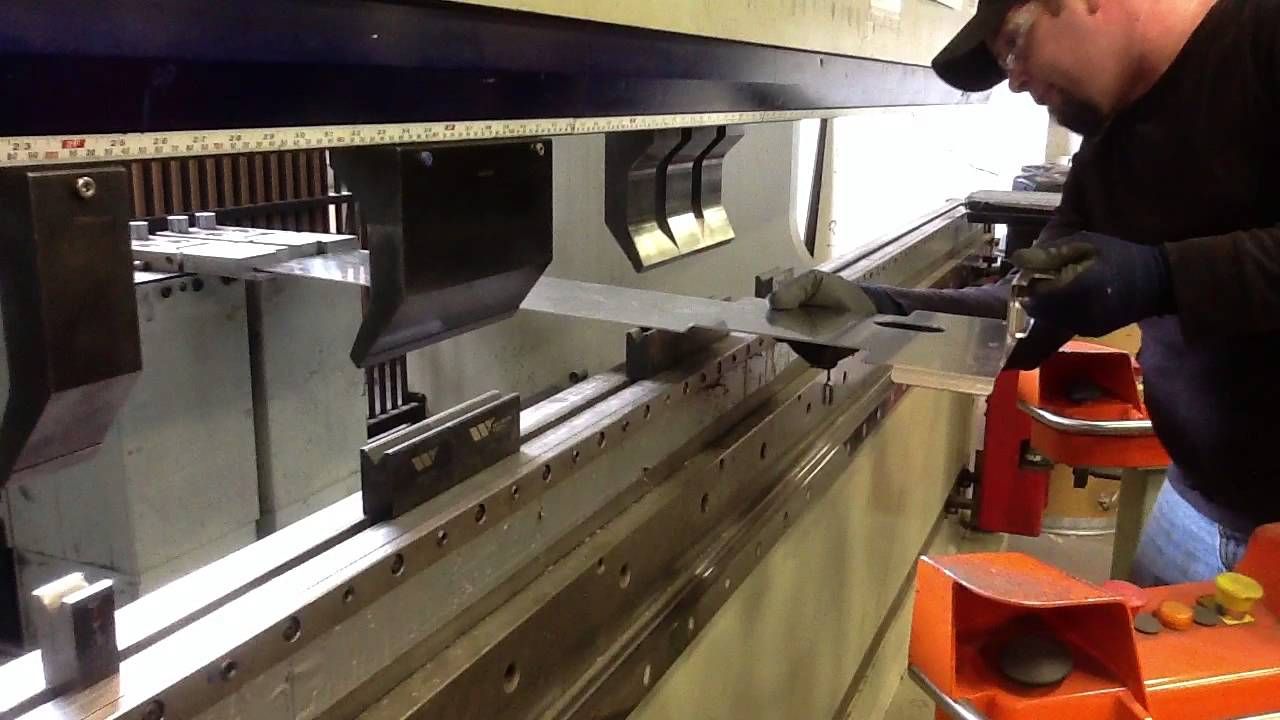
A press brake is a fundamental machine in metal fabrication. It bends sheet and plate material into precise angles and shapes. From small workshops to large manufacturing facilities, press brakes play a critical role in creating parts for everything from automotive frames to architectural panels.
What Is a Press Brake?
A press brake is a machine that bends or forms metal by pressing a workpiece between a punch and a die. When the ram (the moving upper beam) descends, it forces the material into the die on the lower beam, creating bends at specified angles. The precision and repeatability of this process are central to producing parts that meet technical requirements.
Press brakes can handle different materials and thicknesses depending on their design and power source. They are used in industries such as automotive, aerospace, construction, appliance manufacturing, and custom fabrication.
Why Press Brakes Matter
Press brakes are important because they:
-
Enable precision bending at exact angles and tolerances.
-
Increase productivity compared to manual metal forming.
-
Support customization, allowing a wide range of part geometries.
-
Fit multiple scales of production, from a single prototype to high-volume runs.
-
Integrate with modern workflows, including digital design and automation.
With advancements in control systems and drive technologies, press brakes continue to evolve in capability and accessibility.
Core Benefits and Limitations
Every type of press brake system has benefits and limitations. Understanding these helps set realistic expectations and select the best tool for the job.
Benefits
Precision and Consistency
Modern press brakes deliver repeatable, accurate bends with programmable controls.
Versatility
They handle a range of materials, thicknesses, and part geometries.
Scalability
Systems range from simple manual machines to fully automated cells for high-volume production.
Integration with Design Tools
Computer numerical control (CNC) systems allow direct integration with CAD files.
Limitations
Upfront Cost
Automated and electric systems can require significant investment.
Skill Requirement
Operators must understand tooling, setups, and safety practices.
Maintenance Needs
Mechanical systems require regular upkeep to remain accurate and reliable.
Space Requirements
Larger machines and automation cells need sufficient floor space.
Types of Press Brake Systems
Press brakes are typically categorized by their drive mechanism and level of automation. The most common categories are:
-
Manual Press Brakes
-
Hydraulic Press Brakes
-
Electric Press Brakes
-
Automated or Robotic Press Brake Systems
Each has distinct operational characteristics and best-fit use cases.
1. Manual Press Brakes
Manual press brakes are the simplest type and are usually found in small workshops, schools, or hobbyist settings.
How They Work
An operator manually positions the workpiece, operates a mechanical lever or screw, and controls the bend angle by eye or basic gauges.
Suitable For
Small quantities, simple bends, occasional use, and learning environments.
Pros
-
Low cost
-
Easy to understand setup
-
Requires minimal infrastructure
Cons
-
Limited precision and repeatability
-
Slow for larger jobs
-
Greater reliance on operator skill
2. Hydraulic Press Brakes
Hydraulic press brakes use hydraulic cylinders to drive the ram. These are among the most common industrial systems.
How They Work
A hydraulic pump generates pressure, which moves pistons that drive the ram downward. The CNC system may control positions and speeds.
Suitable For
Medium to heavy-duty bending, general fabrication, and production environments where force requirements vary.
Pros
-
High bending forces
-
Smooth motion and strong finishing
-
Good for thicker material
Cons
-
Hydraulic systems require maintenance (fluids, seals)
-
Energy is consumed even at idle
-
Maintenance can be intensive
3. Electric Press Brakes
Electric press brakes use servo motors and mechanical linkages instead of hydraulics. They are gaining popularity in precision and energy-sensitive applications.
How They Work
Servo motors drive ballscrews or other mechanical systems that move the ram with high precision.
Suitable For
High-precision work, repeatable production, and environments that prioritize efficiency and cleanliness.
Pros
-
Energy-efficient (no hydraulic fluid loss)
-
High positioning accuracy
-
Low operating noise
Cons
-
May have lower maximum bending force than equivalent hydraulics
-
Higher upfront cost
-
Requires quality electrical infrastructure
4. Automated or Robotic Press Brake Systems
Automated systems combine CNC press brakes with material handling, sensors, vision systems, or robotic arms.
How They Work
Parts are fed automatically, aligned, and bent in sequence without manual intervention. Robotics can pick, load, and unload parts.
Suitable For
High-volume production, complex part runs, lights-out manufacturing.
Pros
-
Increased throughput
-
Reduced labor input
-
Consistent quality
Cons
-
High capital investment
-
Requires integration expertise
-
Space and safety planning essential
Press Brake Comparison: Manual, Hydraulic, Electric, Automated
| Feature | Manual | Hydraulic | Electric | Automated |
|---|---|---|---|---|
| Precision | Low | Moderate to High | High | Very High |
| Repeatability | Low | Good | Excellent | Excellent |
| Bending Force | Low | High | Moderate to High | High |
| Speed | Slow | Moderate | Fast | Very Fast |
| Maintenance | Simple | Moderate | Moderate | Complex |
| Upfront Cost | Low | Moderate | Higher | Highest |
| Best Use | Small/simple work | General fabrication | Precision production | High-volume production |
Latest Trends and Innovations
Press brake technology is evolving in response to global manufacturing demands. Some notable trends include:
Digital and CNC Integration
Controls are becoming more intuitive, with graphical interfaces, offline programming, and simulation tools. Operators can import CAD files and simulate bends before running parts.
Electric Systems Advancing
Electric press brakes are replacing hydraulic systems in many precision applications due to energy efficiency and cleaner operation.
Sensor-Assisted Bending
Bend sensors, angle detection, and closed-loop feedback systems help improve accuracy, especially for complex profiles.
Collaborative Robots (Cobots)
Smaller robotic arms designed to work beside operators are being paired with press brakes to assist with part handling without full automation investment.
Remote Diagnostics
Manufacturers are offering remote monitoring and diagnostics to support uptime and proactive maintenance.
Key Features to Consider
When evaluating press brakes, consider the following features:
1. Bending Capacity
Measured in tonnage, bending capacity determines the thickness and material strength a machine can handle.
2. Working Length
The distance across the die opening defines the maximum width of the part.
3. Control System
Modern CNC controls offer improved productivity. Look for user-friendly interfaces and offline programming.
4. Backgauge Precision
The backgauge positions material for bends. High precision here improves part accuracy.
5. Tooling Compatibility
Open tooling standards allow you to source various punches and dies for different applications.
6. Safety Features
Light curtains, safety mats, interlocks, and two-hand controls help protect operators.
7. Service and Support
Availability of parts, technical support, and training affects long-term reliability.
Top Companies and Solutions
The following companies are known for press brake systems. Links are provided for reference to public information.
1. Amada – Global manufacturer of metalworking machinery including press brakes.
https://www.amada.com
2. Trumpf – Offers a wide range of press brakes and laser-based bending solutions.
https://www.trumpf.com
3. Bystronic – Known for integrated bending solutions with digital controls.
https://www.bystronic.com
4. LVD Group – Manufactures press brakes for diverse industrial applications.
https://www.lvdgroup.com
5. Accurpress – Offers hydraulic and electric press brakes with support resources.
https://www.accurpress.com
6. SafanDarley – Specializes in electric press brakes with precise motion control.
https://www.safandarley.com
7. Cincinnati Incorporated – Provides press brakes and bending automation options.
https://www.e-cinco.com
These companies vary in regional availability, machine range, and service networks. Evaluating local support and user reviews can be helpful when choosing.
How to Choose the Right Press Brake
Choosing the right press brake depends on application, volume, budget, and long-term plans.
Step 1: Define Application Needs
-
What materials will you bend?
-
What thicknesses and widths are typical?
-
How many parts per week or shift?
Step 2: Determine Required Precision
High-tolerance work may justify electric or CNC systems.
Step 3: Evaluate Production Volume
Low volumes may not require automation. For high throughput, consider robots or automated cells.
Step 4: Consider Total Cost of Ownership
Include maintenance, energy consumption, tooling costs, and training when comparing options.
Step 5: Review Support and Service
Local service, spare parts availability, and training programs improve long-term value.
Tips for Best Use and Maintenance
Proper use and maintenance extend machine life and improve safety. Consider the following tips:
Safety and Training
-
Ensure operators receive formal training on press brake operation.
-
Use PPE such as safety glasses and gloves.
-
Implement safety barriers and interlocks.
Tooling Care
-
Inspect punches and dies for wear.
-
Clean and lubricate tooling before use.
-
Store tooling in designated racks to prevent damage.
Routine Maintenance
-
Check hydraulic fluid levels if applicable.
-
Inspect electrical connections periodically.
-
Keep guideways and slides clean and lightly lubricated.
-
Calibrate backgauges and controls regularly.
Monitoring Accuracy
-
Track bend angle deviations.
-
Use test coupons to verify settings before production runs.
Documentation
-
Keep a log of maintenance activities, part programs, and tooling setups.
-
Use this documentation to reduce setup times and improve repeatability.
Press Brake Checklist
Use this checklist when evaluating machines or preparing for operation:
Before Purchase or Evaluation
-
Required tonnage and working length identified
-
Material types and thicknesses confirmed
-
Desired level of automation defined
-
Local service and parts support mapped
-
Budget and long-term cost considered
Before Each Job
-
Proper tooling selected and inspected
-
Backgauge and angle settings checked
-
Safety devices tested
-
Test bend performed
Ongoing
-
Maintenance schedule followed
-
Operator training updated
-
Software and control updates applied
FAQs
What is the difference between hydraulic and electric press brakes?
Hydraulic systems use fluid power for bending force, offering strong and smooth operation for heavy work. Electric systems use servo-driven mechanical motion, which can provide high precision and energy efficiency.
Are CNC controls necessary?
CNC controls improve repeatability and reduce setup time for complex parts. For simple, occasional bends, manual or semi-automatic controls may suffice.
Can press brakes bend all metals?
Most press brakes can bend a range of metals, including steel, aluminum, stainless steel, and some non-ferrous alloys. Material thickness and strength affect capacity.
Is automation suitable for small shops?
Full automation may not be cost-effective for small shops. However, collaborative robots or simple material handling aids can still improve productivity.
How long do press brakes last?
With proper maintenance, a press brake can operate reliably for many years. Critical factors include usage intensity, maintenance practices, and operating environment.
Conclusion
Press brake machines are essential tools in modern fabrication. Whether manual, hydraulic, electric, or automated, each type serves a purpose. Understanding capabilities, limitations, and operational needs helps users make informed decisions that support quality and efficiency.
From entry-level manual machines to advanced robotic cells, press brakes continue to adapt to industry demands. Choosing the right system is a balance of production goals, budget, and long-term strategy. With proper training, safety practices, and maintenance, press brakes can contribute to accurate, reliable, and productive metal forming for years to come.