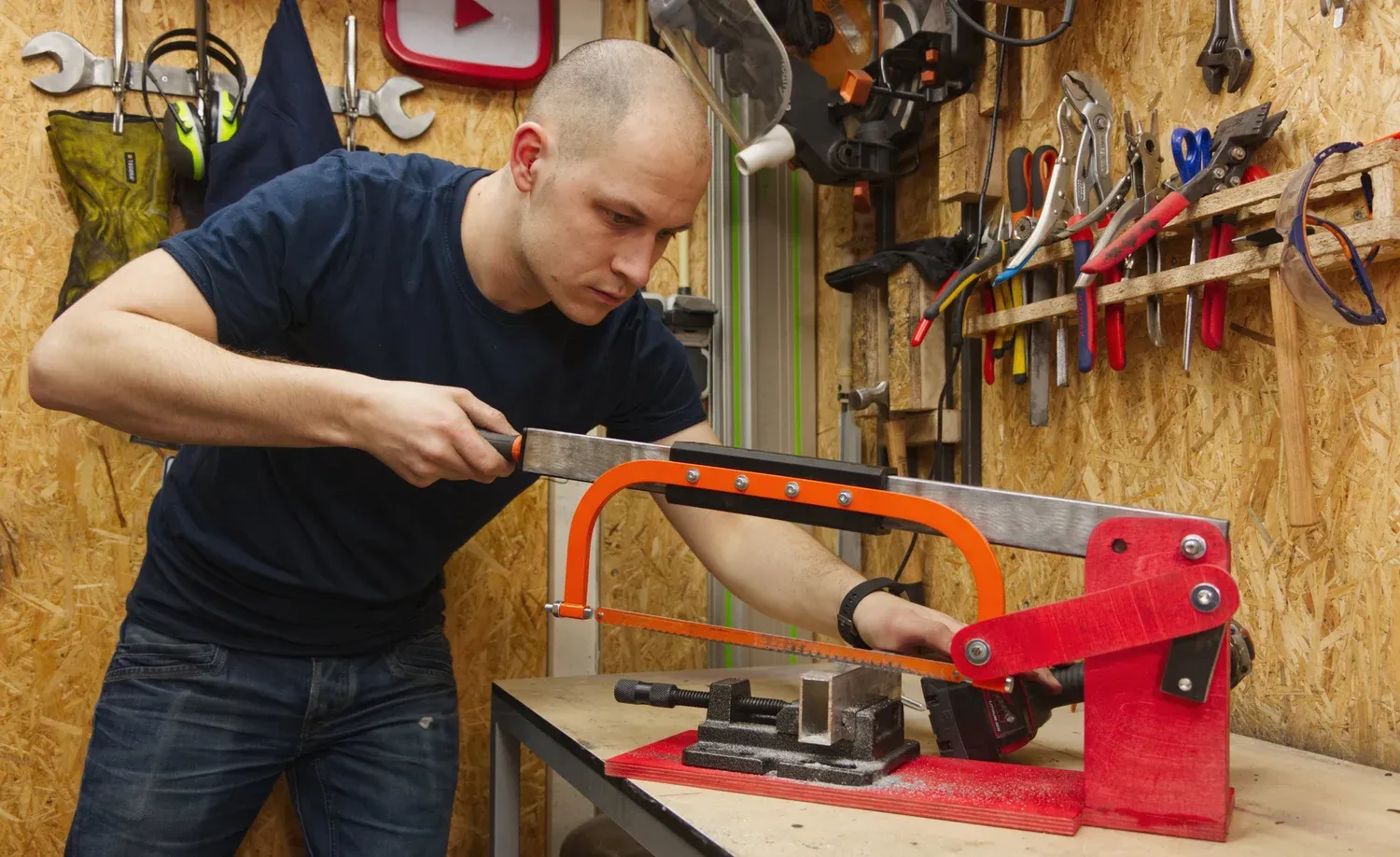
Metal cutting remains a foundational process in manufacturing, fabrication, construction, and maintenance workshops. While modern technologies such as CNC machining centers and laser cutting systems often receive attention, power hacksaw machines continue to serve an important role in many industrial and semi-industrial settings.
What Is a Power Hacksaw Machine?
A power hacksaw is a motor-driven machine that uses a toothed blade moving back and forth in a linear motion to cut metal. The machine applies controlled pressure and feed during the cutting stroke, allowing efficient removal of material.
Unlike band saws, which use continuous loop blades, power hacksaws operate with a reciprocating mechanism. This simple design makes them durable and relatively easy to maintain.
Common applications include:
-
Cutting solid metal bars
-
Cutting hollow pipes and tubes
-
Preparing stock for machining
-
Structural steel fabrication
-
Workshop and repair operations
How Power Hacksaws Work
The basic working principle involves:
-
A motor driving a crank and slider mechanism
-
The mechanism converting rotary motion into reciprocating motion
-
A blade mounted in a rigid frame
-
Controlled downward feed during the cutting stroke
-
Lift or reduced pressure during the return stroke
Hydraulic or pneumatic systems may assist in feed control, depending on the machine type.
Types of Power Hacksaw Machines
Power hacksaws are categorized based on their drive mechanism and level of automation.
1. Hydraulic Hacksaw Machines
Hydraulic hacksaws use hydraulic cylinders to control blade feed pressure. The hydraulic system ensures smooth, consistent cutting force.
Key characteristics:
-
Controlled feed rate
-
Reduced vibration
-
Better cutting accuracy
-
Suitable for heavy-duty applications
Best suited for:
-
Thick metal bars
-
Industrial fabrication
-
Continuous workshop use
2. Air Powered Hacksaws (Pneumatic Hacksaws)
Air powered hacksaws operate using compressed air instead of hydraulic fluid. Pneumatic systems drive the cutting motion or assist with feed control.
Key characteristics:
-
Operates using compressed air
-
Lightweight industrial setups
-
Useful in environments where hydraulic systems are not preferred
Common applications:
-
Industrial plants
-
Areas requiring spark-safe environments
-
Maintenance workshops
3. Automatic Power Hacksaws
Automatic hacksaws reduce manual involvement by integrating automated feeding and cut completion systems.
Features often include:
-
Automatic material clamping
-
Automatic feed adjustment
-
Auto shut-off after cutting
-
Some programmable settings
Best suited for:
-
Batch production
-
Repetitive cutting tasks
-
Medium-scale manufacturing
Comparison Table: Hydraulic vs Air Powered vs Automatic
| Feature | Hydraulic Hacksaw | Air Powered Hacksaw | Automatic Hacksaw |
|---|---|---|---|
| Feed Control | Precise hydraulic control | Pneumatic control | Automated feed systems |
| Operator Involvement | Moderate | Moderate | Low |
| Cutting Accuracy | High | Moderate to high | High |
| Maintenance | Hydraulic system upkeep | Air compressor maintenance | Electrical + mechanical maintenance |
| Best For | Heavy-duty cutting | Industrial maintenance | Repetitive production tasks |
| Initial Cost | Medium to high | Medium | Medium to high |
Benefits of Power Hacksaw Machines
1. Durable and Simple Design
Power hacksaws are mechanically straightforward, which often translates to long service life.
2. Suitable for Thick Materials
They perform well when cutting solid steel bars and structural components.
3. Lower Initial Cost Compared to CNC Systems
For basic cutting tasks, power hacksaws are generally more affordable than advanced cutting systems.
4. Controlled Cutting Pressure
Hydraulic and automatic systems allow consistent feed, reducing blade wear.
Limitations of Power Hacksaw Machines
1. Slower Than Band Saws
Reciprocating motion is typically slower than continuous band cutting.
2. Higher Vibration (in basic models)
Mechanical-only systems may produce noticeable vibration.
3. Not Ideal for Complex Shapes
Power hacksaws are primarily used for straight cuts.
4. Blade Wear
Improper feed settings can accelerate blade damage.
Latest Trends and Innovations
Although traditional in design, modern power hacksaws have seen incremental improvements.
1. Improved Hydraulic Control Systems
Modern hydraulic systems provide smoother feed adjustment and reduced noise.
2. Semi-Automation
Machines now include automatic return stroke control and feed regulation.
3. Energy Efficient Motors
Newer electric motors are designed for better efficiency and lower operating costs.
4. Enhanced Safety Features
Common additions include:
-
Emergency stop switches
-
Blade guards
-
Overload protection
-
Coolant systems
While power hacksaws are not as digitally advanced as CNC equipment, these upgrades improve reliability and usability.
Key Features to Consider Before Buying
When evaluating a power hacksaw machine, consider the following checklist:
Machine Capacity
-
Maximum cutting width
-
Maximum cutting height
-
Ability to handle round and square sections
Motor Power
-
Suitable horsepower for intended material thickness
Feed Mechanism
-
Manual feed
-
Hydraulic feed
-
Pneumatic feed
-
Automatic feed
Blade Specifications
-
Blade length
-
Tooth pitch compatibility
-
Material (HSS or bi-metal blades)
Construction Quality
-
Rigid frame
-
Vibration resistance
-
Stable base
Safety Features
-
Emergency stop
-
Blade guards
-
Coolant system
Top Companies Manufacturing Power Hacksaws
Several manufacturers offer industrial power hacksaws. Availability may vary by region.
-
Amada – Known for metal cutting machinery and band saws
-
Behringer – Produces industrial cutting machines
-
HMT Machine Tools – Indian manufacturer of industrial machinery
-
Everising Machine Co. – Offers metal cutting equipment
-
Kasto Maschinenbau – Known for sawing technology
When reviewing companies, compare:
-
Machine capacity
-
Service network
-
Spare part availability
-
Warranty policies
-
Technical documentation
Always review official manufacturer specifications and request technical datasheets before making a decision.
How to Choose the Right Power Hacksaw Machine
Selecting the right machine depends on your operational needs.
Step 1: Define Material Type
-
Mild steel
-
Stainless steel
-
Alloy steel
-
Aluminum
Different materials require different blade types and feed control.
Step 2: Determine Production Volume
-
Occasional workshop use
-
Daily fabrication
-
Continuous industrial production
Automatic systems may be suitable for repetitive high-volume work.
Step 3: Assess Budget
Consider not only purchase cost but also:
-
Blade replacement costs
-
Power consumption
-
Maintenance requirements
Step 4: Check Available Space
Some heavy-duty hydraulic systems require larger installation areas.
Step 5: Evaluate Maintenance Capabilities
If in-house technicians are limited, simpler mechanical systems may be easier to maintain.
Practical Tips for Best Use and Maintenance
Proper usage significantly improves machine lifespan and cutting performance.
Blade Selection
-
Match blade pitch to material thickness
-
Avoid using worn blades
-
Use appropriate blade material
Proper Feed Adjustment
-
Excessive pressure increases blade wear
-
Too little pressure slows cutting
Regular Lubrication
-
Lubricate moving parts as per manufacturer guidelines
Coolant Use
-
Use coolant when cutting hard metals
-
Prevent overheating and improve blade life
Routine Inspection Checklist
-
Check hydraulic fluid levels
-
Inspect air lines (for pneumatic systems)
-
Tighten fasteners
-
Inspect blade alignment
-
Clean metal chips regularly
Preventive maintenance reduces downtime and improves consistency.
Frequently Asked Questions (FAQs)
1. What is the difference between a power hacksaw and a band saw?
A power hacksaw uses a reciprocating straight blade, while a band saw uses a continuous loop blade. Band saws are typically faster, but power hacksaws are durable and effective for heavy solid cuts.
2. Is a hydraulic hacksaw better than a mechanical one?
Hydraulic systems provide smoother feed control and reduced vibration. However, they require hydraulic maintenance.
3. Can a power hacksaw cut stainless steel?
Yes, provided the correct blade type and feed settings are used.
4. Are automatic hacksaws suitable for small workshops?
They can be useful if repetitive cutting is required. For occasional use, a semi-automatic or hydraulic machine may be sufficient.
5. How often should blades be replaced?
Blade life depends on material, feed rate, and maintenance. Regular inspection helps determine replacement timing.
6. Do air powered hacksaws require a large compressor?
They require a compressor capable of delivering sufficient pressure and flow rate, as specified by the manufacturer.
Power Hacksaw vs Other Metal Cutting Machines
| Machine Type | Ideal For | Speed | Cost Range | Complexity |
|---|---|---|---|---|
| Power Hacksaw | Straight cuts in bars | Moderate | Medium | Low to medium |
| Band Saw | Faster cutting | High | Medium to high | Medium |
| CNC Plasma | Sheet metal | Very high | High | High |
| Laser Cutting | Precision sheet work | Very high | High | High |
Power hacksaws remain relevant where simplicity, durability, and straight cutting tasks dominate.
Conclusion: A Practical and Reliable Metal Cutting Solution
Power hacksaw machines continue to serve an important role in metal fabrication environments. While they may not offer the speed or automation of advanced CNC systems, they provide dependable, cost-effective cutting for bars, rods, and structural sections.
Hydraulic systems offer smoother operation, air powered models are suitable for specific industrial environments, and automatic machines support repetitive production tasks. Selecting the right type depends on workload, material type, budget, and maintenance capacity.
For workshops and industrial operations that prioritize reliability and straightforward metal cutting, power hacksaws remain a practical and enduring solution.