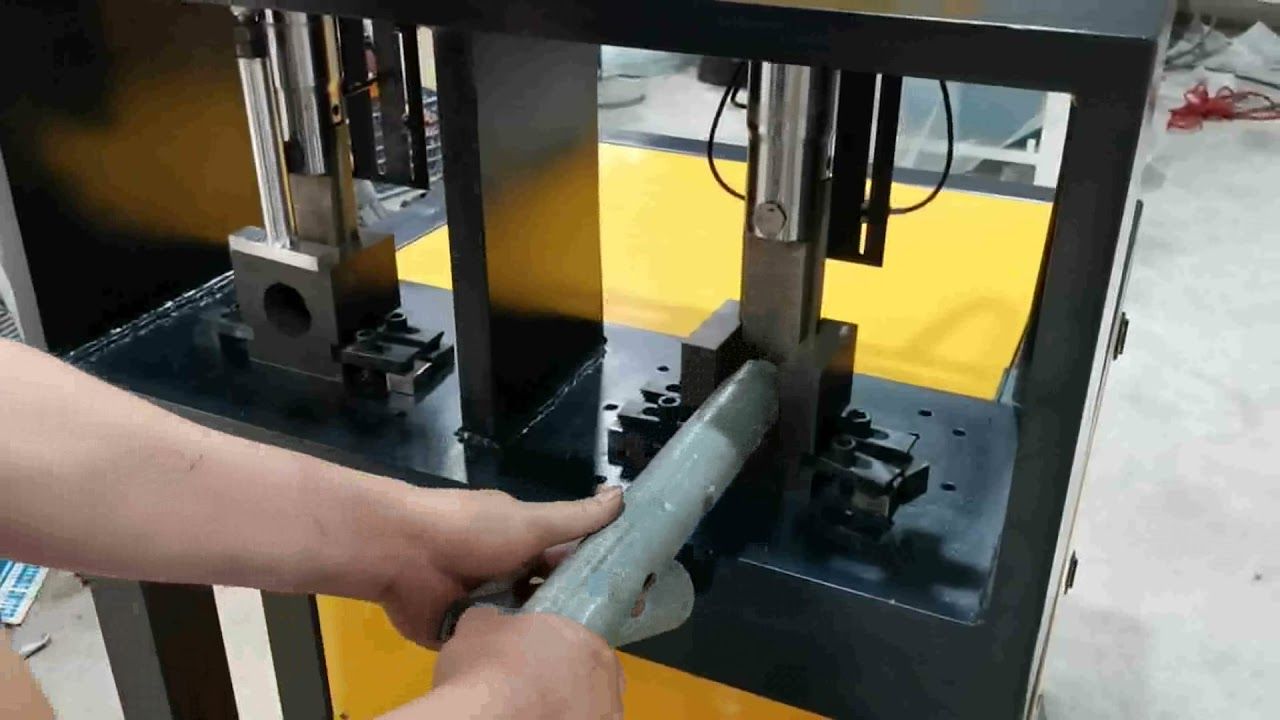
In many industries that involve metal fabrication, structural construction, and pipeline assembly, precise pipe joining is essential. Pipes and tubes often need to be joined at angles or fitted together accurately to create strong and reliable structures. This is where pipe notching machines become important.
What Is a Pipe Notching Machine?
A pipe notching machine is a specialized metalworking tool used to create notches in round pipes or tubes. These notches allow one pipe to fit snugly against another pipe, usually for welding or structural assembly.
The process typically involves:
-
Securing the pipe in a fixture or clamp.
-
Using a cutting tool such as a hole saw, milling cutter, or grinding belt.
-
Cutting a curved profile that matches the diameter of the connecting pipe.
This precise shaping ensures that the pipes align correctly, reducing gaps and improving weld quality.
Pipe notching machines are often used with materials such as:
-
Mild steel
-
Stainless steel
-
Aluminum
-
Copper
-
Structural tubing
They can handle different pipe diameters depending on machine capacity.
Benefits of Pipe Notching Machines
Pipe notching machines provide several advantages compared to manual cutting methods.
1. Improved Precision
These machines produce accurate and consistent notches, ensuring pipes fit together properly. This improves welding quality and structural strength.
2. Increased Productivity
Automated or semi-automated notching machines can process multiple pipes quickly, reducing fabrication time in workshops and manufacturing environments.
3. Reduced Material Waste
Accurate cutting minimizes errors and reduces the need for rework or material replacement.
4. Better Joint Strength
Properly notched pipes create tight joints, allowing stronger welds and more reliable structures.
5. Consistency in Mass Production
For industries producing large numbers of identical pipe assemblies, notching machines ensure uniform results across all components.
Limitations and Considerations
While pipe notching machines offer many benefits, they also have certain limitations.
1. Initial Equipment Cost
Some industrial machines, especially CNC or automated models, can require significant upfront investment.
2. Maintenance Requirements
Cutting tools such as hole saws or milling cutters wear out over time and must be replaced or sharpened.
3. Limited Pipe Size Range
Each machine has a specific capacity range for pipe diameters and wall thickness.
4. Operator Training
Advanced machines may require skilled operators to ensure correct setup and programming.
Types of Pipe Notching Machines
Pipe notching machines come in several forms depending on the cutting method, level of automation, and intended application.
1. Hole Saw Pipe Notchers
Hole saw notchers are among the most commonly used machines, particularly in small fabrication workshops.
They use a circular hole saw cutter to remove material and create the notch profile. The pipe is clamped in position while the rotating hole saw cuts the desired shape.
Key characteristics include:
-
Simple mechanical design
-
Suitable for small to medium production volumes
-
Relatively affordable compared to advanced machines
Hole saw notchers are widely used in automotive roll cage fabrication, handrail construction, and metal furniture manufacturing.
2. Belt Grinder Pipe Notchers
These machines use abrasive belts to grind the pipe end into a curved shape.
The pipe is pressed against a rotating grinding belt that gradually removes material until the correct profile is achieved.
Common advantages include:
-
Smooth finish on the pipe edge
-
Good for thin-walled tubes
-
Lower cutting forces compared to saw-based methods
Belt grinder notchers are commonly used in decorative metalwork and stainless steel fabrication.
3. End Mill Pipe Notchers
End mill notchers use a milling cutter to remove material from the pipe end.
The milling tool rotates at high speed and cuts the notch with high precision.
These machines are typically used for:
-
Thicker metal pipes
-
Industrial fabrication tasks
-
Higher accuracy applications
They can also handle harder materials more effectively than hole saw machines.
4. CNC Pipe Notching Machines
CNC pipe notchers are computer-controlled machines designed for automated and high-precision operations.
These machines can perform complex notching tasks and are often integrated into automated fabrication lines.
Key capabilities include:
-
Programmable cutting angles
-
High production efficiency
-
Consistent results across large batches
CNC systems are commonly used in automotive manufacturing, aerospace fabrication, and industrial construction.
Comparison of Pipe Notching Machine Types
| Machine Type | Cutting Method | Typical Use | Precision Level |
|---|---|---|---|
| Hole Saw Notcher | Circular saw cutter | Small workshops | Moderate |
| Belt Grinder Notcher | Abrasive belt grinding | Decorative metalwork | Moderate |
| End Mill Notcher | Milling cutter | Industrial fabrication | High |
| CNC Pipe Notcher | Computer-controlled cutting | Large-scale production | Very high |
Industrial Applications of Pipe Notching Machines
Pipe notching machines support a wide range of industries.
Construction and Structural Engineering
Structural frames, railings, and scaffolding often require pipes to be joined at specific angles.
Automotive Manufacturing
Pipe notchers are commonly used when building roll cages, exhaust systems, and custom chassis components.
Furniture Manufacturing
Metal furniture such as tables, chairs, and frames frequently uses tubular structures that require precise joints.
Pipeline and Process Industries
In pipeline fabrication, precise pipe joints help ensure leak-proof welding and structural reliability.
Marine and Offshore Fabrication
Pipe notching machines are used to fabricate pipe structures and support frames for marine environments.
Latest Trends and Innovations
The pipe fabrication industry continues to evolve with new technologies and improved machine designs.
Integration with CNC Automation
Many modern pipe notchers are now integrated with CNC systems, allowing automated programming and reduced manual setup.
Laser and Plasma Cutting Integration
Some advanced fabrication systems combine pipe notching with laser or plasma cutting technologies to handle complex pipe geometries.
Digital Measurement and Alignment
New machines often include digital displays and angle measurement systems for greater accuracy during setup.
Improved Tooling Materials
Cutting tools made from carbide and advanced alloys provide longer tool life and improved cutting performance.
Key Features to Consider When Evaluating Pipe Notching Machines
When selecting a pipe notching machine, several technical features should be considered.
| Feature | Why It Matters |
|---|---|
| Pipe diameter capacity | Determines maximum pipe size the machine can handle |
| Cutting method | Influences precision and cutting speed |
| Motor power | Affects performance when cutting thicker materials |
| Angle adjustment capability | Important for creating angled pipe joints |
| Clamping system | Ensures pipe stability during cutting |
| Automation level | Determines productivity and ease of use |
Major Manufacturers and Industry Solutions
Several companies produce pipe notching machines used in industrial fabrication and workshop environments.
Some well-known manufacturers include:
-
Baileigh Industrial
-
JET Tools
-
Scotchman Industries
-
Ercolina
-
Trick Tools
These companies offer a range of manual, hydraulic, and CNC-based pipe notching solutions designed for different production needs.
Users comparing machines from different manufacturers typically evaluate:
-
Cutting accuracy
-
machine durability
-
tooling compatibility
-
maintenance requirements
How to Choose the Right Pipe Notching Machine
Selecting the right machine depends on production requirements, pipe materials, and workshop capacity.
Step 1: Determine Pipe Size Requirements
Ensure the machine supports the maximum pipe diameter and wall thickness required for your application.
Step 2: Identify Production Volume
Small workshops may benefit from simple hole saw notchers, while high-volume manufacturing may require CNC machines.
Step 3: Evaluate Material Types
Different materials require different cutting capabilities. For example, stainless steel may require stronger tooling.
Step 4: Consider Available Workspace
Some machines require larger floor space, while others are compact bench-mounted tools.
Step 5: Review Budget and Maintenance Costs
Balance the initial investment with long-term operational costs such as tooling replacement and maintenance.
Tips for Best Use and Maintenance
Proper use and maintenance help extend the life of pipe notching machines and improve cutting performance.
Use Proper Cutting Speeds
Adjust cutting speed based on the material type to avoid excessive tool wear.
Keep Tools Sharp
Dull cutting tools can cause inaccurate notches and increase machine strain.
Secure Pipes Properly
Always ensure the pipe is tightly clamped before starting the cutting process.
Perform Routine Cleaning
Metal chips and dust should be removed regularly to maintain machine efficiency.
Inspect Moving Parts
Check bearings, motors, and alignment systems periodically to prevent unexpected breakdowns.
Frequently Asked Questions
What is the difference between pipe notching and pipe coping?
Pipe notching generally refers to cutting a curved shape into a pipe so it can join another pipe. Pipe coping specifically refers to shaping the pipe end to fit precisely against another pipe surface.
Can pipe notching machines cut different pipe materials?
Yes. Most machines can cut materials such as steel, aluminum, and stainless steel. However, cutting performance depends on the machine’s power and tooling.
Are pipe notchers suitable for small workshops?
Many hole saw pipe notchers are compact and affordable, making them suitable for small fabrication shops.
Do pipe notchers require CNC programming?
Only CNC-based machines require programming. Manual machines operate using mechanical adjustments.
How accurate are pipe notching machines?
Accuracy depends on machine type and setup. CNC machines typically provide the highest precision, while manual machines offer moderate accuracy.
Conclusion
Pipe notching machines play an important role in modern metal fabrication and structural assembly. By allowing pipes and tubes to be precisely shaped for joining, these machines improve weld quality, reduce fabrication time, and ensure consistent results.
Different machine types—from simple hole saw notchers to advanced CNC systems—serve a wide range of industrial needs. Understanding the working principles, capabilities, and limitations of each type helps fabricators select the most suitable solution for their applications.
As manufacturing technologies continue to evolve, pipe notching equipment is becoming more precise, automated, and efficient. For workshops and industrial facilities alike, choosing the right pipe notching machine can contribute to improved productivity and higher-quality structural assemblies.