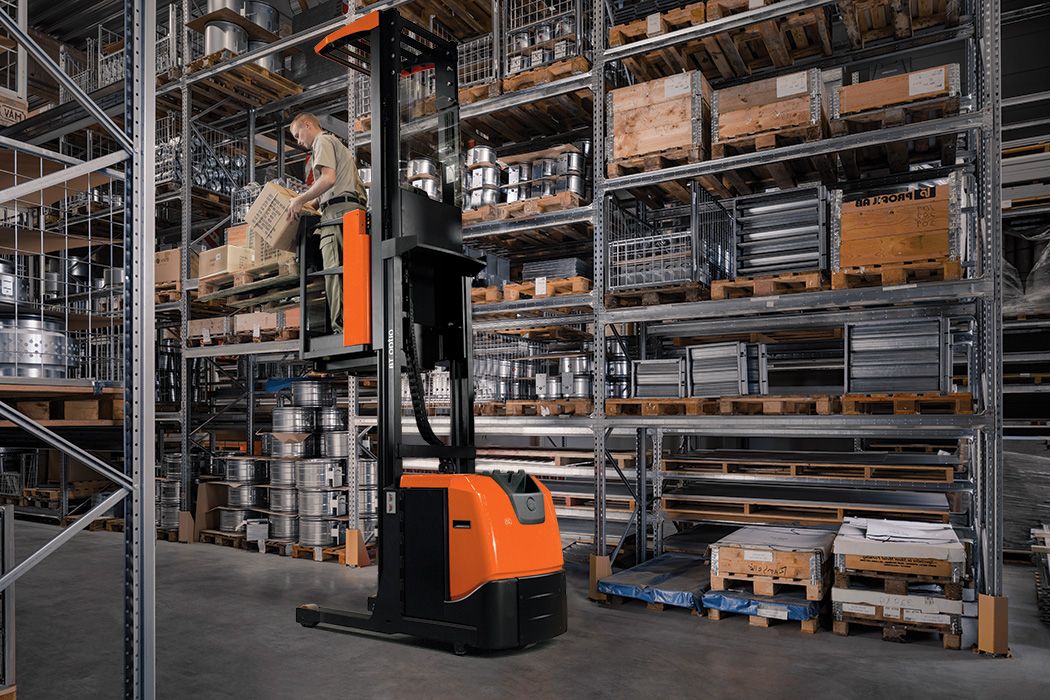
Order picking is a crucial activity in warehouse operations. It refers to the process of retrieving products from storage locations to fulfill customer orders. As the pace of commerce continues to rise across e-commerce, retail, and supply chains, the efficiency of order picking directly affects accuracy, productivity, and cost. For decades, order picking has been largely manual—workers walk aisles, collect items from shelves, and consolidate them for packing. However, as order volumes grow and product diversity increases, warehouses are turning to order picking machines and systems to boost productivity, reduce errors, and improve worker safety.
What Are Order Picking Machines?
Order picking machines are tools or automated systems used in warehouses to speed up the process of selecting and collecting items for customer orders. They range from simple mechanized carts to advanced robotics. These systems often integrate with warehouse management software and are designed to optimize paths, reduce manual effort, and improve accuracy.
Two broad categories exist:
-
Manual-assisted machines, which help workers pick faster with mechanical support.
-
Automated picking systems, which use robotics and software to reduce human involvement.
Benefits of Order Picking Machines
Order picking machines offer several benefits when implemented appropriately. Some benefits include:
1. Improved Efficiency
Mechanical assistance helps workers move through aisles faster and access products more easily. Automated systems can operate continuously and handle larger volumes.
2. Better Order Accuracy
Systems with scanners, guided picking, or robotic mechanisms reduce human error, increasing order accuracy and customer satisfaction.
3. Ergonomic Assistance
Machines reduce physical strain by bringing items to the operator or assisting with lifting and reaching, which can reduce worker fatigue and injury.
4. Consistent Performance
Automated order picking systems maintain consistent speed and quality throughout a shift, which can be difficult to achieve with entirely manual processes.
5. Enhanced Throughput
By allowing faster picking and fewer errors, warehouses can fulfill more orders in shorter timeframes.
Limitations and Challenges
While order picking machines have advantages, there are notable limitations and considerations:
1. Initial Cost
Automated systems require significant upfront investment in equipment and infrastructure, which may not be feasible for all operations.
2. Complexity of Integration
Not all warehouses are designed to incorporate automated equipment. Retrofitting existing facilities may involve layout changes and software integration.
3. Maintenance and Downtime
Machines and robots require regular maintenance. Without proper support, downtime can impact productivity.
4. Workforce Impact
Automation changes the nature of warehouse jobs. Workers may need retraining, and there may be resistance to changes in workflow.
5. Limited Flexibility for Some Products
Highly irregular, fragile, or bulky items may still require manual handling, even in automated environments.
Types of Order Picking Machines
Order picking machines vary in complexity and automation. Choosing the right type depends on warehouse size, product mix, and operational goals.
1. Picking Carts and Tuggers
These are mechanized carts that assist human pickers by carrying more products and reducing the need to return to a central staging area frequently. Tuggers are motorized carts that move multiple carts in a train.
2. Order Picker Trucks
Also known as “stock pickers,” these are motorized machines that lift the operator along with the load to higher storage levels. They are useful for multi-level racks and heavy items.
3. Pick-to-Light and Put-to-Light Systems
These systems use lights at storage locations to guide workers to the correct SKU. Workers follow visual cues and confirm picks, reducing errors and speeding up selection.
4. Automated Guided Vehicles (AGVs) and Autonomous Mobile Robots (AMRs)
AGVs and AMRs navigate the warehouse to transport goods to picking stations or move items between zones. AMRs use sensors and mapping to navigate dynamically.
5. Robotic Picking Systems
These are advanced systems where robotic arms or mobile bots handle item selection and placement. They may include suction, grippers, and vision systems.
6. Warehouse Pick Modules
Pick modules are structured areas optimized for picking operations. They can include shelving, conveyors, and sorting systems designed for efficient picking workflows.
7. Smart Picking Systems
These combine software, sensors, and hardware to guide picking operations. They may include voice picking, wearable scanners, or tablet-based instructions.
Comparison Table: Picking Systems
| System Type | Human Involvement | Best For | Implementation Complexity |
|---|---|---|---|
| Picking Carts & Tuggers | High | Small to medium operations | Low |
| Order Picker Trucks | Medium | Multi-level racks | Medium |
| Pick-to-Light Systems | Medium | High accuracy needs | Medium |
| AGVs / AMRs | Low | High throughput, large warehouses | High |
| Robotic Picking Systems | Low | High volume, standardized SKUs | High |
| Smart Picking Systems | Medium | Flexible operations | Medium |
Latest Trends and Innovations
Warehouse operations are evolving rapidly, and order picking systems are a key part of this transformation.
1. Increased Adoption of Robotics
Robotic picking and mobile robots are becoming more commonplace. They handle repetitive tasks and work alongside humans (collaborative robots).
2. Integration with AI and Machine Learning
Artificial intelligence is improving picking route optimization, demand forecasting, and adaptive decision-making.
3. Voice and Wearable Picking
Voice-activated systems and wearable devices guide pickers hands-free, streamlining workflow and reducing errors.
4. Cloud-Based Warehouse Management
Cloud systems allow real-time data access, remote monitoring of operations, and easier software updates.
5. Hybrid Picking Models
Many warehouses adopt hybrid systems combining manual and automated elements to balance cost and flexibility.
Key Features to Consider
When evaluating order picking systems, several features are important.
Checklist: What to Look For
-
Scalability: Can the system grow with volume?
-
Integration: Compatibility with existing warehouse management systems (WMS)
-
Accuracy: Error reduction features (e.g., guided picking)
-
Flexibility: Ability to handle different product sizes and categories
-
Maintenance Support: Availability of technical support and spare parts
-
User Interface: Ease of use for operators
-
Safety Features: Guarding, sensors, and ergonomic design
Top Companies and Solutions
While this article does not promote any service, public information about warehouse picking solutions provides perspective. Manufacturers and providers vary based on system type.
-
Dematic: Offers warehouse automation including picking systems and conveyors (https://www.dematic.com)
-
Swisslog: Supplies robotic picking and automated material handling (https://www.swisslog.com)
-
Honeywell Intelligrated: Provides order picking equipment and software (https://www.intelligrated.com)
-
Knapp: Known for automated picking and warehouse execution systems (https://www.knapp.com)
-
Fetch Robotics: Focuses on autonomous mobile robots for material handling (https://fetchrobotics.com)
These links lead to publicly available solution descriptions and case examples. Users should evaluate them based on operational goals and compatibility.
How to Choose the Right Order Picking System
Choosing the right order picking machine or system requires assessing specific warehouse needs.
Practical Steps to Decision
-
Define Operational Goals
-
What are current bottlenecks?
-
What accuracy, speed, or throughput improvements are needed?
-
-
Evaluate Product Characteristics
-
Are products bulky, fragile, or diverse in size?
-
What is the SKU count and order mix?
-
-
Assess Existing Infrastructure
-
Can the facility accommodate new machinery?
-
Are software systems compatible?
-
-
Consider Budget and ROI
-
Balance initial cost against expected productivity gains
-
Estimate break-even timeframe
-
-
Plan for Training and Support
-
Ensure staff can effectively operate and maintain systems
-
Confirm availability of technical assistance
-
Tips for Best Use and Maintenance
Proper use and maintenance are essential for system longevity and performance.
Best Practices
-
Schedule Routine Maintenance
Regular inspection of mechanical components and software updates reduces downtime. -
Train Staff Thoroughly
Provide hands-on training for operators and supervisors. -
Monitor Performance Metrics
Track picking accuracy, speed, and error rates to identify improvement areas. -
Maintain Spare Parts Inventory
Keep critical components on hand to minimize repair delays. -
Review Safety Protocols Regularly
Ensure that safety procedures evolve with system changes.
Frequently Asked Questions (FAQs)
What is the difference between an order picker machine and a picking robot?
An order picker machine typically assists a human operator with the picking process. A picking robot performs picking tasks autonomously without direct human involvement.
Are order picking machines suitable for small warehouses?
Yes. Simple mechanized carts or smart picking systems can improve efficiency without requiring full automation.
Do automated picking systems replace workers?
Automation reduces the need for repetitive manual tasks, but workers are still needed for supervision, maintenance, and handling exceptions.
How long does it take to implement an order picking system?
Implementation times vary widely based on system complexity, from weeks for simple mechanized equipment to months for fully automated solutions.
Are order picking machines expensive?
Costs vary. Basic mechanized systems are relatively affordable, while integrated robotic systems require significant investment. Total cost should be evaluated in the context of productivity improvements.
Conclusion: Practical Takeaways
Order picking machines and systems are integral components of modern warehouse operations. They address common challenges such as speed, accuracy, and labor constraints while enabling warehouses to handle increasing order volumes.
Whether adopting simple mechanized carts, guided picking systems, or fully automated robotics, the choice should align with operational needs, budget, and scalability. Understanding the types of systems available, their benefits and limitations, and how to evaluate them can help warehouses make informed decisions.
Rather than seeking the most advanced technology, the goal should be to match the right level of automation to real warehouse requirements. With thoughtful selection, proper training, and regular maintenance, order picking systems can contribute to more efficient, reliable, and competitive warehouse operations.