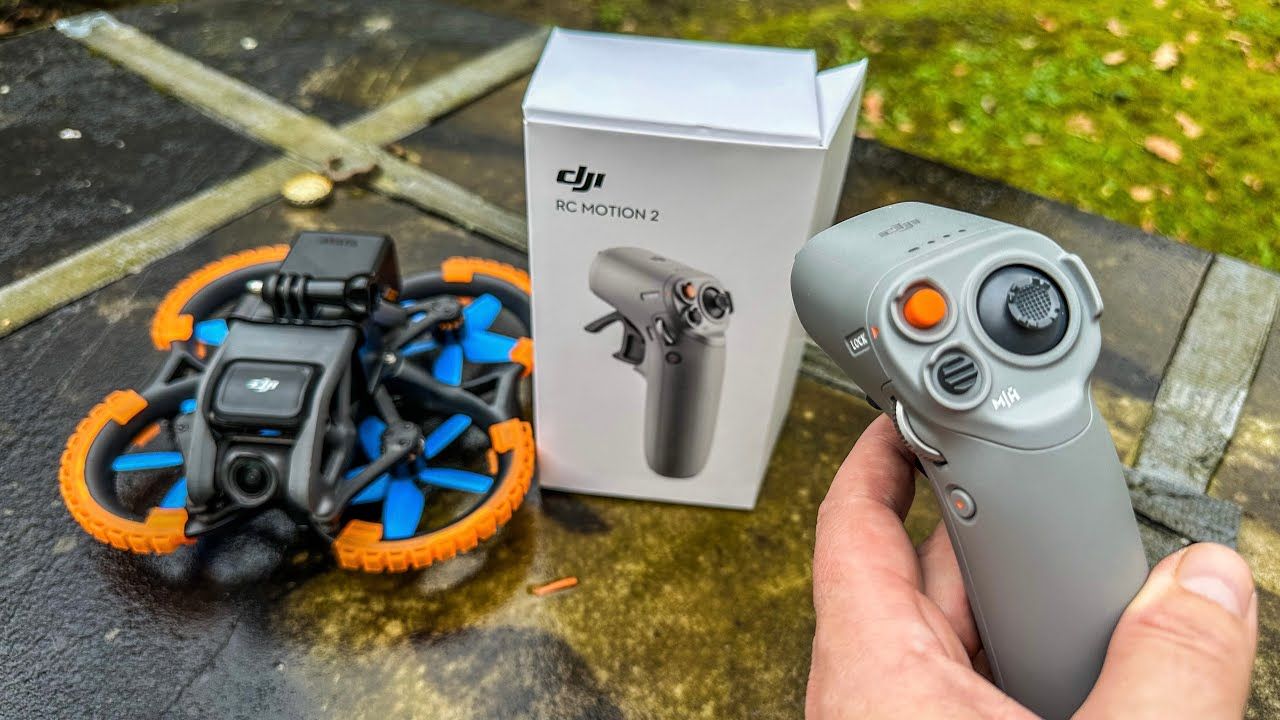
Motion control is a key part of modern automation, enabling machines to move with precision and repeatability. Whether it’s positioning a tool on a production line or controlling the movement of a robotic arm, motion controllers play a central role in coordinating these actions.
What Is a Motion Controller?
A motion controller is responsible for controlling the position, speed, and movement of a machine component. It sends signals to motors and receives feedback from sensors to ensure accurate motion.
Basic working process:
- The controller receives a command (position, speed, or movement path)
- It sends signals to motors or actuators
- Sensors provide feedback on position or motion
- The controller adjusts output to maintain accuracy
This feedback loop helps ensure consistent and precise movement.
Benefits of Motion Controllers
1. High Precision
Motion controllers allow accurate positioning, which is essential for many applications.
2. Automation Support
They enable automated systems to operate with minimal manual input.
3. Repeatability
Once programmed, motion controllers can repeat the same movements consistently.
4. Flexibility
Different configurations can be programmed for various tasks.
5. Integration with Systems
They can be integrated with other control systems and software.
Limitations to Consider
- Initial setup complexity
- Programming requirements
- Cost for advanced systems
- Maintenance and calibration needs
- Dependence on compatible hardware
Understanding these limitations helps in choosing the right system for specific applications.
Types of Motion Controllers
1. Single Axis Motion Controllers
Single axis controllers manage movement along one direction.
Applications:
- Simple positioning tasks
- Basic automation systems
2. Multi Axis Motion Controllers
Multi axis motion controllers coordinate movement across two or more axes.
Key features:
- Synchronized movement
- Complex motion paths
- Higher precision
Applications:
- Robotics
- CNC machines
- Automated assembly systems
3. 3 Axis Motion Controllers
A 3 axis motion controller is a common type used for controlling movement in three dimensions (X, Y, and Z).
Applications:
- Milling and cutting machines
- 3D positioning systems
4. Piezo Stage Systems
Piezo stages use piezoelectric materials to achieve extremely precise movements, often at microscopic scales.
Key features:
- Very high precision
- Fast response times
- Suitable for fine adjustments
Applications:
- Optical systems
- Semiconductor research
- Medical equipment
5. Linear Piezo Stages
Linear piezo stages are designed for straight-line motion with very fine control.
Applications:
- Micro-positioning
- Scientific instruments
6. Linear Positioning Actuators
These devices convert energy into linear motion and are often controlled by motion controllers.
Key features:
- Controlled linear movement
- Compatibility with automation systems
Applications:
- Industrial automation
- Packaging systems
Comparison Table: Motion Controller Types
| Type | Best Use Case | Key Advantage | Limitation |
|---|---|---|---|
| Single Axis Controller | Simple tasks | Easy to use | Limited capability |
| Multi Axis Controller | Complex systems | Coordinated movement | Higher complexity |
| 3 Axis Controller | 3D positioning | Versatile | Moderate cost |
| Piezo Stage | High precision tasks | Micro-level accuracy | Limited range |
| Linear Piezo Stage | Fine linear motion | High precision | Specialized use |
| Linear Actuator Systems | Linear movement | Broad applications | Requires integration |
Latest Trends and Innovations
1. Integration with Smart Systems
Motion controllers are increasingly integrated with digital systems for real-time monitoring and control.
2. Improved Precision Technologies
Advancements in sensors and feedback systems enhance accuracy.
3. Compact and Modular Designs
New designs allow easier installation and scalability.
4. AI and Machine Learning
Some systems are incorporating adaptive algorithms to optimize motion performance.
5. Energy Efficiency
Modern controllers are designed to reduce energy consumption while maintaining performance.
Key Features to Consider
When selecting a motion controller, consider the following:
- Number of axes required
- Precision and accuracy needs
- Type of motion (linear or rotary)
- Compatibility with motors and actuators
- Ease of programming
- Integration with existing systems
- Environmental conditions
Top Companies and Solutions
Several companies are known for motion control technologies:
- Siemens
- Rockwell Automation
- Yaskawa Electric
- Parker Hannifin
- Aerotech
These companies offer a range of solutions for different motion control applications.
How to Choose the Right Motion Controller
Step-by-Step Checklist
- Identify the application requirements
- Determine the number of axes needed
- Evaluate precision and speed requirements
- Assess compatibility with hardware
- Consider budget and scalability
- Review software and control features
Practical Tips for Use and Maintenance
- Regularly calibrate the system for accuracy
- Monitor system performance and feedback signals
- Keep components clean and properly aligned
- Update software and firmware when needed
- Train operators on system usage
- Schedule routine inspections
FAQs
What is the main function of a motion controller?
It controls the movement of machines by managing motors and receiving feedback from sensors.
When should a multi axis motion controller be used?
When applications require coordinated movement across multiple directions.
What makes piezo stages unique?
They provide extremely precise movement at very small scales.
Are motion controllers difficult to use?
They may require technical knowledge, especially during setup and programming.
Can motion controllers improve efficiency?
Yes, they help automate processes and improve accuracy and consistency.
Conclusion
Motion controllers are essential components in modern automation, enabling precise and controlled movement across a wide range of applications. From multi axis systems used in complex machinery to highly specialized piezo stages for precision tasks, each type serves a unique role.
Understanding the differences between these systems and considering factors such as accuracy, application needs, and integration requirements can help in selecting the right solution. With proper setup and maintenance, motion controllers can support efficient and reliable operations over time.
A clear understanding of motion control technologies allows users to make informed decisions and adapt to evolving automation needs.