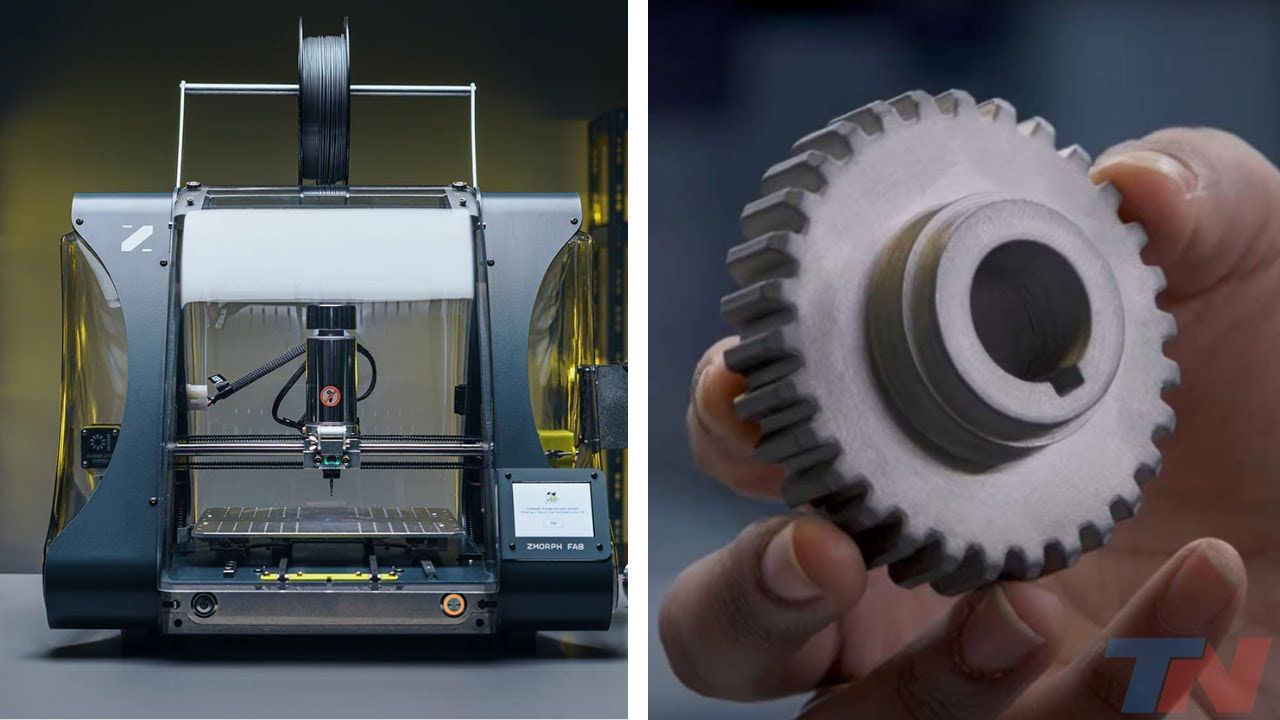
Metal 3d printing, also called metal additive manufacturing, is changing how complex parts are designed and produced across industries such as aerospace, automotive, healthcare, tooling, and energy. Instead of machining parts from solid blocks or casting them in molds, manufacturers can now build components layer by layer using metal powders, binders, or wire feedstock.
How metal 3d printing works at a basic level
All metal additive manufacturing methods share the same fundamental principle:
a digital 3d model is sliced into layers, and each layer is formed sequentially until the part is complete.
What differs between technologies is:
-
How metal is deposited or bonded
-
Whether heat is applied during printing or afterward
-
Powder vs binder vs wire feedstock
-
Final density and mechanical strength
The three most discussed industrial processes today include:
-
Binder jetting
-
Direct metal laser melting (dmlm / dmls / lpbf)
-
Bound metal deposition or extrusion-based systems
Each offers distinct benefits and trade-offs.
Binder jetting explained
Binder jetting builds parts by selectively depositing a liquid binder onto a bed of metal powder. The binder glues the powder together layer by layer to form a “green part.” After printing, the part must go through:
-
Debinding (removing binder material)
-
Sintering in a furnace to densify the metal
Materials commonly used in binder jetting
Binder jetting supports a growing list of metals, including:
-
Stainless steel (often 316L or 17-4PH)
-
Tool steel
-
Inconel alloys
-
Copper
-
Some experimental aluminum grades
Advantages
-
High build speed and productivity
-
No support structures needed during printing
-
Lower thermal stress compared to laser methods
-
Good for batch manufacturing
Limitations
-
Shrinkage during sintering must be carefully controlled
-
Mechanical properties may be slightly lower than laser-melted parts
-
Surface finish often requires post-processing
Typical applications
-
Automotive brackets and housings
-
Heat exchangers
-
Mass-produced industrial components
-
Low-cost tooling
Binder jetting is often viewed as the closest metal printing process to mass production.
Direct metal laser melting (dmlm / dmls)
Dmlm, also known as laser powder bed fusion, uses a high-power laser to fully melt metal powder inside a sealed chamber filled with inert gas. Each layer is fused directly into dense metal, producing parts with strong mechanical performance.
Materials commonly used in laser melting
-
Aluminum alloys (AlSi10Mg, 6061 research grades)
-
Stainless steels
-
Titanium alloys
-
Nickel superalloys
-
Tool steels (maraging, H13, etc.)
Advantages
-
Very high density (often above 99 percent)
-
Strong mechanical properties
-
Suitable for safety-critical parts
-
Excellent geometric freedom
Limitations
-
Slower than binder jetting
-
Requires support structures
-
Expensive machines and powder handling
-
Residual stress may require heat treatment
Typical applications
-
Aerospace structural components
-
Medical implants
-
Lightweight performance parts
-
Conformal cooling channels in molds
Dmlm is currently considered the benchmark for high-performance metal printing.
Tool steel 3d printing: why it matters
Tool steel is one of the most important categories in industrial manufacturing because it is used to produce molds, dies, and cutting tools. Printing tool steel enables manufacturers to create complex cooling channels, internal structures, and customized geometries that traditional machining cannot achieve.
Common printed tool steels
-
H13 tool steel
-
Maraging steel
-
Stainless tool steels
-
Powder metallurgy tool steels
Benefits of printing tool steel
-
Conformal cooling in injection molds
-
Reduced cycle time in production
-
Improved thermal management
-
Faster tool development
Challenges
-
Hard materials increase print difficulty
-
Heat treatment is usually required
-
Surface finishing may be extensive
Despite these challenges, printed tooling is one of the fastest-growing industrial uses of metal additive manufacturing.
Aluminum nitride and advanced materials
Beyond traditional metals, some advanced additive manufacturing research focuses on ceramic-metal hybrids and high-performance compounds such as aluminum nitride.
Aluminum nitride is valued for:
-
High thermal conductivity
-
Electrical insulation properties
-
Stability at high temperatures
It is used in:
-
Electronics cooling systems
-
Semiconductor equipment
-
Specialized industrial components
While still less common than steel or aluminum printing, advanced materials represent a growing frontier in additive manufacturing.
Benefits of metal 3d printing overall
Across processes, metal additive manufacturing offers several shared advantages.
Design freedom
Engineers can create internal channels, lattice structures, and lightweight geometries impossible with traditional machining.
Reduced waste
Material is used only where needed, lowering scrap rates.
Faster prototyping
Design changes can be implemented without tooling revisions.
Supply chain flexibility
Parts can be produced closer to the point of use, reducing logistics complexity.
Limitations to consider
Despite the advantages, metal printing is not always the best solution.
High equipment cost
Industrial machines can cost hundreds of thousands of dollars or more.
Post-processing requirements
Many parts require:
-
Heat treatment
-
Machining
-
Surface finishing
Material limitations
Not every alloy behaves well in powder form or under laser heat.
Quality control challenges
Porosity, distortion, and residual stress must be carefully managed.
Understanding these limitations helps ensure realistic expectations.
Comparison table: major metal printing processes
| Feature | Binder jetting | Dmlm / laser fusion | Extrusion / bound metal |
|---|---|---|---|
| Heat during printing | No | Yes | No |
| Post-processing | Required sintering | Heat treatment optional | Required sintering |
| Density | Medium-high | Very high | Medium |
| Speed | High | Moderate | Moderate |
| Cost per part | Low at scale | High | Moderate |
| Best for | Batch production | High-performance parts | Prototyping and small runs |
Latest trends and innovations
Metal additive manufacturing continues to evolve rapidly. Several key developments are shaping the industry.
Larger industrial printers
Manufacturers are scaling machines to produce larger structural components.
Multi-material printing
Research is exploring how to combine metals and ceramics in one build.
Improved powder recycling
New systems allow powders to be reused more efficiently.
Simulation-driven design
Software now predicts shrinkage, distortion, and thermal behavior before printing.
Growth of printed tooling
Printed molds with internal cooling channels are becoming more common in injection molding and die casting.
Key features to consider when choosing a process
When evaluating metal printing options, consider the following checklist:
Design requirements
-
Does the part require internal channels?
-
Is weight reduction critical?
-
Are tight tolerances necessary?
Mechanical needs
-
High strength or fatigue resistance?
-
Exposure to heat or corrosion?
Production volume
-
Prototype or mass production?
-
One-off or repeat manufacturing?
Budget and timeline
-
Machine access or service bureau?
-
Post-processing time acceptable?
Top companies and solutions in metal additive manufacturing
Several well-known companies provide metal printing systems or services.
Printer manufacturers
-
EOS
-
GE Additive
-
SLM Solutions
-
HP Metal Jet
-
Desktop Metal
Service providers
-
Protolabs
-
Materialise
-
Xometry
-
Shapeways (industrial services)
These companies offer different technologies, materials, and production scales.
How to choose the right option
A practical approach is to start with the application rather than the technology.
Choose binder jetting if:
-
You need many parts at lower cost
-
Slightly lower density is acceptable
-
Complex shapes must be printed quickly
Choose dmlm if:
-
Strength and density are critical
-
Parts are used in aerospace or medical fields
-
Precision matters more than speed
Choose extrusion-based metal printing if:
-
You want a lower-cost entry into metal printing
-
Parts are for prototyping or non-critical use
-
Outsourced sintering is acceptable
Tips for best use and maintenance
To get the most from metal printing, consider these practical tips:
-
Design parts specifically for additive manufacturing
-
Avoid copying designs made for machining
-
Plan post-processing from the start
-
Maintain strict powder handling procedures
-
Use simulation tools when available
-
Partner with experienced service providers initially
These steps reduce cost, errors, and delays.
FAQs
Is metal 3d printing stronger than traditional manufacturing?
It depends on the process. Laser-melted parts can match or exceed wrought materials, while sintered parts may be slightly weaker.
Is binder jetting suitable for functional parts?
Yes, especially in automotive and industrial applications where extreme strength is not required.
Can tool steel really be printed?
Yes. Printed tool steels are already used for molds, dies, and production tooling.
Is aluminum difficult to print?
Some aluminum alloys are challenging due to reflectivity and thermal behavior, but printing capability is improving.
Is metal printing cost-effective?
It can be for complex parts, low-volume production, or designs that reduce assembly steps.
Conclusion
Metal 3d printing is no longer just a prototyping tool. It is becoming a viable production method across many industries. Technologies such as binder jetting, dmlm, and tool steel printing each serve different needs, from high-performance aerospace components to batch-produced industrial parts.
The key is understanding that there is no single “best” metal printing method. The right choice depends on design complexity, material performance requirements, production volume, and budget.
As materials expand and machines become faster, metal additive manufacturing is likely to play an increasingly central role in modern industrial production.