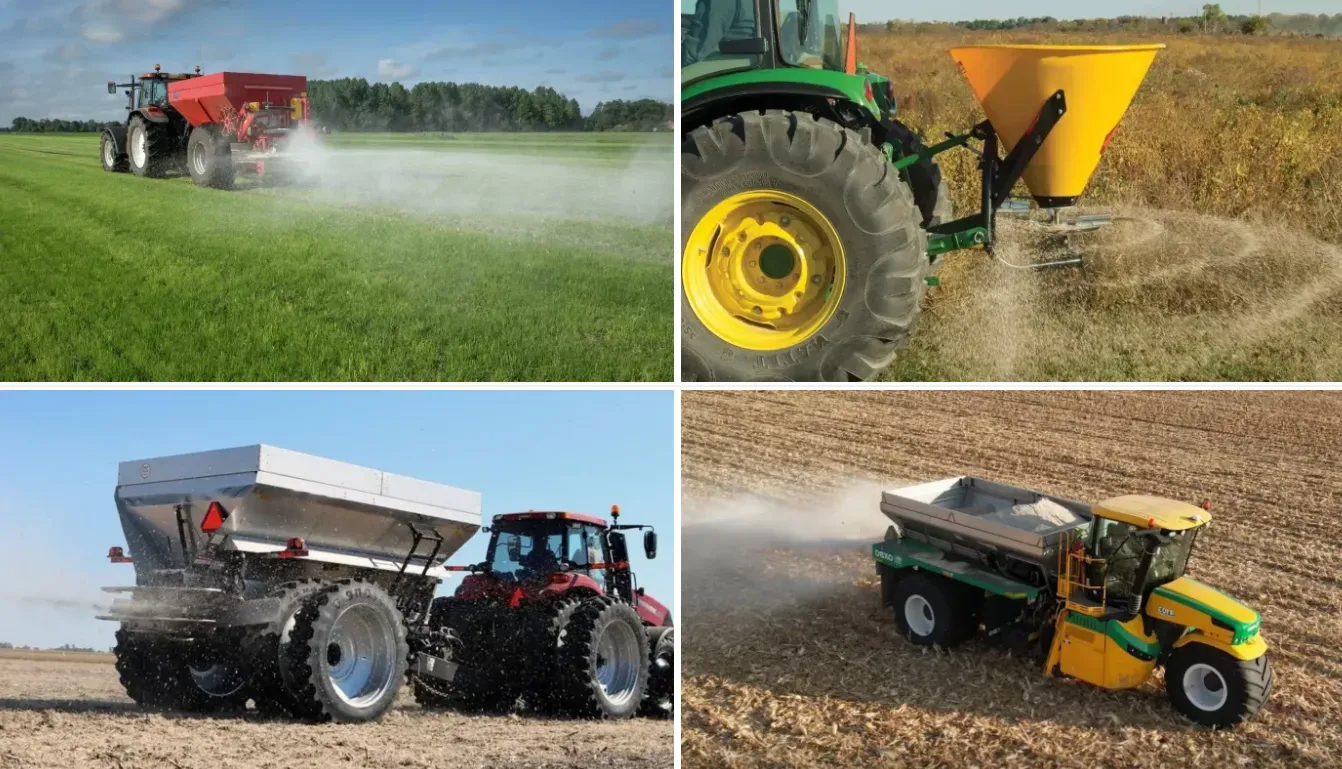
Efficient nutrient management is one of the foundations of productive agriculture. Livestock operations and mixed farms generate large quantities of manure, which contains valuable nutrients such as nitrogen, phosphorus, and potassium. When applied correctly, manure improves soil structure, increases organic matter, and supports long-term crop productivity.
How Manure Spreaders Work
At a basic level, a manure spreader performs three main functions:
-
Loading and carrying manure
-
Moving manure toward a discharge mechanism
-
Breaking up and spreading manure evenly over the soil surface
Most spreaders consist of:
-
A hopper or box to hold manure
-
A floor conveyor or apron chain that moves material backward
-
A beater or spinner mechanism that breaks up and distributes the manure
-
A power system (ground-driven wheels or PTO-driven shaft)
As the machine moves forward, the conveyor pushes manure toward rotating beaters or spinning discs. These components shred clumps and broadcast the material across the field.
The consistency of manure—whether solid, semi-solid, composted, or bedding-heavy—affects how efficiently it spreads. Equipment selection often depends on this factor.
Main Types of Manure Spreaders
Manure spreaders can be categorized based on drive mechanism, discharge system, and size.
1. Ground-Driven Manure Spreaders
These models use the rotation of the wheels to power the apron chain and beaters.
Best suited for:
-
Small farms
-
Low-horsepower tractors
-
Light to moderate manure volumes
Advantages:
-
Simple design
-
Lower mechanical complexity
-
Often more affordable
Limitations:
-
Spreading rate depends on travel speed
-
Less precise control
2. PTO-Driven Manure Spreaders
PTO (Power Take-Off) spreaders are powered by the tractor’s PTO shaft, which drives internal components.
Best suited for:
-
Medium to large farms
-
Higher manure volumes
-
Operators requiring better control
Advantages:
-
Consistent spreading rate
-
Independent of ground speed
-
More powerful performance
Limitations:
-
Requires compatible tractor
-
Slightly more complex maintenance
3. Broadcast Manure Spreaders
These use horizontal or vertical beaters or spinner discs to throw manure in a wide arc.
Best suited for:
-
Field crops
-
Large open areas
Advantages:
-
Wide coverage
-
Faster application
-
Good for solid manure
Limitations:
-
Less precision
-
Potential nutrient loss if not managed properly
4. Rear Discharge vs. Side Discharge Spreaders
| Feature | Rear Discharge | Side Discharge |
|---|---|---|
| Spreading direction | Behind tractor | To one side |
| Field flexibility | Standard layouts | Useful for narrow fields |
| Common use | Broad-acre farming | Specialty field patterns |
5. Compact and ATV/UTV-Compatible Spreaders
Smaller units designed for:
-
Small farms
-
Equestrian facilities
-
Hobby farms
-
Orchards
These models are often pulled by compact tractors or utility vehicles.
Benefits of Using Manure Spreaders
Manure spreaders provide several practical advantages:
1. Improved Nutrient Distribution
Uniform application helps prevent nutrient concentration in one area and deficiency in another.
2. Time Efficiency
Mechanical spreading is significantly faster than manual methods.
3. Soil Health Support
Even distribution enhances soil organic matter and microbial activity.
4. Reduced Labor Requirements
One operator can cover a large area with minimal manual handling.
5. Better Waste Management
Helps manage livestock waste in a structured way.
Limitations and Considerations
Despite their benefits, manure spreaders have some constraints:
-
Uneven spreading if improperly calibrated
-
Nutrient runoff risk in heavy rain
-
Odor management concerns
-
Mechanical wear from corrosive material
-
Initial equipment cost
Understanding these limitations helps farmers use equipment more effectively.
Key Features to Consider Before Buying
When selecting a manure spreader, consider the following checklist:
Capacity
-
Measured in cubic feet or bushels
-
Should match herd size and field area
Drive Mechanism
-
Ground-driven for simplicity
-
PTO-driven for consistent output
Spreading Width
-
Wider spread saves time
-
Narrow spread may improve precision
Construction Material
-
Corrosion-resistant steel
-
Heavy-duty frame
-
Protected chains and bearings
Ease of Maintenance
-
Accessible grease points
-
Replaceable wear parts
-
Simple chain adjustments
Tractor Compatibility
-
Hitch type (3-point or tow-behind)
-
Horsepower requirement
Comparison Table: Common Manure Spreader Categories
| Category | Farm Size | Power Source | Precision | Maintenance Level |
|---|---|---|---|---|
| Ground-driven | Small | Wheel motion | Moderate | Low |
| PTO-driven | Medium-Large | Tractor PTO | High | Moderate |
| Broadcast | Medium-Large | PTO or hydraulic | Wide coverage | Moderate |
| Compact/ATV | Small | Tow-behind | Moderate | Low |
Latest Trends and Innovations
Modern manure spreading technology is evolving in response to environmental regulations and efficiency demands.
1. Precision Application Technology
Some systems now include:
-
Adjustable rate controls
-
Hydraulic feed systems
-
Electronic monitoring
These features allow better nutrient management.
2. Improved Corrosion Resistance
Manufacturers are using:
-
Galvanized steel
-
Poly-coated surfaces
-
Sealed bearing systems
This extends equipment lifespan.
3. Vertical Beater Designs
Vertical beaters provide:
-
Finer material breakup
-
More consistent broadcast pattern
4. Integration with Nutrient Management Plans
Some advanced systems align with farm nutrient planning software to track application rates.
Notable Manufacturers and Solutions
Several established agricultural equipment companies manufacture manure spreaders. Public information and product catalogs are available on their official websites:
-
New Holland Agriculture
-
John Deere
-
H&S Manufacturing
-
Meyer Manufacturing
-
Millcreek Manufacturing
-
Kuhn Group
Each company offers different models ranging from compact units to large commercial spreaders. Comparing specifications such as capacity, discharge system, and power requirements can help narrow down options.
How to Choose the Right Manure Spreader
Selecting the right spreader depends on several practical factors:
1. Farm Size and Livestock Volume
Larger herds generate more manure and require higher capacity units.
2. Type of Manure
-
Solid manure with bedding
-
Semi-solid composted manure
-
Drier material
Different beaters and discharge systems handle material differently.
3. Tractor Power Availability
Check PTO horsepower requirements before selecting equipment.
4. Field Conditions
-
Flat terrain vs. hilly land
-
Field access width
-
Soil type
5. Budget and Long-Term Value
Consider durability and maintenance costs rather than only initial purchase price.
Best Practices for Use and Maintenance
Proper use extends equipment lifespan and ensures consistent performance.
Operation Tips
-
Load evenly to avoid imbalance
-
Avoid overfilling hopper
-
Maintain consistent travel speed
-
Calibrate spreading rate before field application
Maintenance Checklist
-
Clean after each use
-
Inspect apron chains regularly
-
Lubricate moving parts
-
Check tire pressure
-
Store under cover when possible
Corrosive manure material can reduce equipment life if cleaning is neglected.
Frequently Asked Questions
1. What is the difference between ground-driven and PTO-driven spreaders?
Ground-driven spreaders operate based on wheel movement, while PTO-driven models use tractor power for more consistent spreading regardless of travel speed.
2. How do I determine the correct application rate?
Application rate depends on nutrient analysis of manure and crop requirements. Soil testing and nutrient planning help determine appropriate spreading amounts.
3. Can compact tractors handle manure spreaders?
Yes, many manufacturers offer compact models compatible with small tractors, ATVs, or utility vehicles. Always check horsepower requirements.
4. How wide can manure spreaders distribute material?
Spreading width varies by model and design. Broadcast spreaders typically offer wider coverage compared to basic rear discharge models.
5. Is composted manure easier to spread?
Composted manure is generally more uniform and easier to distribute evenly compared to fresh material with bedding.
Conclusion: Practical Takeaways
Manure spreaders are essential tools in agricultural nutrient management. They support efficient manure handling, promote soil health, and reduce labor requirements when properly selected and maintained.
Understanding the differences between ground-driven, PTO-driven, broadcast, and compact models helps match equipment to farm needs. Factors such as manure type, tractor compatibility, field size, and maintenance requirements all influence the best choice.
By focusing on proper calibration, consistent maintenance, and thoughtful equipment selection, farmers can improve nutrient distribution while protecting soil and environmental quality.
In modern agriculture, manure is not simply waste—it is a resource. The right spreading equipment ensures that this resource is used effectively, responsibly, and efficiently across farming operations.