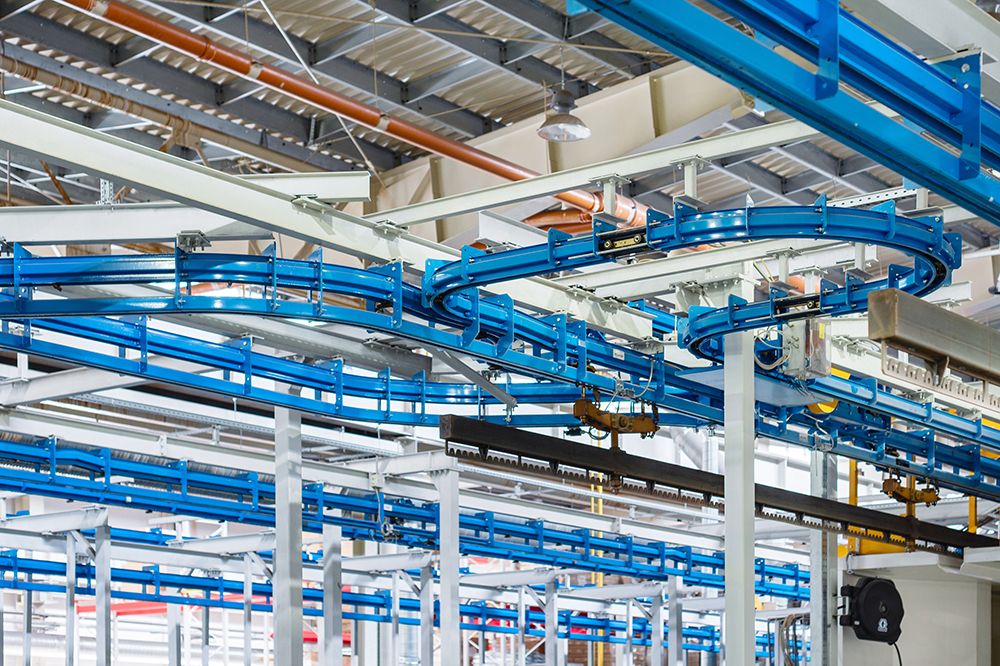
Conveyor systems are a foundational part of modern industrial operations. From manufacturing plants and warehouses to food processing facilities and airports, conveyors help move materials efficiently, safely, and consistently. While they often operate quietly in the background, conveyor systems play a critical role in productivity, workflow organization, and cost control.
What Are Conveyor Systems?
A conveyor system is a mechanical handling solution designed to transport materials from one point to another. Conveyors can move raw materials, finished goods, or packaged products across short or long distances within a facility.
Most conveyor systems consist of:
-
A supporting structure (frame)
-
A moving surface (belt, rollers, chain, or screws)
-
Drive components (motors and pulleys)
-
Control mechanisms
Conveyor systems are commonly used where repetitive movement of goods is required, reducing manual handling and improving workflow efficiency.
Benefits and Limitations of Conveyor Systems
Benefits
Improved Efficiency
Conveyors enable continuous material movement, reducing delays and manual handling time.
Reduced Labor Strain
By minimizing lifting and carrying, conveyors help reduce physical strain and workplace injuries.
Consistent Material Flow
Automated transport supports predictable, repeatable processes, which is important in manufacturing and packaging.
Scalability
Many conveyor systems can be extended, reconfigured, or integrated with other automation equipment.
Enhanced Safety
When properly designed and maintained, conveyors improve safety by reducing human interaction with heavy or hazardous materials.
Limitations
Initial Setup Cost
Installing a conveyor system can require significant upfront investment in equipment and infrastructure.
Limited Flexibility for Certain Layouts
Fixed conveyors may not adapt easily to frequent layout changes without modification.
Maintenance Requirements
Moving parts require regular inspection, lubrication, and part replacement.
Energy Consumption
Large conveyor systems can consume considerable power, especially if not optimized.
Types of Conveyor Systems
Conveyor systems are categorized based on design, movement method, and application.
1. Belt Conveyors
Belt conveyors use a continuous belt loop to transport materials.
Common uses:
-
Warehousing
-
Manufacturing assembly lines
-
Packaging operations
Advantages:
-
Suitable for a wide range of materials
-
Quiet operation
-
Smooth transport
2. Roller Conveyors
Roller conveyors use a series of rollers mounted on a frame.
Types:
-
Gravity roller conveyors
-
Powered roller conveyors
Common uses:
-
Distribution centers
-
Order picking zones
3. Chain Conveyors
Chain conveyors use chains to move heavy or rigid materials.
Common uses:
-
Automotive manufacturing
-
Heavy-duty industrial environments
4. Screw Conveyors
Screw conveyors use a rotating helical screw to move bulk materials.
Common uses:
-
Food processing
-
Chemical and agricultural industries
5. Overhead Conveyors
These conveyors are suspended from the ceiling and free up floor space.
Common uses:
-
Paint lines
-
Garment manufacturing
-
Automotive assembly
6. Slat Conveyors
Slat conveyors use slats or plates attached to chains.
Common uses:
-
Assembly lines
-
Heavy or irregularly shaped items
Conveyor System Comparison Table
| Conveyor Type | Best For | Load Type | Flexibility |
|---|---|---|---|
| Belt Conveyor | General material transport | Light to medium | Medium |
| Roller Conveyor | Cartons and pallets | Medium | High |
| Chain Conveyor | Heavy loads | Heavy | Low |
| Screw Conveyor | Bulk materials | Loose solids | Low |
| Overhead Conveyor | Space-saving transport | Medium | Medium |
| Slat Conveyor | Assembly processes | Heavy or rigid | Medium |
Industrial Uses of Conveyor Systems
Conveyor systems are used across multiple industries:
Manufacturing
-
Assembly lines
-
Component movement
-
Finished product handling
Warehousing and Logistics
-
Order fulfillment
-
Sorting and distribution
-
Loading and unloading operations
Food and Beverage Processing
-
Ingredient handling
-
Packaging and inspection
-
Temperature-controlled transport
Mining and Aggregates
-
Raw material transport
-
Bulk handling over long distances
Airports and Transportation
-
Baggage handling
-
Security screening systems
Latest Trends and Innovations
Automation and Smart Controls
Modern conveyor systems increasingly use sensors, programmable logic controllers (PLCs), and software integration to monitor performance and reduce downtime.
Energy-Efficient Designs
Manufacturers are focusing on low-friction components, optimized motors, and energy-saving modes to reduce power consumption.
Modular Conveyor Systems
Modular designs allow easy expansion or reconfiguration, supporting changing production needs.
Integration with Robotics
Conveyors are now commonly paired with robotic pick-and-place systems for sorting, packing, and palletizing.
Predictive Maintenance
Condition-monitoring sensors help identify wear and tear before failures occur, reducing unplanned downtime.
Key Features to Consider
When evaluating conveyor systems, the following features are commonly reviewed:
Load Capacity
Understand the maximum weight and size of materials the conveyor must handle.
Speed and Throughput
The system should support required production or distribution rates.
Material Compatibility
Surface type, incline capability, and friction must match the transported material.
Layout and Space Constraints
Available floor space, ceiling height, and facility layout affect conveyor selection.
Safety Features
Emergency stops, guards, and sensors help protect operators.
Maintenance Accessibility
Easy access to components reduces downtime and maintenance effort.
Top Conveyor System Companies and Resources
The following organizations are widely known for industrial conveyor systems and educational resources:
| Company / Organization | Focus Area | Public Link |
|---|---|---|
| Siemens | Automation and conveyor controls | https://www.siemens.com |
| Bosch Rexroth | Conveyor and automation solutions | https://www.boschrexroth.com |
| Dematic | Warehouse and logistics conveyors | https://www.dematic.com |
| Interroll | Rollers and conveyor modules | https://www.interroll.com |
| PMMI | Packaging and material handling resources | https://www.pmmi.org |
These sites provide general information, technical resources, and industry insights.
How to Choose the Right Conveyor System
Step-by-Step Selection Checklist
-
Define the type of material being transported
-
Determine load weight and dimensions
-
Identify required speed and throughput
-
Review facility layout and space limitations
-
Consider integration with existing equipment
-
Evaluate safety and compliance requirements
-
Assess maintenance and long-term operating needs
Proper planning reduces redesign costs and operational disruptions.
Tips for Best Use and Maintenance
Best Practices for Operation
-
Train operators on safe and correct usage
-
Avoid exceeding load capacity
-
Keep material flow consistent
Routine Maintenance Tips
-
Inspect belts, rollers, and chains regularly
-
Lubricate moving parts as recommended
-
Check motor alignment and tension
-
Replace worn components promptly
Maintenance Schedule Example
| Task | Frequency |
|---|---|
| Visual inspection | Daily |
| Cleaning | Weekly |
| Lubrication | Monthly |
| Component alignment check | Quarterly |
| Full system review | Annually |
Frequently Asked Questions
What is the most common conveyor system?
Belt conveyors are among the most widely used due to their versatility and simplicity.
Are conveyor systems customizable?
Yes, many systems can be customized in length, speed, incline, and layout.
How long do conveyor systems last?
With proper maintenance, conveyor systems can operate for many years, often over a decade.
Can conveyors be used outdoors?
Some conveyor systems are designed for outdoor use with weather-resistant materials.
Do conveyor systems require skilled operators?
Basic operation usually requires minimal training, while maintenance may require technical expertise.
Are conveyor systems energy efficient?
Efficiency depends on design, load, and usage patterns. Modern systems focus on reducing energy consumption.
Conclusion
Conveyor systems are an essential component of industrial operations, enabling efficient material movement across a wide range of applications. Understanding how different conveyor types work, their benefits and limitations, and how to evaluate key features helps organizations make informed decisions.
As technology advances, conveyor systems continue to evolve with smarter controls, improved energy efficiency, and greater flexibility. By focusing on proper selection, safe operation, and regular maintenance, industries can ensure reliable performance and long-term value from their conveyor systems.
For anyone seeking to understand industrial material handling, conveyor systems remain a practical and enduring solution that supports productivity and operational stability.