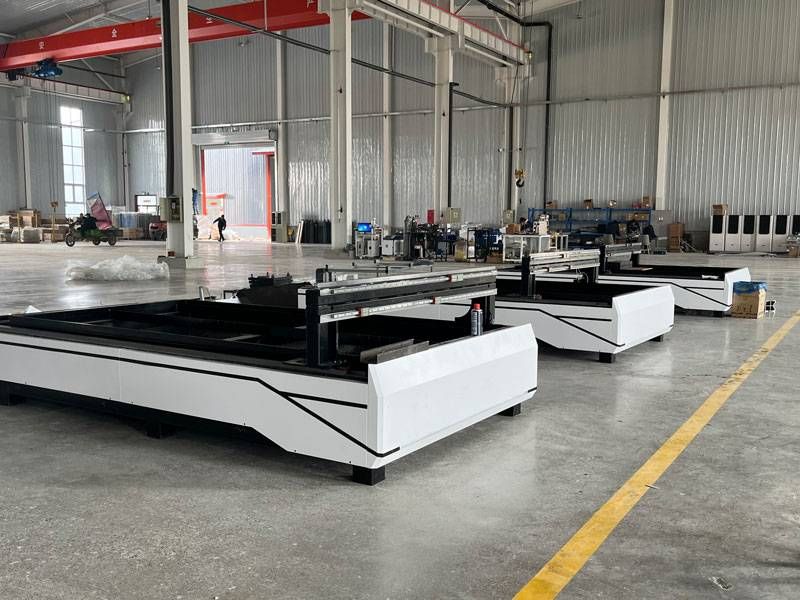
In the world of metal fabrication, precision and efficiency are paramount. For anyone working with sheet metal—from a custom shop producing architectural features to a manufacturer creating appliance panels—the ability to transform a flat sheet into a complex part cleanly and accurately is a fundamental need. This is where laser cutting technology has become a transformative tool, and the heart of this tool is the laser cutting table.
The Core Function: More Than Just a Table
A laser cutting table is an integrated system, not merely a surface to place metal. It is the platform that orchestrates the cutting process. Its primary functions are:
Material Support and Positioning: It holds the sheet metal rigid and flat during the intense, localized heat of the laser cutting process, preventing vibration or movement that would ruin a cut.
Precision Motion Control: A moving gantry, guided by a computer (CNC), carries the laser cutting head across the sheet with extreme accuracy, following a digital design path.
Integrated Cutting Process: The table houses the laser source (often in a separate cabinet) and the beam delivery system, bringing focused light energy to the cutting head.
Waste and Byproduct Management: The table is designed to allow cut pieces to drop through a slat bed, keeping the work surface clear, and often integrates fume extraction to remove harmful smoke and particulates.
Benefits and Limitations of Laser Cutting for Sheet Metal
Understanding what laser cutting excels at, and where it might not be the ideal choice, is crucial for setting realistic expectations.
Key Benefits:
Exceptional Precision and Edge Quality: Laser cutting produces clean, smooth edges with tight tolerances, often requiring little to no secondary finishing like deburring or grinding.
High Speed and Productivity: On thin to medium-gauge sheet metal, lasers cut very quickly, significantly reducing cycle times compared to many other methods.
Complex Geometries Made Simple: Intricate shapes, sharp corners, fine details, and small holes are easy to produce, offering great design freedom.
Minimal Material Distortion: The heat input is highly concentrated, resulting in a small Heat-Affected Zone (HAZ), which reduces warping and thermal stress on the surrounding material.
Automation and Consistency: Once programmed, the process is fully automated, producing identical parts batch after batch with minimal operator intervention.
Important Considerations:
Capital Investment: The upfront cost for a quality industrial laser cutting table is significant, encompassing the machine, installation, and necessary infrastructure (power, air, exhaust).
Material Thickness Limits: While excellent for sheet metal, there are practical limits. The capability to cut thicker plate requires exponentially more laser power, which increases cost.
Reflective Material Challenges: Highly reflective metals like copper and brass can be difficult to process with a fiber laser, as they reflect the beam rather than absorb it, requiring specialized parameters and safeguards.
Operational Costs: Consumables like lenses, nozzles, and assist gases (oxygen, nitrogen), along with electricity and maintenance, contribute to the ongoing cost of ownership.
Types of Laser Cutting Tables for Sheet Metal
The most important distinction is the type of laser technology used. For modern metal cutting, this is almost exclusively the domain of fiber lasers.
Fiber Laser Cutting Tables: This is the current industry standard. The laser beam is generated in an active fiber optic cable and delivered directly to the cutting head via a flexible fiber. They are known for high electrical efficiency, low maintenance, and excellent beam quality.
Ideal For: The vast majority of sheet metal applications involving carbon steel, stainless steel, and aluminum. They offer the best combination of speed, precision, and operating cost.
While older CO2 laser tables exist, they have largely been superseded by fiber lasers for metal cutting due to fiber's superior efficiency, cutting speed on thin metals, and lower maintenance requirements.
Tables are also categorized by their mechanical configuration:
Moving Gantry Tables: This is the most common design for sheet metal. The laser cutting head is mounted on a bridge (gantry) that moves in the X and Y axes over a stationary sheet of metal. This design is robust and well-suited for standard sheet sizes.
Flying Optics Tables: In some high-speed systems for thinner materials, the sheet may move in one axis (like a conveyor) while the cutting head moves in the other, allowing for extremely rapid processing.
Latest Trends and Innovations
The technology continues to evolve towards greater speed, intelligence, and autonomy.
Higher Power Lasers Becoming Standard: While 3-6 kW lasers were once high-end, powers of 10kW, 15kW, and above are now more common. This doesn't just allow for thicker cuts; it dramatically increases cutting speed on thin gauges by allowing the head to move faster while maintaining energy density.
Automated Material Handling: Integrated loaders and unloaders are no longer just for large factories. Systems that automatically feed raw sheets and remove cut parts or skeletons enable "lights-out" manufacturing, where the machine can run unattended for extended periods.
Smart Machine Monitoring and AI: Modern controllers use sensors to monitor cut quality, nozzle height, and component health in real time. Artificial intelligence algorithms can suggest optimal cutting parameters, predict maintenance needs, and even detect and compensate for piercing failures automatically.
Improved User Interfaces and Connectivity: Touch-screen controls and simplified, intuitive software make programming and operation more accessible. Cloud connectivity allows for remote monitoring, job management, and software updates.
Key Features to Consider: Your Evaluation Checklist
When comparing specific laser table models, assess these core components and capabilities:
Laser Source Power (kW): This is the primary determinant of your capable material thickness and cutting speed. More power increases both, but also cost.
Working Area (Table Size): Defined by standard sheet sizes: 4x4 ft, 4x8 ft (most common), 5x10 ft, or larger. Consider your maximum blank size and the need to process remnant pieces.
Machine Frame and Drive System: A welded, stress-relieved steel frame ensures long-term stability and accuracy. Look for professional-grade linear guide rails and servo motors (not stepper motors) for precision, speed, and durability.
Control System and Software: The CNC controller brand (e.g., Siemens, Beckhoff) and the included or recommended CAD/CAM nesting software are critical for usability, features, and support.
Cut Head Technology: Features like automatic nozzle changers, capacitive height sensors, and piercing controls significantly impact ease of use and cut consistency.
Support Bed (Slat Type): The bed that holds the sheet. Different slat designs (knife-edge, cathedral) affect cut quality, dross adherence, and ease of maintenance.
Required Peripherals: Factor in the need for a chiller (cools the laser), air compressor (for assist gas and optics purge), and fume extraction system—these are often separate but essential purchases.
Overview of Notable Manufacturers
The market ranges from global industrial leaders to companies serving smaller shops. Researching brands that offer support in your region is highly recommended.
TRUMPF: A German leader known for high-end, reliable, and highly automated laser systems, often seen as the benchmark for precision and innovation. (trumpf.com)
Bystronic: A Swiss manufacturer offering a strong balance of performance, user-friendly software, and comprehensive service networks. (bystronic.com)
Amada: A Japanese company with a reputation for extremely durable machines and integrated fabricating solutions. (amada.com)
Mazak: Produces a range of laser cutting machines with a focus on advanced beam control and cutting process optimization. (mazakusa.com)
HSG Laser: A Chinese manufacturer that has gained significant global market share by offering capable machines at competitive price points. (hanslaser.com)
Boss Laser / Lotus Laser / OMTech: These represent brands in the "prosumer" or small industrial sector, offering smaller-format, more affordable fiber laser tables aimed at startups, fabrication shops, and makers. They provide an accessible entry point with varying levels of support.
How to Choose the Right Option: A Decision Framework
Analyze Your Real Workload: Look at your past jobs or projected work. What is the primary material type (mild steel, stainless, aluminum)? What is the thickness range that constitutes 80% of your work? What level of precision and edge finish is required by your customers?
Calculate Your Production Volume: How many hours per day or week will the machine run? High-volume production justifies investment in higher power, automation, and premium brands known for uptime. Lower volume or job-shop work may favor a simpler, more affordable machine.
Audit Your Facility's Readiness: Do you have the necessary 3-phase electrical power, a supply of clean compressed air, and a plan for exhaust ventilation? Is the floor space adequate for the machine and material handling?
Understand Total Cost of Ownership (TCO): Look beyond the sticker price. Include installation, essential peripherals, training, software, and estimated monthly costs for consumables (gases, lenses, electricity).
Prioritize Service and Support: For a production-critical asset, reliable local technical support and access to spare parts can be more valuable than a marginal price difference. Research the supplier's reputation for service.
Tips for Best Use and Maintenance
Invest in Comprehensive Operator Training: A well-trained operator maximizes cut quality, optimizes nesting to save material, prevents crashes, and performs basic troubleshooting.
Implement a Strict Preventative Maintenance Schedule: Follow the manufacturer's PM guide. This includes cleaning lenses and windows, checking beam alignment, lubricating rails, inspecting cables, and cleaning the chiller.
Use Quality Consumables and Recommended Settings: While third-party nozzles and lenses may be cheaper, they can lead to poor cut quality, inconsistent results, and even damage to the cutting head. Start with the machine maker's recommended settings for your material.
Keep the Machine and Work Area Clean: Regularly remove metal dust, spatter, and slag from the table, slats, and cutting head area. Contamination is a leading cause of optical component failure.
Develop a Standard Operating Procedure (SOP): Document best practices for machine startup, sheet loading, program selection, and shutdown to ensure consistency and safety.
FAQs Addressing Real User Concerns
Q: What is a "laser burn table"?
A: This is an informal term often used interchangeably with "laser cutting table." It references the fact that the laser burns or vaporizes the metal to create the cut. The term is commonly used in industries like fabrication and artistic metalwork.
Q: Can one machine cut both steel and non-metals like wood or acrylic?
A: Typically, no. The fiber lasers used for metal have a wavelength that is not readily absorbed by most non-metals. Cutting wood, plastic, or acrylic effectively requires a CO2 laser, which is a different technology. Some rare "combi" machines exist but are specialized.
Q: What do "5x10" or "4x8" specifications refer to?
A: These numbers refer to the cutting area or working envelope of the table, usually in feet. A "5x10" table can accommodate and cut on a sheet up to 5 feet wide by 10 feet long. The physical machine footprint will be larger.
Q: How important is the nesting software?
A: It is extremely important. Advanced nesting software can improve material utilization by several percentage points by intelligently arranging parts on a sheet, which translates directly to significant savings on raw material costs over time. It also manages cutting paths for efficiency.
Q: Is it feasible for a small business to start with a lower-cost "prosumer" laser table?
A: Yes, many small custom fabricators and workshops begin with these machines. Success depends on carefully matching the machine's capabilities (power, bed size, durability) to the specific jobs you intend to pursue, and understanding that support and part availability may differ from industrial brands.
Conclusion: Aligning Technology with Need
Selecting a laser cutting table is a significant investment that should be driven by a clear understanding of your specific sheet metal applications. There is no single "best" machine, only the most appropriate one for a given set of requirements—material types, thicknesses, desired quality, production volume, and budget.
By moving beyond generalities and systematically evaluating your needs against the types, features, and considerations outlined here, you can make a confident, informed choice. The right laser table is not just a tool; it becomes a core component of your shop's capability, enabling you to produce high-quality work with efficiency and repeatability, and empowering your business to take on more complex and valuable projects.