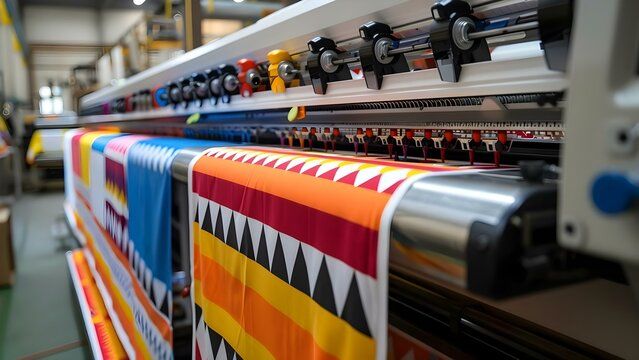
Large format textile printing has become an important part of modern fabric production, supporting industries such as fashion, home décor, advertising, sportswear, and industrial textiles. As demand grows for customized designs, faster production cycles, and sustainable printing methods, manufacturers are increasingly turning to advanced textile printing technologies that can handle large fabric widths and high output volumes.
What Is Large Format Textile Printing?
Large format textile printing refers to printing methods designed to handle wide fabric rolls, often used for:
-
Apparel manufacturing
-
Soft signage and banners
-
Upholstery and interior textiles
-
Curtains and home furnishing fabrics
-
Industrial textiles and technical fabrics
These systems typically support wide print widths, high-speed output, and compatibility with multiple fabric types such as cotton, polyester, silk, and blended materials.
Benefits Of Large Format Textile Printing
1. High Production Efficiency
Large machines allow continuous roll printing, reducing downtime and improving throughput. This is useful for factories handling bulk textile orders.
2. Design Flexibility
Digital textile printing allows quick pattern changes without new screens or plates, which supports customization and short production runs.
3. Consistent Print Quality
Modern machines include color management systems and automated calibration tools that help maintain consistent output across long fabric runs.
4. Reduced Waste
Compared with traditional screen printing, digital methods can reduce excess dye use and setup waste.
5. Versatility Across Industries
The same equipment can often support apparel, signage, décor textiles, and technical fabrics with minor configuration changes.
Limitations And Challenges
Despite its advantages, large format textile printing also has some constraints.
1. High Initial Investment
Industrial textile printers, dryers, and pre-treatment systems can require substantial upfront costs.
2. Technical Skill Requirements
Operators need training in color profiling, machine calibration, and fabric handling.
3. Fabric Preparation Needs
Some printing methods require coating, steaming, or washing steps before or after printing.
4. Ink And Material Compatibility
Not all fabrics work with all ink types, which may limit flexibility in certain production setups.
Types Of Large Format Textile Printing Technologies
Digital Direct-To-Fabric Printing
This method prints directly onto fabric rolls using inkjet technology.
Common ink types include:
-
Reactive inks for cotton
-
Acid inks for silk and nylon
-
Pigment inks for multi-fabric compatibility
-
Sublimation inks for polyester
Digital direct printing is widely used for fashion, home textiles, and short-run production.
Dye Sublimation Printing
This process prints designs onto transfer paper and then heat-presses them onto polyester fabrics. It is often used for:
-
Sportswear
-
Soft signage
-
Event graphics
-
Flags and banners
It produces durable prints with good color saturation.
Rotary Screen Printing
Rotary screen printing remains popular for very large production runs. It uses cylindrical screens to transfer dye onto fabric continuously.
This method is suitable for:
-
High-volume apparel production
-
Repeating patterns
-
Long textile runs
Flatbed Screen Printing
Flatbed systems are slower but useful for thicker materials and specialty textile applications.
Common Machines Used In Large Format Textile Printing
Industrial textile printing lines typically include:
-
Roll-to-roll textile printers
-
Fabric feeding systems
-
Drying units or heat presses
-
Steam fixation units
-
Washing and finishing systems
-
Automated cutting or inspection units
Many manufacturers produce integrated solutions. Examples include machines from companies such as Epson, Kornit Digital, Mimaki, Durst, MS Printing Solutions, and HP, which offer different solutions depending on production scale and ink technology.
Comparison Table: Printing Methods
| Method | Best For | Speed | Setup Cost | Design Flexibility | Fabric Compatibility |
|---|---|---|---|---|---|
| Digital Direct Printing | Apparel, décor | Medium–High | Medium | Very high | Broad |
| Dye Sublimation | Polyester textiles | High | Medium | High | Polyester only |
| Rotary Screen Printing | Mass production | Very high | High | Low | Broad |
| Flatbed Screen Printing | Specialty fabrics | Low–Medium | Medium | Medium | Broad |
Latest Trends And Innovations
Automation And Workflow Integration
Modern textile printers now integrate with design software, RIP systems, and production tracking tools, helping reduce manual steps.
Eco-Friendly Ink Development
Pigment-based inks and water-saving processes are gaining attention due to environmental regulations and sustainability goals.
High-Speed Single-Pass Printing
Single-pass inkjet machines print fabric in one movement rather than multiple passes, significantly increasing output speed.
AI-Assisted Color Control
Some systems now include automated color correction and defect detection, helping reduce waste and maintain consistency.
Hybrid Printing Lines
Manufacturers are combining digital printing with screen printing to balance speed and customization.
Key Features To Consider In Large Format Textile Printers
When evaluating machines, users often focus on:
Print Width
Industrial printers may support widths from 1.6 meters to over 3 meters.
Ink Compatibility
Ensure the printer supports required ink types for your fabrics.
Production Speed
Speed varies depending on resolution and fabric type.
Maintenance Requirements
Some machines require frequent head cleaning or calibration.
Software Integration
Look for compatibility with design tools, workflow automation, and color management systems.
Checklist: Evaluating A Textile Printing Machine
-
Supports required fabric types
-
Suitable print width for your production
-
Compatible ink system available locally
-
Acceptable operating costs
-
Reliable technical support in your region
-
Integration with existing production workflow
-
Spare parts availability
How To Choose The Right Printing Option
Choosing the correct solution depends on production needs.
For Small To Medium Apparel Production
Digital direct-to-fabric printing offers flexibility and quick turnaround.
For Polyester-Focused Production
Dye sublimation systems can provide efficient and durable results.
For Very High-Volume Manufacturing
Rotary screen printing remains cost-effective at scale.
For Mixed Applications
Hybrid workflows combining digital and traditional methods may be most efficient.
Tips For Best Use And Maintenance
Proper machine care can improve performance and lifespan.
Maintain Stable Environmental Conditions
Temperature and humidity affect ink performance and fabric handling.
Clean Print Heads Regularly
Routine cleaning prevents clogging and maintains print quality.
Use Recommended Inks And Materials
Non-approved supplies can cause print defects or hardware issues.
Monitor Fabric Feeding Alignment
Incorrect tension can lead to distorted prints or uneven output.
Train Operators Properly
Well-trained staff can detect problems early and reduce downtime.
Frequently Asked Questions
Is Large Format Textile Printing Only For Big Factories?
Not necessarily. Smaller businesses can use compact roll-to-roll digital printers, though large industrial machines are more common in high-volume production.
Which Fabrics Work Best With Digital Printing?
Cotton, polyester, blends, silk, and viscose can all be printed digitally, depending on the ink system.
Is Digital Textile Printing More Sustainable?
It can reduce water and dye waste compared with traditional processes, though sustainability depends on ink type, energy use, and finishing processes.
How Long Do Textile Prints Last?
Durability varies by ink type and fabric, but properly processed prints can last through repeated washing and use.
What Is The Typical Lifespan Of A Textile Printer?
Industrial machines can operate for many years with proper maintenance, though print heads and components may require periodic replacement.
Conclusion
Large format textile printing has evolved into a versatile and essential technology for modern fabric production. By combining digital innovation, automation, and traditional printing methods, manufacturers can now produce large volumes of customized textiles with improved efficiency and consistency.
Understanding the available technologies, machine types, and operational considerations helps businesses make informed decisions about equipment investments and production workflows. Whether used for apparel manufacturing, interior textiles, or industrial applications, large format textile printing continues to adapt to changing design demands, sustainability concerns, and global production needs.