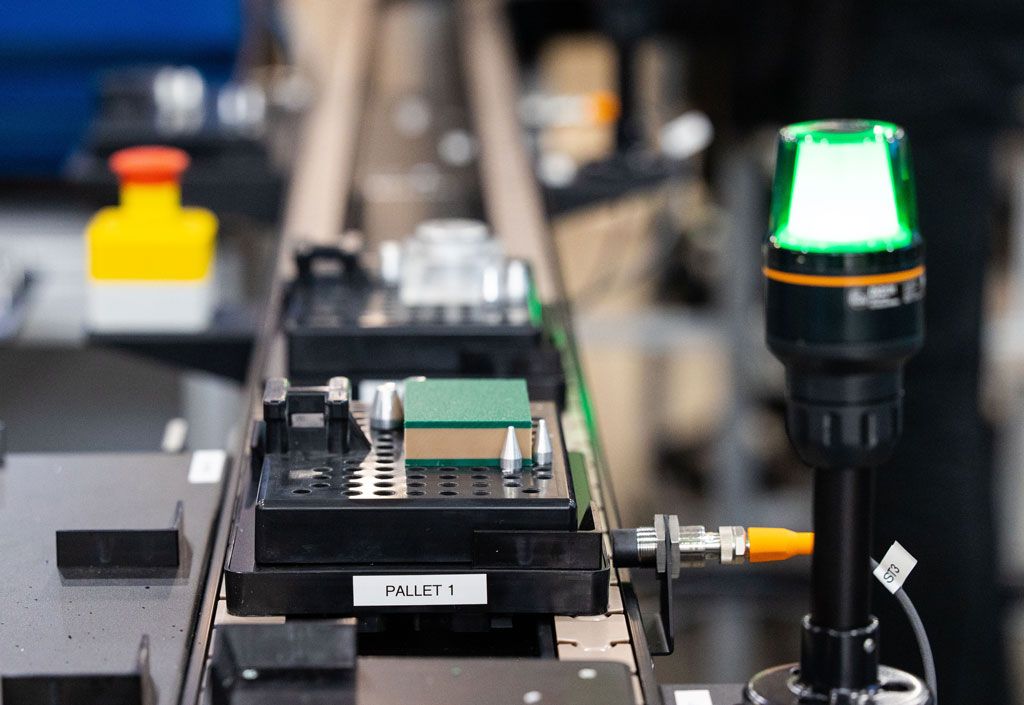
In any industrial facility, from a power plant to an automotive assembly line, machines are the heartbeat of production. Just like a doctor monitors vital signs, plant engineers and reliability teams need to monitor the health of critical equipment. Unplanned downtime is one of the greatest costs in manufacturing, and it often gives warning signs long before a catastrophic failure. This is where industrial sensors, particularly those for vibration and temperature, become the essential nervous system of a modern plant.
Understanding the Role of Vibration and Temperature Monitoring
Vibration and temperature are two of the most fundamental and telling parameters for mechanical equipment health.
Vibration Analysis: Excessive or changing vibration patterns are primary indicators of problems like imbalance, misalignment, bearing wear, gear mesh issues, and looseness. Sensors measure parameters like velocity, acceleration, and displacement.
Temperature Monitoring: Abnormal temperature rises in bearings, motors, pumps, and electrical connections can signal friction, overloading, poor lubrication, or impending failure. It’s a simple but highly effective early warning sign.
Together, these sensors form the core of a Condition-Based Maintenance (CBM) or Predictive Maintenance (PdM) strategy, moving away from reactive fixes and scheduled overhauls toward maintenance driven by actual asset condition.
Benefits and Considerations of Sensor-Based Monitoring
Implementing a sensor network offers clear advantages but requires a strategic approach.
Key Benefits:
Predict and Prevent Failures: The primary benefit is identifying faults early, allowing for planned intervention during scheduled stops, avoiding catastrophic breakdowns.
Reduce Maintenance Costs: By fixing only what needs fixing and when it needs it, you save on unnecessary parts, labor, and the high cost of emergency repairs.
Increase Asset Uptime and Lifespan: Preventing severe failures extends the operational life of equipment and maximizes production availability.
Improve Safety: Monitoring helps prevent dangerous situations that can arise from sudden equipment failures, like flying debris or fires.
Energy Efficiency: Properly maintained, balanced, and aligned equipment runs more efficiently, reducing energy consumption.
Important Considerations:
Initial Investment and ROI: There are costs for sensors, data collectors, gateways, software, and training. The Return on Investment (ROI) must be calculated based on preventing specific, costly failures.
Data Overload and Expertise: Sensors generate data. The value comes from analysis. You need personnel with the skills to interpret vibration spectra and temperature trends, or you need software that can do it intelligently.
System Integration: Sensor data is most powerful when integrated into a larger control system (SCADA, DCS) or plant asset management software (CMMS/EAM).
Not a Silver Bullet: While critical, vibration and temperature don't catch every failure mode. A comprehensive program may also include oil analysis, ultrasound, and motor current analysis.
Types and Categories of Sensors
Understanding the sensor types is crucial before comparing brands.
Vibration Sensors:
Accelerometers: The most common type. They measure the rate of change of velocity (acceleration), excellent for high-frequency events like bearing defects. Can be mounted permanently or used with portable data collectors.
Velocity Sensors: Measure displacement over time (mm/s). A traditional standard for overall vibration severity on mid-range frequency equipment like fans and pumps.
Displacement Probes (Proximity Probes): Measure the physical movement (in mils or microns) of a shaft relative to the bearing housing. Critical for monitoring radial and axial play in turbomachinery like turbines and compressors.
Temperature Sensors:
RTDs (Resistance Temperature Detectors): Very accurate and stable sensors where resistance changes predictably with temperature. Platinum (Pt100) is the industrial standard for critical point measurements.
Thermocouples: Rugged, wide temperature range, and lower cost than RTDs. They generate a small voltage proportional to the temperature difference between two junctions.
Non-Contact Infrared (IR) Sensors: Measure surface temperature from a distance. Useful for moving parts, electrical panels, or hazardous locations.
Latest Trends and Innovations
The sensor landscape is being reshaped by connectivity and intelligence.
Wireless Vibration & Temperature Sensors: This is a major trend. Battery-powered sensors with integrated wireless transmitters (like WirelessHART, ISA100, or proprietary mesh networks) drastically reduce installation cost and complexity, enabling monitoring on hundreds of previously "unmonitorable" assets.
Industrial IoT (IIoT) and Cloud Analytics: Sensors are becoming nodes in the Industrial Internet of Things. Data is streamed to cloud platforms where advanced analytics and machine learning algorithms detect anomalies and predict failures without requiring deep expert knowledge on-site.
All-in-One Multi-Parameter Sensors: Modern devices often combine an accelerometer, temperature sensor (PT100), and sometimes a built-in gyroscope (Industrial IMU - Inertial Measurement Unit) in one housing, providing a more complete picture of asset health.
Edge Processing and "Smart" Sensors: Instead of sending all raw data, sensors with edge computing capability can process data locally, only sending alerts, spectral snippets, or computed health indices, reducing network load and latency.
Key Features to Consider: Your Specification Checklist
When evaluating sensors and brands, use this list to compare offerings:
Measurement Parameter & Range: What exactly does it measure (e.g., g acceleration, mm/s velocity, °C)? What is the minimum and maximum range?
Accuracy and Resolution: How precise does the measurement need to be for your application? What is the smallest change it can detect?
Environmental Rating: What is the ingress protection (IP rating) against dust and water? What is the operating temperature range? Is it suitable for hazardous areas (ATEX, IECEx)?
Output and Connectivity: What is the output signal (4-20mA, voltage, digital MODBUS, wireless protocol)? How does it connect to your data acquisition system?
Power Supply: Does it require loop power, a separate supply, or is it battery-operated (for wireless)?
Mounting and form Factor: Is it a stud-mounted accelerometer, a magnetic mount, a threaded thermowell for temperature? Will it fit the space?
Software and Ecosystem: Is the sensor compatible with industry-standard analysis software? Does the brand offer its own user-friendly data management and diagnostic platform?
A Neutral Comparison of Leading Industrial Sensor Brands
The market consists of giants that offer full-system solutions and specialists focused on core sensor technology. Here is an overview of several prominent players.
| Brand / Company | Typical Market Position & Focus | Key Strengths / Known For | Considerations / Typical Use Case |
|---|---|---|---|
| Emerson (CSI, AMS) | Leader in full-system predictive maintenance solutions. | AMS Suite machinery health software, CSI portable analyzers, robust wireless (WirelessHART) sensor networks. A top choice for large-scale, integrated plant-wide programs. | Often part of a larger automation ecosystem. Can be a comprehensive, higher-investment solution. |
| SKF (@ptitude, Enlight) | Bearing manufacturer turned full-service reliability partner. | Deep mechanical expertise, Multilog online systems, IMx series portable collectors, strong in rolling element bearing analysis. | Sensors and systems are designed with deep bearing and gear knowledge. Strong focus on mill and heavy industry. |
| Fluke (Prüftechnik) | Leader in portable test & measurement, expanding into condition monitoring. | Vibrometer portable vibration tools, 810 vibration testers, trusted brand for maintenance technicians. Strong in entry-level and mid-tier portable analysis. | Focused on the technician toolset. A strong choice for building a PdM program around portable data collection. |
| Banner Engineering | Leader in industrial automation sensors, including condition monitoring. | X-Series wireless vibration/temperature sensors, easy setup, strong in OEM and discrete manufacturing. Known for reliability and simplifying wireless monitoring. | Excellent for adding wireless monitoring to a wide range of assets without complex integration. Strong in factory automation. |
| ifm electronic | Major supplier of factory automation sensors and systems. | Comprehensive Vibration, Temperature, and IO-Link sensors, built-in condition evaluation, easy integration into PLC systems. Known for simplicity and value. | Ideal for integrating basic condition monitoring directly into machine control systems, especially with IO-Link. |
| Hansford Sensors | Specialist manufacturer of vibration sensors. | Focuses purely on high-quality accelerometers, velocity sensors, and transmitters. A common "white label" supplier and preferred sensor for many system integrators. | A top choice if you need high-quality, reliable core sensor technology to integrate into your own or a third-party system. |
(Official Links: emerson.com, skf.com, fluke.com, bannerengineering.com, ifm.com, hansfordsensors.com)
How to Choose the Right Option: A Decision Framework
Define Your Program Scope and Maturity: Are you starting a new predictive maintenance program, expanding an existing one, or just monitoring a few critical assets? A mature plant-wide program has different needs than a pilot project on three pumps.
Assess In-House Expertise: Do you have certified vibration analysts on staff, or do you need a system with strong automated diagnostics and cloud-based expert support? This greatly influences the choice between advanced portable analyzers and simpler wireless monitor systems.
Evaluate Integration Needs: How must the sensor data flow? Into a historian? A CMMS like SAP or Maximo? A standalone software platform? Prioritize brands and products that integrate smoothly with your existing digital infrastructure.
Consider Total Cost of Ownership (TCO): Look beyond unit sensor cost. Factor in installation labor, software licenses, training costs, and ongoing support. A simpler, more automated system might have a higher upfront cost but lower long-term cost due to reduced analyst time.
Pilot Before You Scale: Whenever possible, run a pilot project with 2-3 different technologies on similar problem assets. Test the installation, data quality, software usability, and support responsiveness before making a large purchase.
Tips for Best Use and Maintenance
Proper Installation is Critical: A vibration sensor's performance depends entirely on a solid mechanical connection to the asset. Follow mounting instructions (surface prep, stud torque, adhesive use) meticulously.
Establish Baseline Measurements: When equipment is newly installed or after a repair, take "baseline" vibration and temperature readings. All future analysis will be compared to this known-good state.
Create Consistent Measurement Routes: For portable data collection, ensure technicians take measurements at the exact same point, in the same direction, and under the same operating conditions every time.
Regularly Calibrate Sensors: While industrial sensors are robust, they can drift. Follow a schedule for recalibration, especially for critical measurements, to ensure data integrity.
Focus on Actionable Data: The goal is not to collect data, but to drive maintenance work orders. Ensure your process seamlessly turns sensor alerts and analyst recommendations into actionable tasks in your work order system.
FAQs Addressing Real User Concerns
Q: What's more important, vibration or temperature monitoring?
A: They are complementary. Vibration is often the best early indicator of mechanical faults. Temperature is excellent for detecting lubrication issues, cooling failures, and electrical problems. For critical assets, you should typically use both.
Q: Can wireless sensors be as reliable as wired ones?
A: For most condition monitoring purposes, yes. Modern industrial wireless protocols are extremely robust. The trade-off is battery life (which can be 3-5 years) and a potential slight delay in data transmission versus a hardwired 4-20mA signal. The benefit of monitoring previously unwired assets far outweighs this for many applications.
Q: What is an Industrial IMU sensor used for?
A: An Inertial Measurement Unit combines accelerometers, gyroscopes, and sometimes magnetometers. In industry, it's used for more advanced motion analysis—like monitoring the sway of large cranes, the pitch/roll of mobile equipment, or complex multi-axis vibration on large structures, going beyond simple single-point vibration.
Q: Do I need to be a vibration expert to use these systems?
A: Not necessarily. While expert analysis unlocks the deepest diagnostics, many modern systems (especially wireless cloud-based platforms) are designed for "level 1" users. They use automated algorithms to provide simple traffic-light alerts (Green/Yellow/Red) and basic fault indications (e.g., "imbalance suspected"), making condition monitoring accessible to general maintenance teams.
Q: How many sensors do I need on a pump or motor?
A: A good starting point for a critical rotating asset is one radial vibration sensor on the drive-end bearing, one on the non-drive-end bearing (both perpendicular to the shaft), and one temperature sensor on each bearing housing. More advanced analysis might require axial vibration or phase measurement.
Conclusion: Building a Sensory Foundation for Reliability
Selecting vibration and temperature sensors is not just a procurement task; it's a foundational step in building a data-driven reliability culture. The "best" brand is not a universal answer but depends on your specific plant environment, team skills, digital strategy, and the criticality of your assets.
By understanding the technology trends and the distinct positions of the major players in the market—from full-spectrum solution providers like Emerson and SKF to automation-focused specialists like Banner and ifm, and core technology experts like Hansford—you are better equipped to ask the right questions. The most successful implementations match the sensor's intelligence and connectivity to the expertise of your team and the integration needs of your plant, creating a seamless flow from raw data to reliable, actionable insight that keeps your operations running smoothly.