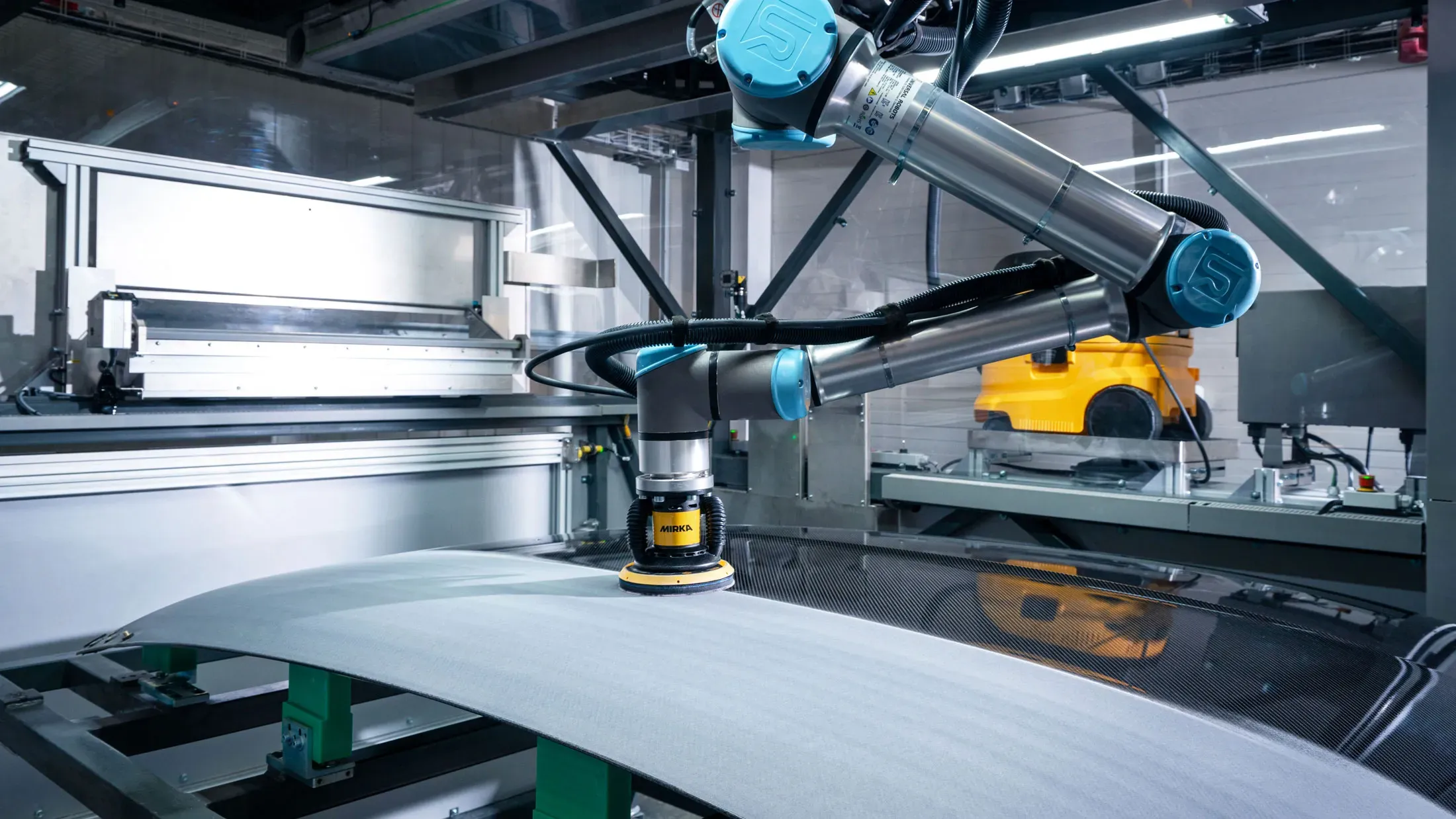
In modern manufacturing, shaping a part is only one step in the production process. The surface condition of that part often determines how well it performs, how long it lasts, and whether it meets safety or aesthetic standards. This is where grinding and polishing technologies play an essential role.
Benefits and Limitations of Industrial Polishing and Grinding
Key Benefits
1. Improved functionality and safety
Grinding removes burrs, rough edges, and defects that can affect part performance or safety.
2. Better dimensional accuracy
Grinding can achieve tight tolerances and improve geometric precision, making it suitable for high-precision components.
3. Enhanced surface quality
Polishing eliminates scratches and produces a surface suitable for coating, inspection, or aesthetic use.
4. Durability and performance gains
Smoother surfaces reduce friction, wear, and contamination risks, especially in mechanical or hygienic environments.
Limitations to Consider
-
High energy consumption for heavy grinding operations
-
Tool wear and consumable costs
-
Process variability if parameters are poorly controlled
-
Skilled setup required for precision finishing
While polishing and grinding are versatile, they must be carefully matched to material type, geometry, and production scale.
Types of Industrial Polishing and Grinding Technologies
Industrial finishing technologies can be grouped into mechanical, chemical, and hybrid methods.
1. Mechanical Grinding Processes
Mechanical grinding uses abrasive wheels, belts, or discs to remove material.
Common methods include:
-
Surface grinding for flat precision surfaces
-
Belt grinding for deburring, finishing, and stock removal
-
Cylindrical grinding for shafts and rotating components
Belt grinding in particular is widely used for finishing and deburring because it can remove burrs, improve surface roughness, and clean metal surfaces efficiently.
2. Mechanical Polishing Methods
Mechanical polishing follows grinding to refine the surface.
Typical processes include:
-
Buff polishing using soft wheels and compounds
-
Vibratory polishing for small parts in batch production
-
Diamond polishing for metallographic preparation
In metallographic preparation, polishing removes grinding scratches to create a mirror-like surface suitable for microscopic analysis.
3. Mass Finishing and Deburring Systems
These are designed for processing large quantities of parts simultaneously.
Examples include:
-
Vibratory finishing systems
-
Tumbling machines
-
Abrasive flow machining
Vibratory finishing uses abrasive media inside a vibrating container to deburr, clean, and polish many small components at once.
Abrasive flow machining pushes abrasive-laden fluid through internal cavities, making it effective for polishing hard-to-reach surfaces.
4. Chemical and Electrochemical Finishing
Some polishing processes remove material chemically rather than mechanically.
Electropolishing is a common example.
It removes microscopic surface peaks using an electrochemical reaction, improving smoothness and corrosion resistance.
This method is widely used in industries that require extremely clean surfaces, such as medical equipment and semiconductor manufacturing.
Comparison Table: Major Finishing Technologies
| Process Type | Typical Use | Precision Level | Production Scale | Key Advantage |
|---|---|---|---|---|
| Mechanical grinding | Shaping and burr removal | High | Small to large | Good dimensional control |
| Mechanical polishing | Surface refinement | Very high | Small to medium | Produces smooth finishes |
| Mass finishing | Batch processing parts | Medium | High volume | Efficient for many components |
| Electropolishing | Ultra-smooth surfaces | Very high | Medium | Improves corrosion resistance |
Latest Trends and Innovations in Industrial Finishing
1. Automation and Robotics
Automated polishing systems are becoming more common, using sensors and AI-assisted control to maintain consistent finishing quality. Research shows robotic surface treatment systems can scan surfaces and automatically adjust polishing parameters, improving repeatability and efficiency.
2. Hybrid Finishing Technologies
Modern finishing increasingly combines multiple processes:
-
Grinding followed by superfinishing
-
Mechanical polishing with chemical treatment
-
Automated polishing integrated into machining centers
Superfinishing removes extremely thin surface layers to improve geometry and reduce friction, especially in precision components.
3. Precision Surface Engineering
Industries such as aerospace and electronics now require extremely low roughness values, driving demand for:
-
Advanced abrasives
-
Computer-controlled polishing systems
-
Specialized metallographic preparation equipment
These technologies support inspection, coating adhesion, and long-term reliability.
Key Features to Consider in Polishing Equipment
When evaluating polishing or grinding machines, several technical factors matter.
Machine Capability Checklist
-
Material compatibility (steel, aluminum, alloys, etc.)
-
Surface finish requirements
-
Part size and geometry
-
Throughput requirements
-
Automation compatibility
-
Consumable availability
-
Dust extraction and safety systems
Matching equipment capability to production requirements helps avoid unnecessary costs and performance issues.
Top Industrial Polishing Equipment Providers
Some widely recognized global manufacturers of grinding and polishing systems include:
-
Struers – metallographic preparation equipment
-
Buehler – materials testing and polishing systems
-
Timesavers – sheet metal finishing equipment
-
Loeser – industrial belt grinding systems
-
QATM – metallographic grinding and polishing solutions
These companies typically publish technical guides, process comparisons, and equipment specifications on their official websites, which can be useful for comparing solutions.
How to Choose the Right Polishing or Grinding Method
Selecting the right finishing technology depends on production goals and part requirements.
Decision Checklist
Choose grinding when:
-
dimensional accuracy is critical
-
burr removal is needed
-
surface defects must be removed
Choose polishing when:
-
visual appearance matters
-
surface roughness must be minimized
-
inspection or coating follows
Choose mass finishing when:
-
large batches are processed
-
individual handling is inefficient
-
parts are relatively small
Choose electropolishing when:
-
cleanliness and corrosion resistance are priorities
-
internal geometries need smoothing
-
mechanical polishing is impractical
Tips for Best Use and Maintenance
Operational Tips
-
Use progressively finer abrasives rather than skipping stages
-
Keep polishing surfaces clean to prevent scratches
-
Replace worn abrasive belts and wheels regularly
-
Monitor pressure and speed settings carefully
Maintenance Tips
-
Inspect coolant systems and filters frequently
-
Ensure dust extraction units are functioning properly
-
Calibrate automated systems periodically
-
Train operators on correct setup procedures
Good maintenance improves surface consistency and extends machine life.
Frequently Asked Questions
What is the difference between grinding and polishing?
Grinding removes larger amounts of material to shape or smooth a part, while polishing focuses on refining the surface and removing small imperfections.
Why is metallographic polishing important?
It prepares a scratch-free surface that allows accurate microscopic examination of a material’s structure.
Are automated polishing machines replacing manual work?
Automation is increasing, but manual finishing is still common for complex shapes, prototypes, and small production runs.
Do all metal parts require polishing?
No. Polishing is used only when surface smoothness, aesthetics, or functional performance requires it.
What industries use these processes most?
-
Automotive manufacturing
-
Aerospace engineering
-
Medical device production
-
Electronics fabrication
-
Heavy machinery manufacturing
Conclusion: The Growing Importance of Surface Finishing
Grinding and polishing technologies are often seen as final production steps, but they play a much deeper role in manufacturing quality. Surface finishing influences durability, performance, safety, and appearance across nearly every industrial sector.
As manufacturing continues to shift toward automation, precision engineering, and advanced materials, finishing technologies are evolving alongside it. Understanding how these processes work — and when to use them — helps manufacturers improve efficiency, reduce defects, and meet increasingly strict performance standards.
For anyone working with industrial materials, polishing and grinding are not just finishing steps. They are essential tools for achieving reliable, high-quality production outcomes.