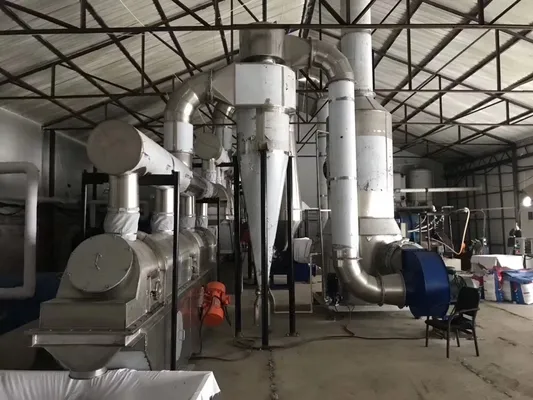
Drying is one of the most common steps in industrial processing. Many materials need to have moisture removed before they can be stored, transported, or used in further manufacturing. From food products and chemicals to pharmaceuticals, minerals, textiles, and construction materials, drying affects product quality, shelf life, weight, and safety.
How Industrial Drying Works
Industrial drying typically involves transferring heat to a material so that moisture evaporates, followed by removing the resulting vapor. This can be achieved through several mechanisms:
-
Convection drying – hot air passes over the material
-
Conduction drying – heat is transferred through a surface
-
Radiation drying – energy is transferred through infrared or microwave radiation
-
Vacuum drying – pressure reduction lowers evaporation temperature
Each method is suited to specific materials, depending on heat sensitivity, particle size, moisture content, and required processing speed.
Benefits of Industrial Drying Systems
Industrial drying offers several practical advantages across manufacturing sectors.
Key Benefits
-
Improves product stability and shelf life
-
Reduces transportation weight and storage space
-
Helps maintain consistent product quality
-
Supports controlled chemical and physical properties
-
Allows automation and continuous processing
-
Can reduce microbial growth in food or biological materials
When properly selected, a drying system can significantly improve production efficiency.
Limitations and Operational Challenges
Despite their importance, industrial dryers come with practical constraints.
Common Limitations
-
Energy consumption can be high in large-scale operations
-
Some materials degrade under excessive heat
-
Initial investment costs may be significant
-
Process control requires trained operators
-
Maintenance is necessary to prevent uneven drying
-
Dust or vapor emissions may require filtration systems
Balancing efficiency with product protection is one of the main challenges in industrial drying.
Types of Industrial Drying Technologies
Industrial dryers vary widely depending on the industry and material being processed.
1. Spray Drying Systems
Spray dryers convert liquid materials into powders by atomizing them into a hot air chamber. This method is widely used in:
-
Food processing (milk powder, coffee, flavorings)
-
Pharmaceuticals
-
Chemicals and detergents
Spray drying produces uniform particles and allows continuous operation.
2. Fluidized Bed Dryers
Fluidized bed dryers suspend particles in a stream of hot air, creating a fluid-like motion that improves heat transfer and uniform drying.
Common uses include:
-
Granular chemicals
-
Pharmaceutical tablets and powders
-
Agricultural products
-
Plastics processing
These dryers offer good temperature control and consistent results.
3. Vacuum Drying Systems
Vacuum dryers operate under reduced pressure, allowing moisture to evaporate at lower temperatures. They are useful for heat-sensitive materials such as:
-
Pharmaceuticals
-
Specialty chemicals
-
Food ingredients
-
biological materials
This method reduces oxidation and protects delicate substances.
4. Freeze Drying Systems
Freeze drying removes moisture by sublimation, turning ice directly into vapor under vacuum conditions. It is commonly used in:
-
pharmaceutical preservation
-
high-value food products
-
biological samples
-
research materials
Although energy-intensive, it preserves product structure and nutrients very effectively.
5. Heat Pump and Energy-Efficient Dryers
Heat pump dryers recycle heat within the system, reducing energy loss. They are increasingly used where energy efficiency is a priority, especially in food processing and textile drying.
6. Desiccant Air Drying Systems
Desiccant dryers remove moisture from air before it contacts materials. These systems are common in:
-
plastics manufacturing
-
electronics production
-
packaging lines
-
storage facilities
They help maintain controlled humidity conditions.
Comparison Table: Common Industrial Drying Methods
| Drying Method | Best For | Energy Efficiency | Heat Sensitivity Handling | Typical Industries |
|---|---|---|---|---|
| Spray Drying | Liquids to powder | Moderate | Moderate | Food, pharma, chemicals |
| Fluidized Bed | Granular materials | Good | Good | Chemicals, pharma, agriculture |
| Vacuum Drying | Heat-sensitive materials | Moderate | Excellent | Pharma, specialty chemicals |
| Freeze Drying | High-value products | Low | Excellent | Pharma, research, food |
| Heat Pump Drying | Energy-focused operations | High | Good | Food, textiles |
| Desiccant Drying | Humidity control | Good | Not primary heating method | Plastics, electronics |
Latest Trends and Innovations in Industrial Drying
Industrial drying is evolving alongside automation and energy-efficiency improvements.
Notable Developments
-
Integration of sensors for real-time moisture monitoring
-
AI-assisted process control for consistent product quality
-
Hybrid drying systems combining multiple technologies
-
Improved insulation to reduce heat loss
-
Closed-loop air systems to reduce emissions
-
Electrification and heat-recovery designs for lower energy use
These innovations aim to improve sustainability while maintaining productivity.
Key Features to Consider When Evaluating Drying Equipment
Selecting the right system involves assessing both technical and operational factors.
Technical Features Checklist
-
Moisture removal capacity required
-
Material sensitivity to heat or oxygen
-
Desired particle size or product form
-
Temperature control range
-
Automation and monitoring capabilities
-
Energy consumption profile
Operational Considerations Checklist
-
Available installation space
-
Production volume requirements
-
Maintenance accessibility
-
Spare part availability
-
Operator training requirements
-
Environmental or regulatory compliance
Major Industrial Dryer Manufacturers and Solutions
Several global manufacturers design industrial drying equipment for different sectors.
Examples include:
-
GEA Group
-
Bühler Group
-
SPX Flow
-
Andritz
-
Hosokawa Micron
-
Carrier Vibrating Equipment
These companies produce a range of dryers, from spray drying towers to fluidized beds and vacuum systems. Businesses often compare systems based on process compatibility, service networks, and lifecycle cost rather than only upfront price.
How to Choose the Right Industrial Drying Technology
Choosing a drying system depends on matching process needs with equipment capabilities.
Step-by-Step Selection Approach
-
Identify the material’s moisture content and sensitivity
-
Determine the required final product form
-
Estimate throughput and production schedule
-
Evaluate energy availability and costs
-
Consider environmental and safety requirements
-
Compare installation footprint and infrastructure needs
-
Review long-term maintenance and operating costs
The most effective drying system is not always the fastest or most complex, but the one that fits the production workflow best.
Tips for Effective Operation and Maintenance
Proper operation improves consistency and reduces downtime.
Usage Tips
-
Maintain stable temperature and airflow settings
-
Avoid overloading the dryer
-
Monitor moisture levels regularly
-
Adjust settings for seasonal humidity changes
-
Document process parameters for repeatability
Maintenance Checklist
-
Inspect filters and air ducts regularly
-
Check seals, fans, and motors for wear
-
Clean drying chambers to prevent buildup
-
Calibrate sensors and temperature controls
-
Schedule periodic professional servicing
Preventive maintenance helps extend equipment life and ensures product quality remains consistent.
Frequently Asked Questions
What industries rely most on industrial drying?
Food processing, pharmaceuticals, chemicals, agriculture, textiles, and mining all depend heavily on drying processes.
Is one drying method better than others?
No single method is universally best. The right choice depends on the material, energy availability, and production goals.
Do energy-efficient dryers always cost more?
They may have higher initial costs but can reduce operating expenses over time through lower energy consumption.
Can drying systems be automated?
Yes, many modern systems include automated temperature control, moisture monitoring, and production tracking features.
How often should industrial dryers be serviced?
Routine inspections should occur regularly, while full servicing schedules depend on operating hours and manufacturer recommendations.
Conclusion: The Practical Role of Drying Technology in Industry
Industrial drying is a foundational step in many production processes, influencing product quality, efficiency, and storage stability. While technologies vary widely, the goal remains the same: remove moisture in a controlled and efficient way without damaging the material.
Understanding the different drying methods, their applications, and their operational considerations helps organizations make more informed equipment decisions. By selecting a system suited to their specific materials and maintaining it properly, industries can support reliable production and consistent product standards over the long term.