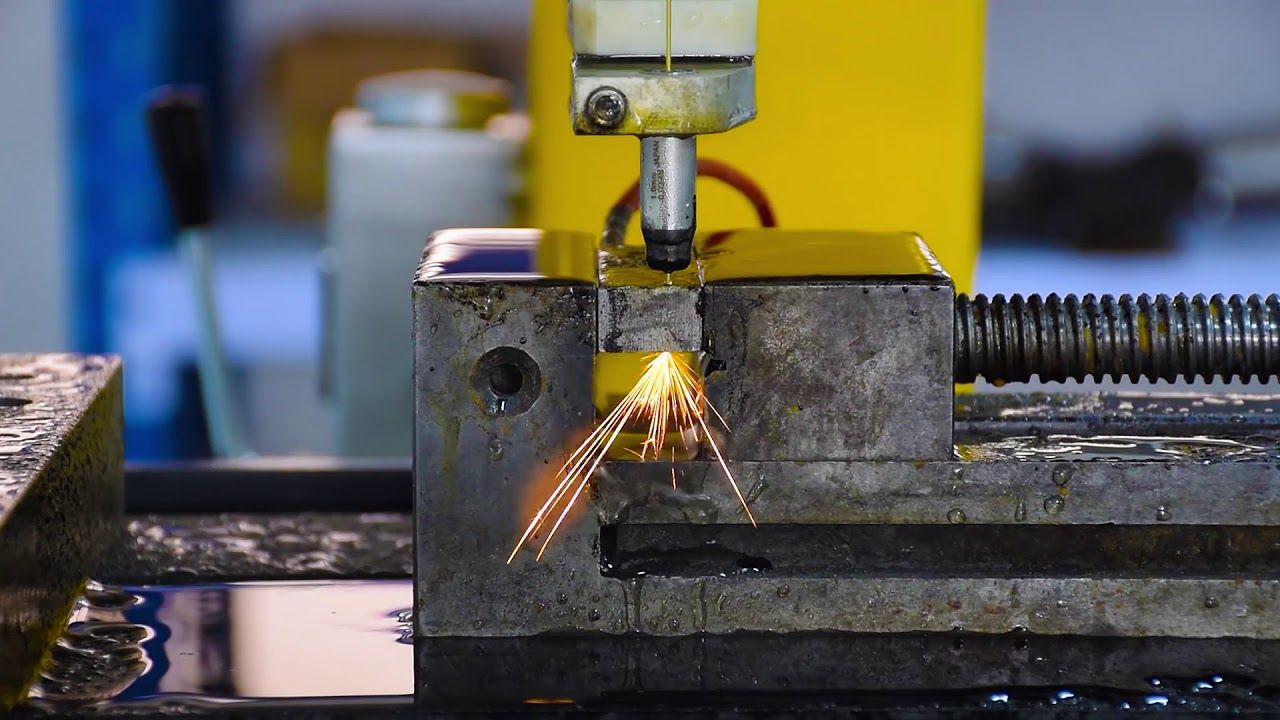
Hole-making is one of the most common and essential operations in manufacturing. From automotive engine blocks and aerospace turbine components to medical devices and industrial tooling, precisely drilled holes are fundamental to assembly, fluid flow, fastening, and structural performance.
Overview of Major Industrial Drilling Technologies
1. Deep Hole Boring
Deep hole boring is used when the depth-to-diameter ratio of a hole is very high, typically greater than 10:1. It is common in industries that require long, straight, and precise internal bores.
Typical applications:
-
Hydraulic cylinders
-
Oil and gas components
-
Aerospace shafts
-
Mold cooling channels
Deep hole boring machines use specialized tools such as gun drills or BTA (Boring and Trepanning Association) systems that allow efficient chip evacuation and coolant flow.
2. EDM Hole Drilling (Hole Popping EDM)
EDM hole drilling, also called hole popping EDM, uses electrical discharges (sparks) to erode material. Instead of cutting mechanically, it removes material through controlled spark erosion.
It is particularly useful for:
-
Very small diameter holes
-
Hard materials like carbide or hardened steel
-
Precision starter holes for wire EDM
Because it does not rely on cutting force, EDM can drill delicate or hardened components without mechanical stress.
3. CNC Drill Press Systems
A CNC drill press automates drilling operations using computer numerical control. Compared to manual drilling, CNC systems offer:
-
High repeatability
-
Automated tool changes
-
Multi-axis movement
-
Integration with CAD/CAM software
CNC drill presses are widely used in:
-
Metal fabrication
-
Automotive manufacturing
-
General engineering workshops
4. Multi-Spindle Drill Press
A multi-spindle drill press allows multiple holes to be drilled simultaneously. This increases production speed and consistency, especially in high-volume manufacturing.
Common uses include:
-
Automotive parts
-
Structural components
-
Industrial brackets
How These Technologies Work
Deep Hole Boring Process
Deep hole boring uses a rotating cutting tool that removes material while coolant is pumped through the tool. The coolant helps:
-
Remove chips
-
Reduce heat
-
Improve surface finish
Accurate alignment is critical to prevent deviation over long distances.
EDM Hole Drilling Process
In EDM drilling:
-
An electrode (usually brass or copper) approaches the workpiece.
-
Electrical pulses create controlled sparks.
-
Each spark melts or vaporizes a small portion of the material.
-
Dielectric fluid flushes away debris.
Because there is no direct contact cutting, EDM can machine extremely hard materials with high precision.
CNC Drill Press Operation
A CNC drill press operates through programmed instructions. The operator defines:
-
Hole locations
-
Depth
-
Feed rate
-
Tool type
The machine executes the program automatically, ensuring consistency across multiple parts.
Benefits and Limitations
Comparison Table
| Technology | Key Benefits | Limitations | Ideal Use Case |
|---|---|---|---|
| Deep Hole Boring | Accurate deep bores, good surface finish | Requires specialized setup | Long cylindrical components |
| EDM Hole Drilling | Works on hard materials, small diameters | Slower than mechanical drilling | Precision micro holes |
| CNC Drill Press | High automation, repeatability | Higher upfront cost | Batch and mass production |
| Multi-Spindle Drill Press | High production speed | Less flexible for custom jobs | High-volume manufacturing |
Latest Trends and Innovations
Industrial drilling technology continues to evolve. Key trends include:
1. Smart CNC Integration
Modern CNC drill presses now integrate with:
-
IoT monitoring
-
Real-time tool wear analysis
-
Predictive maintenance systems
2. Hybrid Machines
Some systems combine:
-
Milling
-
Drilling
-
Tapping
-
EDM functions
This reduces handling time and improves efficiency.
3. Improved Electrode Materials in EDM
Advanced electrode coatings improve:
-
Wear resistance
-
Precision
-
Speed
4. Automation and Robotics
Robotic loading systems are increasingly paired with CNC drilling equipment to reduce manual handling.
Key Features to Consider
When evaluating industrial drilling systems, consider the following:
Machine Capability Checklist
-
Required hole diameter range
-
Maximum drilling depth
-
Material compatibility
-
Tolerance requirements
-
Production volume
-
Automation level needed
-
Floor space availability
-
Cooling and chip removal system
Top Companies and Solutions in Industrial Drilling
Several established manufacturers produce industrial drilling equipment:
-
DMG MORI (CNC machining centers)
-
Mazak (CNC machine tools)
-
Haas Automation (CNC drill and machining systems)
-
GF Machining Solutions (EDM systems)
-
TBT Tiefbohrtechnik (deep hole drilling systems)
Each company offers various models with different automation levels, precision capabilities, and integration options. Public product catalogs and specification sheets are available on their official websites for comparison.
How to Choose the Right Drilling Technology
Selecting the right drilling system depends on your operational requirements.
Step 1: Define the Application
-
Are holes extremely deep? → Consider deep hole boring
-
Are materials hardened or delicate? → EDM drilling
-
Is high repeatability needed? → CNC drill press
-
Is production volume high? → Multi-spindle drill press
Step 2: Evaluate Budget vs. Output
High automation systems have higher upfront costs but may reduce long-term labor and scrap costs.
Step 3: Consider Maintenance and Skill Requirements
EDM systems require dielectric fluid management.
Deep hole systems need advanced chip evacuation systems.
CNC systems require programming knowledge.
Practical Maintenance Tips
Deep Hole Boring
-
Monitor tool alignment
-
Maintain proper coolant pressure
-
Inspect for tool deflection
EDM Hole Drilling
-
Regularly clean dielectric filters
-
Inspect electrode wear
-
Check flushing efficiency
CNC Drill Press
-
Perform regular calibration
-
Update software
-
Monitor spindle condition
-
Use proper lubrication schedules
Preventive maintenance significantly improves accuracy and machine lifespan.
Frequently Asked Questions (FAQs)
1. What is the difference between deep hole boring and standard drilling?
Standard drilling is typically limited to moderate depth-to-diameter ratios. Deep hole boring is designed for extremely long, precise bores with better alignment control.
2. When should EDM hole drilling be used instead of mechanical drilling?
EDM is preferred when:
-
Material is very hard
-
Hole diameter is very small
-
Mechanical stress must be minimized
3. Is a CNC drill press suitable for small workshops?
Yes, but it depends on production volume and budget. For low-volume operations, a manual or semi-automatic drill press may be sufficient.
4. What industries rely most on deep hole drilling?
Common industries include:
-
Aerospace
-
Oil and gas
-
Automotive
-
Defense manufacturing
5. Does EDM produce better accuracy?
EDM can produce extremely precise holes, especially in hardened materials. However, it is generally slower than mechanical drilling.
Final Comparison Checklist
Before deciding, review this quick checklist:
-
Required hole depth?
-
Required tolerance level?
-
Material hardness?
-
Production volume?
-
Budget constraints?
-
Automation preference?
-
Available operator expertise?
Matching these factors with the appropriate drilling technology improves both productivity and cost efficiency.
Conclusion: Choosing Technology Based on Need, Not Trend
Industrial drilling technologies have evolved to meet highly specialized manufacturing demands. Deep hole boring excels in long, precise internal bores. EDM hole drilling is ideal for hard materials and micro holes. CNC drill press systems offer automation and repeatability for modern production environments.
There is no universal best option. The right solution depends on application requirements, production volume, and technical constraints. Understanding the strengths and limitations of each method allows manufacturers, engineers, and decision-makers to choose technology based on practical needs rather than assumptions.