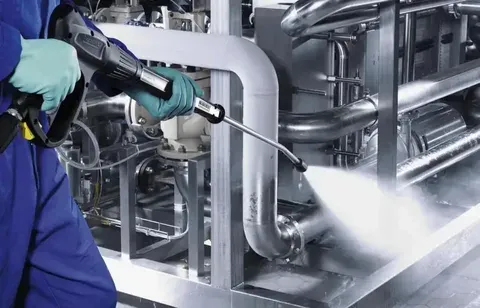
Industrial cleaning equipment plays a vital role in maintaining safe, functional, and compliant facilities in sectors such as manufacturing, warehousing, logistics, and production. Large spaces like warehouses and factories often accumulate dust, debris, and waste that traditional cleaning methods can’t effectively handle. Industrial sweepers and vacuums are designed to meet these demands efficiently, reducing labor, improving safety, and helping meet regulatory standards
Benefits and Limitations
Benefits
Industrial sweepers and vacuums offer several significant advantages over manual cleaning methods:
-
Improved Efficiency: These machines cover large floor areas quickly and with less physical effort compared to manual sweeping, significantly reducing cleaning time.
-
Enhanced Safety: A cleaner floor lowers the risk of slip, trip, and fall hazards. Advanced filtration also reduces airborne dust, contributing to better air quality.
-
Cost Savings Over Time: Although initial investment can be higher, automation typically leads to lower long-term labor and material costs.
-
Environmental Benefits: Modern vacuum sweepers often include filtration and dust control systems that capture fine particles, minimizing environmental impact and improving workplace air quality.
Limitations
Despite the benefits, there are limitations to be aware of:
-
Upfront Investment: High-capacity machines, especially ride-on and autonomous models, come with a significant initial cost.
-
Maintenance Needs: Regular maintenance, such as filter replacement and brush care, is necessary to sustain performance.
-
Complexity: Some specialized equipment demands operator training or advanced knowledge to use efficiently.
-
Not One-Size-Fits-All: Sweepers excel at collecting dry debris, while vacuums are better for fine dust and liquid spills; choosing the wrong system can lead to inefficient cleaning.
Types or Categories of Sweepers and Vacuums
Industrial cleaning equipment comes in a variety of types tailored to different tasks and environments.
Industrial Sweepers
Industrial sweepers are machines that use rotating brushes to sweep debris into a collection bin. They can be:
-
Walk-Behind Sweepers: Compact and maneuverable for medium-sized areas.
-
Ride-On Sweepers: Designed for large warehouses and production spaces, these models cover wide paths and increase productivity.
-
Manual Sweepers: Non-motorized sweepers that rely on user movement — useful for smaller spaces or occasional cleanup.
Sweepers are particularly suited for dry debris such as dirt, grain, pallet fragments, and packaging waste.
Industrial Vacuums
Industrial vacuums use strong suction and often advanced filtration (such as HEPA systems) to remove fine dust, liquids, and other residues. Types include:
-
Wet/Dry Vacuums: Capable of handling both liquid spills and solid debris.
-
Combustible Dust Vacuums: Designed for environments with combustible dust risks and requiring specialized safety ratings.
-
Portable Explosion-Proof Vacuums: Built to meet safety standards in potentially explosive atmospheres.
Vacuums are especially valuable where air quality matters or where fine particulate is present.
Combination Machines
Some industrial equipment combines sweeping and vacuum functions, offering both debris pickup and detailed dust removal in one pass.
Latest Trends and Innovations
Industrial cleaning equipment continues to evolve, integrating technology, sustainability, and automation:
-
Autonomous Cleaning Robots: Machines equipped with sensors and software that navigate and clean with minimal human input.
-
IoT and Connectivity: Real-time monitoring allows managers to track performance, schedule maintenance, and optimize cleaning routes.
-
Advanced Filtration Systems: HEPA and multi-stage filters capture finer particles, enhancing air quality and safety.
-
Battery Technology: Longer-lasting lithium-ion batteries extend operation between charges and support quieter, emission-free indoor cleaning.
These innovations improve performance, eliminate downtime, and support environmental and safety standards in modern industrial settings.
Key Features to Consider
When evaluating industrial sweepers and vacuums, several features influence performance and suitability:
Cleaning Path Width and Capacity
-
Sweepers: Wider cleaning paths cover more area quickly — important in large warehouses.
-
Vacuum Capacity: Larger debris bins and waste tanks reduce the frequency of emptying, increasing efficiency.
Filtration and Dust Control
-
Filtration Level: HEPA filters capture microscopic particles, a necessity in facilities with sensitive air quality requirements.
Power and Mobility
-
Power Source: Battery vs. engine power affects runtime, emissions, and indoor use.
-
Maneuverability: Compact designs or tight turning radii help in restricted spaces.
Safety and Compliance
-
Explosion-Proof Ratings: Required in environments with combustible dust or flammable vapors.
-
Certified Components: Ensure vacuum and sweeper systems meet relevant safety standards.
Ease of Maintenance
Machines with accessible filters, modular parts, and straightforward service points reduce downtime and long-term cost.
Comparison Table: Sweepers vs. Vacuums
| Feature | Industrial Sweeper | Industrial Vacuum |
|---|---|---|
| Best For | Dry debris on large floor areas | Fine dust, liquids, precise extraction |
| Main Mechanism | Rotating brushes & collection bin | Suction & filtration |
| Air Quality Impact | Basic filtration | HEPA filters for fine particles |
| Power Options | Battery, engine | Battery, corded, explosion-proof |
| Typical Use | Warehouses, factories, open areas | Cleanrooms, food plants, workshops |
| Limitations | Less effective for fine dust | May require more frequent emptying |
Top Companies or Solutions
While specific brands may vary by region, several companies and industry sources are commonly referenced for industrial cleaning equipment. Below are examples that readers can explore for further information (not endorsements):
-
Global Industrial: Knowledge center on floor care machines including sweepers and vacuums.
-
Accio Industrial Sweeper Vacuums: Models and equipment data for industrial cleaning.
-
Industrial Cleaning Equipment Suppliers: Listings and product categories covering floor sweepers, scrubbers, and vacuum systems.
Public directories, industry catalogs, and equipment-comparison platforms provide additional specifications and comparisons to support further research.
How to Choose the Right Option
Choosing suitable industrial cleaning equipment depends on several practical factors:
1. Assess the Floor Type and Environment
Concrete, epoxy, or tiled floors differ in how debris accumulates and how machinery interacts with the surface.
2. Define Cleaning Frequency and Volume
Frequent cleaning of large areas favors ride-on sweepers or automated vacuums, while occasional tasks might suit walk-behind models.
3. Evaluate Debris Type
Large debris and dry materials may be best addressed by sweepers, while fine dust or liquids typically require industrial vacuums.
4. Consider Operator Skills
Simplicity and ease of operation reduce training time and risk of misuse.
5. Review Safety Requirements
Ensure compliance with local safety and environmental regulations, especially in sensitive industrial settings.
Tips for Best Use and Maintenance
Proper use and maintenance extend equipment life and improve performance:
Daily Maintenance Checklist
-
Empty debris bins or waste tanks after use.
-
Check and clean filters to maintain airflow and suction.
-
Inspect brush wear and replace when necessary.
Long-Term Care
-
Service batteries or engines according to manufacturer guidelines.
-
Store equipment in a dry, temperature-controlled area.
-
Schedule professional servicing for complex components.
Safety Tips
-
Use appropriate PPE when operating heavy machinery.
-
Follow all safety instructions and training protocols.
Frequently Asked Questions
What is the difference between industrial sweepers and vacuums?
Sweepers use brushes to collect dry debris, making them efficient for general floor cleanup. Vacuums use suction and filters to remove fine dust and liquids, delivering deeper cleaning.
Can one machine replace both a sweeper and a vacuum?
Combination units exist that integrate sweeping and vacuum functions, suitable for environments requiring both debris pickup and fine dust control.
Are industrial vacuums suitable for hazardous dust?
Yes, specialized vacuums are designed with safety features and filtration for hazardous or combustible dust applications.
How often should industrial cleaning equipment be maintained?
Routine maintenance such as filter cleaning and bin emptying is often daily, while comprehensive servicing should follow manufacturer recommendations.
Is battery power better than engine power?
Battery power is useful for indoor and low-emission settings, while engine power suits outdoor or heavy-duty applications.
Conclusion: A Practical Takeaway
Industrial cleaning equipment — particularly sweepers and vacuums — provides efficient, scalable solutions for maintaining safe, clean, and compliant workplaces. By understanding the differences between machine types, key features, and how they fit specific industrial needs, facility managers and operators can make informed decisions that support operational efficiency.
Regular maintenance and thoughtful selection of equipment based on environment, debris type, and safety requirements ensure that industrial cleaning operations remain effective over time. While no single machine suits every scenario, a mix of sweepers and vacuums tailored to the facility’s demands delivers reliable cleanliness and contributes to a healthier, more productive work environment.