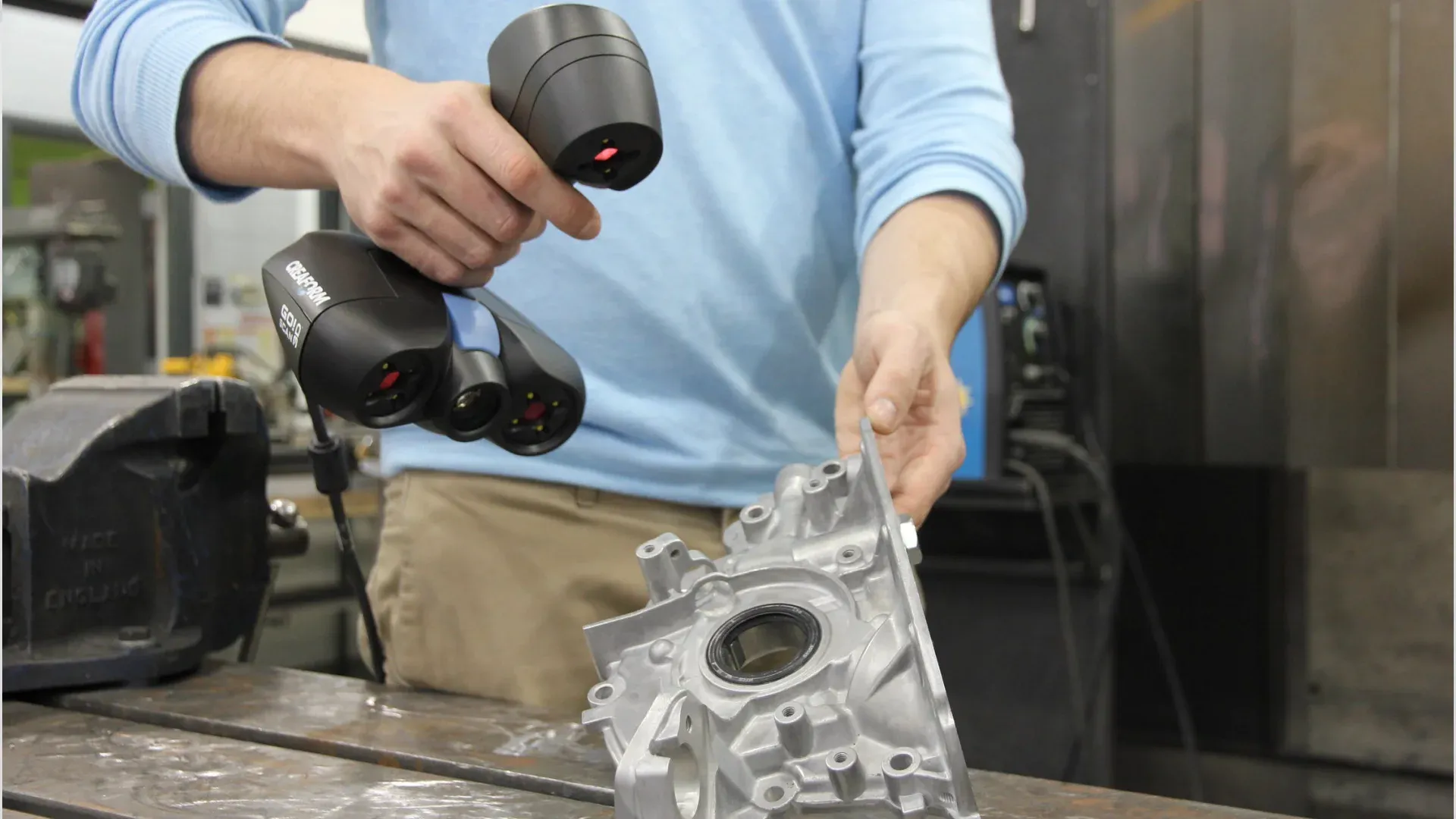
Industrial 3D scanning has become an important tool in manufacturing, engineering, construction, automotive development, aerospace, and quality control. Instead of manually measuring parts with calipers or coordinate measuring machines (CMMs), industries increasingly use 3D scanners to capture the exact shape and geometry of objects quickly and digitally.
What Is an Industrial 3D Scanner?
An industrial 3D scanner is a device designed to capture the physical dimensions and surface characteristics of objects with high accuracy. Unlike consumer 3D scanners used for hobby projects, industrial systems prioritize:
-
Precision and repeatability
-
Data reliability
-
Integration with CAD and inspection software
-
Durability in industrial environments
Most systems rely on one of three core technologies:
-
Laser triangulation
-
Structured light projection
-
LiDAR or time-of-flight measurement
Each approach has different strengths depending on scale, accuracy requirements, and environment.
Benefits of Industrial 3D Scanners
Industrial 3D scanning offers several practical advantages:
1. Improved Measurement Speed
Scanning can reduce the time required to measure complex parts compared to manual measurement methods.
2. High Accuracy
Many systems offer micron-level precision, making them suitable for inspection and metrology.
3. Digital Documentation
Scanned data creates permanent digital records of parts, assemblies, or sites.
4. Reverse Engineering Support
Existing components without CAD files can be digitized and redesigned.
5. Reduced Human Error
Automated data capture reduces variability compared to manual inspection.
Limitations to Consider
While powerful, industrial 3D scanners also have constraints:
-
Initial investment cost can be high
-
Some systems require trained operators
-
Reflective or transparent surfaces may require preparation
-
Large datasets demand strong computing resources
-
Environmental factors (dust, vibration, lighting) may affect accuracy
Understanding these limitations helps ensure realistic expectations.
Types of Industrial 3D Scanners
Industrial 3D scanners can be categorized by scale, mobility, and technology.
1. Large Scale 3D Scanners
Large-scale scanners are typically used for:
-
Buildings and infrastructure
-
Ship hulls and aircraft
-
Industrial plants
-
Construction sites
They often rely on LiDAR or long-range laser scanning and can capture entire environments.
Characteristics:
-
Long scanning range
-
Moderate-to-high accuracy
-
Often tripod-mounted
-
Suitable for outdoor use
2. Portable 3D Scanners
Portable scanners are lightweight and designed for flexibility.
Use cases:
-
Automotive parts
-
Tooling inspection
-
Field engineering
-
Maintenance and repair documentation
Portable systems may use structured light or handheld laser triangulation.
Advantages:
-
Mobility
-
Quick setup
-
Suitable for irregular surfaces
3. Laser-Based Industrial Scanners
Laser scanners are common in industrial metrology and inspection.
They operate by projecting a laser line or point onto a surface and measuring its deformation to calculate geometry.
Key strengths:
-
High precision
-
Suitable for dark or complex surfaces
-
Effective for mechanical parts
4. Handheld SLAM Scanners
SLAM (Simultaneous Localization and Mapping) scanners use onboard sensors and algorithms to map environments in real time.
These are often used in:
-
Warehouses
-
Construction progress monitoring
-
Facility management
SLAM systems allow operators to walk through an area while capturing spatial data continuously.
Technology Comparison Table
| Feature | Large Scale Scanners | Portable Scanners | Laser Scanners | SLAM Scanners |
|---|---|---|---|---|
| Typical Range | Long (tens to hundreds of meters) | Short to medium | Short to medium | Medium to long |
| Mobility | Low | High | Medium | Very high |
| Accuracy | Moderate to high | High | Very high | Moderate |
| Best For | Buildings, plants | Parts, tools | Precision inspection | Rapid mapping |
| Setup Time | Moderate | Low | Moderate | Low |
Latest Trends and Innovations
Industrial 3D scanning continues to evolve. Notable developments include:
1. AI-Enhanced Data Processing
Machine learning is helping automate feature detection and quality analysis.
2. Hybrid Scanning Systems
Some scanners combine structured light and laser technology for greater flexibility.
3. Cloud-Based Data Management
Cloud platforms allow teams to collaborate on scan data remotely.
4. Improved SLAM Algorithms
Newer SLAM systems offer better drift correction and mapping accuracy.
5. Automation and Robotics Integration
Scanners are increasingly integrated with robotic arms for automated inspection lines.
Key Features to Consider
When evaluating industrial 3D scanners, consider the following checklist:
Technical Checklist
-
Required accuracy level
-
Object size range
-
Surface type compatibility
-
Scan speed
-
Software compatibility (CAD, inspection tools)
-
Data export formats
-
Environmental durability
Operational Checklist
-
Operator training requirements
-
Portability needs
-
Calibration process
-
Maintenance support
-
Upgrade options
Top Companies and Solutions
Several established companies offer industrial 3D scanning solutions. Comparing vendors helps understand available technologies.
Some recognized names include:
-
Creaform
-
FARO
-
Hexagon Manufacturing Intelligence
-
Leica Geosystems
-
ZEISS Industrial Metrology
-
Artec 3D
These companies provide a range of handheld, large-scale, and metrology-grade systems. Many publish technical specifications and comparison documents on their public websites, which can help users evaluate differences in accuracy, speed, and application suitability.
When comparing vendors, focus on:
-
Published accuracy metrics
-
Industry certifications
-
Software ecosystem
-
Case studies
-
Integration capabilities
How to Choose the Right Industrial 3D Scanner
Selecting the appropriate scanner depends on practical factors.
Step 1: Define Your Application
Ask:
-
Are you scanning parts or entire facilities?
-
Is the purpose inspection, reverse engineering, or documentation?
-
Is mobility important?
Step 2: Determine Accuracy Requirements
Precision inspection requires higher resolution systems than basic spatial mapping.
Step 3: Evaluate Environment
Consider:
-
Indoor vs outdoor use
-
Lighting conditions
-
Temperature variations
-
Surface reflectivity
Step 4: Assess Budget and Lifecycle Cost
Beyond initial purchase, consider:
-
Software licensing
-
Maintenance
-
Training
-
Calibration
Step 5: Request Demonstrations or Trial Data
Review sample scans and compare outputs before making decisions.
Tips for Best Use and Maintenance
To maintain performance and data quality:
1. Follow Calibration Guidelines
Regular calibration ensures accuracy.
2. Control Environmental Conditions
Avoid excessive vibration or unstable surfaces.
3. Prepare Surfaces if Needed
Use scanning sprays for reflective objects when required.
4. Maintain Clean Optics
Dust or debris can affect data quality.
5. Manage Data Storage
Large scan files require structured storage and backup systems.
Frequently Asked Questions
What accuracy can industrial 3D scanners achieve?
Accuracy varies widely. Some handheld metrology scanners achieve accuracy in the range of tens of microns, while large-scale LiDAR systems prioritize coverage over ultra-fine precision.
Are industrial 3D scanners difficult to use?
Modern systems are designed to be user-friendly, but training is usually required for optimal results.
Can 3D scanners replace coordinate measuring machines?
In some applications, yes. However, for ultra-high precision inspection, CMMs may still be preferred depending on tolerance requirements.
Do surfaces need preparation before scanning?
Shiny or transparent surfaces may require temporary surface treatment for reliable scanning.
How long does data processing take?
Processing time depends on scan size, resolution, and computing power. Large site scans may require more processing time than small part scans.
Practical Comparison Checklist
Before finalizing a solution, use this quick checklist:
-
Application clearly defined
-
Accuracy requirements documented
-
Environment assessed
-
Software compatibility verified
-
Data workflow planned
-
Training resources available
-
Maintenance plan in place
Conclusion: Making an Informed Decision
Industrial 3D scanners have become valuable tools across engineering, manufacturing, and construction. From large-scale facility mapping to precise handheld laser inspection, modern scanning systems offer flexibility and efficiency.
However, no single scanner is ideal for every task. The best approach is to carefully match the scanner type to the application, accuracy requirements, working environment, and operational workflow.
By understanding the differences between large-scale, portable, laser-based, and SLAM technologies, organizations and individuals can make informed decisions that align with practical needs rather than assumptions.
As industrial processes continue to digitize, 3D scanning is likely to remain an important part of design validation, quality control, and digital transformation efforts.