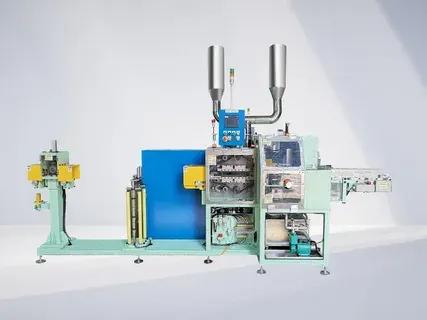
Industrial hoses are used across sectors such as construction, oil and gas, manufacturing, agriculture, transportation, and heavy machinery. These hoses carry fluids, compressed air, hydraulic oil, chemicals, and other materials that keep equipment running. Because hoses must be cut to exact lengths and specifications, cutting technology plays an important role in ensuring safety, efficiency, and reliability.
Benefits and limitations of industrial hose cutting systems
Key benefits
1. Precision and consistency
Modern cutting systems produce uniform hose lengths and clean edges, which improves fitting accuracy and reduces assembly problems.
2. Improved safety
Automated systems reduce operator contact with blades, lowering the risk of injury.
3. Higher productivity
Automatic cutting machines can process hoses quickly and repeatably, supporting large production volumes.
4. Reduced waste
Accurate measuring and controlled cutting help minimize material loss.
5. Cleaner cuts for hydraulic systems
Clean edges reduce internal debris, helping protect pumps, valves, and seals.
Limitations to consider
1. Higher upfront cost
Automated machines and integrated systems require a larger initial investment than manual tools.
2. Maintenance requirements
Blades, motors, and measuring components require regular inspection and replacement.
3. Training needs
Operators must understand machine settings, safety procedures, and material differences.
4. Space considerations
Some automatic cutting lines need dedicated workspace and power supply.
Types of industrial hose cutting technologies
Industrial hose cutting solutions can be grouped into three main categories: hydraulic hose saws, automatic rubber cutting machines, and measuring-cutting systems.
1. Hydraulic hose cutting saws
Hydraulic hose saws are designed for reinforced hoses that contain metal braids or spiral wire layers. These hoses are commonly used in heavy machinery and fluid power systems.
How they work
Hydraulic hose saws use high-speed rotating blades to slice through the hose while minimizing fraying and deformation. Many machines include dust extraction systems to remove rubber particles and metal debris.
Common features
-
Reinforced cutting blades
-
Safety guards and foot controls
-
Adjustable cutting speed
-
Built-in debris extraction
-
Stable hose support tables
Typical applications
-
Construction equipment maintenance
-
Hydraulic repair workshops
-
Manufacturing assembly lines
-
Mining and agricultural equipment servicing
2. Automatic rubber hose cutting machines
Automatic rubber cutting machines are used for non-reinforced hoses, tubing, and flexible materials. These machines often rely on programmable controls and feed mechanisms.
How they work
The hose is fed into the machine through rollers or guides. The system measures the length automatically, then performs a controlled cut using a blade or rotary cutter.
Key advantages
-
Suitable for high-volume production
-
Consistent cut lengths
-
Reduced manual handling
-
Works well with soft materials
Typical industries
-
Automotive manufacturing
-
Food and beverage processing
-
Chemical handling systems
-
Textile and packaging equipment
3. Hose measuring and cutting systems
These systems combine length measurement with automated cutting in a single process. They are often used in production environments where accuracy is critical.
How they work
The hose passes through a measuring device that tracks length electronically. Once the preset length is reached, the machine stops feeding and performs a cut automatically.
Benefits
-
Eliminates manual measurement errors
-
Enables repeatable batch production
-
Reduces operator workload
-
Supports integration with assembly lines
Where they are used
-
Industrial hose assembly plants
-
Distribution centers
-
Large-scale manufacturing facilities
-
OEM equipment production
Comparison table: major hose cutting technologies
| Feature | Hydraulic Hose Saw | Automatic Rubber Cutter | Measuring-Cutting System |
|---|---|---|---|
| Best for reinforced hoses | Yes | No | Sometimes |
| Suitable for soft tubing | Limited | Yes | Yes |
| Automation level | Medium | High | Very high |
| Production speed | Medium | High | High |
| Accuracy | Good | Very good | Excellent |
| Cost range | Moderate | Moderate-high | High |
Latest trends in hose cutting technology
1. Automation and programmable controls
Modern machines increasingly use digital controls, touch screens, and programmable settings to adjust cutting length, speed, and material type.
2. Integrated dust extraction
Advanced machines include internal vacuum systems to remove rubber particles, helping maintain clean hydraulic assemblies.
3. Servo-controlled feeding systems
Precision feed motors allow consistent hose movement and reduce cutting errors.
4. Compact workshop machines
Manufacturers now offer smaller machines designed for mobile repair units and service workshops.
5. Integration with assembly lines
Some cutting systems connect directly with crimping and fitting stations, enabling faster hose assembly workflows.
Key features to consider when choosing a hose cutting system
When selecting equipment, businesses often evaluate the following:
Cutting capability
-
Reinforced vs non-reinforced hose support
-
Maximum hose diameter
-
Material compatibility
Accuracy and repeatability
-
Electronic length measurement
-
Adjustable cutting parameters
-
Calibration controls
Safety features
-
Blade guards
-
Emergency stop systems
-
Dust extraction or containment
Automation level
-
Manual, semi-automatic, or fully automatic operation
-
Programmable cut sequences
-
Integration with production systems
Maintenance requirements
-
Blade replacement intervals
-
Cleaning procedures
-
Availability of spare parts
Major companies and industrial solutions
Several manufacturers produce hose cutting equipment used globally in workshops and production facilities. Some well-known companies include:
-
Parker Hannifin – offers hydraulic hose cutting and assembly equipment
-
Gates Corporation – provides hose processing systems for industrial and automotive use
-
Eaton – manufactures fluid power equipment including hose cutting tools
-
Uniflex – specializes in hose assembly machinery and cutting solutions
-
Finn-Power – produces automated hose processing systems
These companies typically publish product specifications and comparison guides on their official websites, which can help users evaluate options.
How to choose the right hose cutting technology
Choosing the right system depends on production scale, hose type, and workflow requirements.
Step-by-step selection checklist
1. Identify hose materials
-
Rubber only
-
Reinforced hydraulic hose
-
Mixed materials
2. Estimate production volume
-
Occasional workshop use
-
Daily assembly work
-
High-volume manufacturing
3. Determine required accuracy
-
Standard length tolerance
-
Precision batch production
4. Consider workspace and power availability
-
Bench-mounted machine
-
Floor-standing unit
-
Automated production line
5. Evaluate total operating cost
-
Purchase price
-
Blade replacement cost
-
Maintenance downtime
Tips for best use and maintenance
Operating tips
-
Always secure hoses before cutting
-
Use the correct blade type for the material
-
Keep cutting surfaces clean
-
Verify measurement calibration regularly
-
Train operators in safe handling procedures
Maintenance checklist
-
Inspect blades weekly for wear
-
Clean dust extraction systems regularly
-
Lubricate moving components as recommended
-
Check electrical connections periodically
-
Replace worn rollers and guides
Proper maintenance improves cut quality and extends machine lifespan.
FAQs: common questions about industrial hose cutting
What is the difference between a hose saw and a rubber cutter?
A hose saw is designed for reinforced hydraulic hoses and uses stronger blades. Rubber cutters are usually intended for softer, non-reinforced hoses.
Do cutting machines affect hose performance?
Yes. Clean, accurate cuts help ensure proper fitting attachment and reduce internal contamination, which supports system reliability.
Are automatic systems suitable for small workshops?
Some compact semi-automatic machines are designed specifically for repair shops and small operations.
How often should blades be replaced?
This depends on usage and material type. High-volume cutting or reinforced hoses will require more frequent replacement.
Is dust extraction necessary?
It is recommended for reinforced hoses, as rubber particles and wire fragments can affect both machine performance and workplace cleanliness.
Conclusion: practical takeaway
Industrial hose cutting technologies have evolved from simple manual tools to precise automated systems. Hydraulic hose saws, automatic rubber cutting machines, and integrated measuring systems each serve different roles depending on hose type and production scale.
For workshops handling reinforced hoses, durable saw systems provide reliability and strength. For high-volume production, automatic cutters improve speed and consistency. Measuring-cutting systems offer the highest precision and efficiency where repeatable output is required.
When selecting equipment, the best approach is to match the machine to the material, production needs, and accuracy requirements rather than focusing solely on automation level or cost. A well-chosen cutting system can improve productivity, reduce waste, and support long-term equipment reliability across industrial operations.