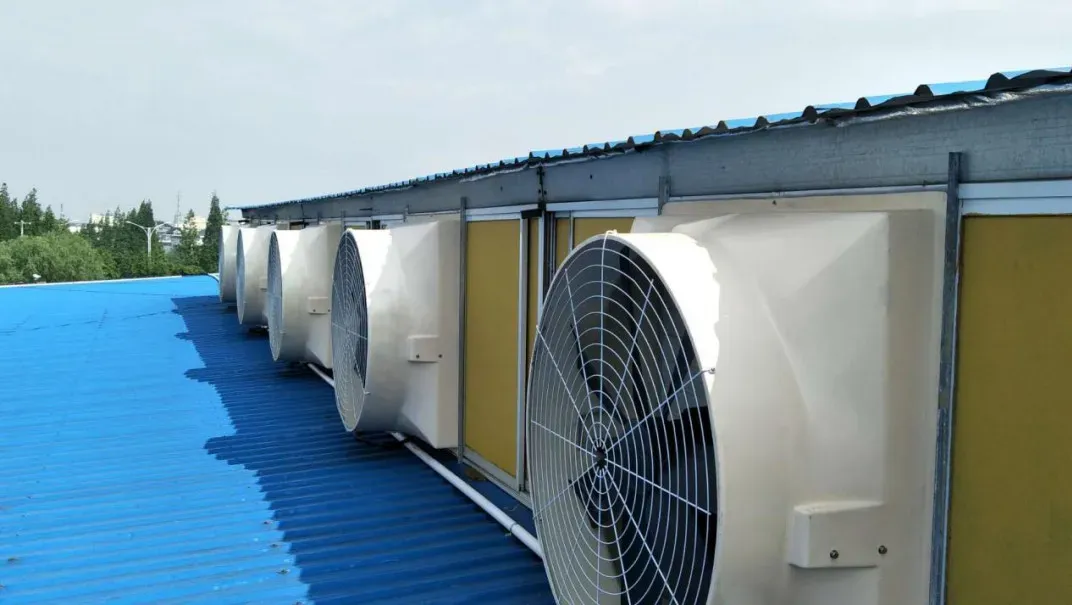
Industrial exhaust fans are a key component of ventilation systems in factories, warehouses, workshops, kitchens, and other large indoor environments. These fans help move stale air, heat, smoke, fumes, dust, and other airborne contaminants out of workspaces, improving indoor air quality and contributing to safer, more comfortable environments. Unlike residential fans, industrial exhaust fans are designed for heavy-duty performance, continuous operation, and challenging conditions
Benefits and Limitations of Industrial Exhaust Fans
Key Benefits
Industrial exhaust fans play a vital role in many applications:
-
Improved Air Quality: They remove pollutants, fumes, and airborne dust, helping reduce respiratory risks and creating a healthier workspace.
-
Temperature and Humidity Control: By exhausting hot or humid air, these systems help maintain a more stable indoor climate, which can protect equipment and improve comfort.
-
Support for Safety Compliance: Many industries must meet ventilation standards set by occupational safety regulations. Proper exhaust systems contribute toward that compliance.
-
Lower HVAC Load: By removing heat and contaminants, exhaust fans can reduce the workload on air conditioning systems, lowering energy costs.
Limitations to Consider
-
Initial Costs: Higher-capacity and certified models (e.g., explosion-proof) can require significant upfront investment.
-
Noise Levels: Industrial fans can generate levels of noise that may require mitigation strategies in certain environments.
-
Maintenance Requirements: Regular maintenance is essential to ensure optimal performance and long service life.
Types or Categories of Industrial Exhaust Fans
Industrial exhaust fans come in several main categories, each suited to particular use cases. Understanding these types helps in matching equipment to the needs of a facility.
1. Axial Fans
Axial fans move air parallel to the fan shaft and are often used for high-volume, low-pressure applications, such as open warehouse ventilation. They can take the form of simple propeller fans or more enclosed tube-axial designs.
Pros:
-
High airflow capability
-
Relatively lower cost
-
Simple installation
Cons:
-
Less effective in ducted systems with high resistance
2. Centrifugal Fans
Centrifugal fans move air perpendicular to the intake and are well suited for applications requiring higher static pressure, such as ducted exhaust systems or filters.
Pros:
-
Better pressure handling
-
Effective in ducted systems
-
Suitable for dust, fumes, and longer duct runs
Cons:
-
Larger footprint
-
Generally more expensive
3. Roof-Mounted Fans
These are installed on building rooftops to expel heat and humidity at the highest point of a structure. They are common in manufacturing plants and food processing facilities.
4. Wall-Mounted Fans
These units are mounted on exterior walls to provide targeted ventilation for specific areas like workshops or machine rooms.
5. Explosion-Proof Fans
Designed for hazardous environments with flammable gases or dust, these fans carry certifications such as UL1203 or ATEX and are built with reinforced housings.
Comparison: Fan Types
| Fan Type | Typical Use Area | Static Pressure | Best For |
|---|---|---|---|
| Axial | Warehouses, open spaces | Low | High volume, low resistance |
| Centrifugal | Ducted systems, chemical plants | High | Long ducts, filters |
| Roof-Mounted | Industrial roofs, heat removal | Medium | Remove hot air |
| Wall-Mounted | Workshops, localized spots | Medium | Target ventilation |
| Explosion-Proof | Hazardous locations | High | Flammable environments |
Latest Trends and Innovations
The industrial ventilation sector increasingly emphasizes energy efficiency, safety compliance, and smart integration:
-
Energy-Efficient Motors: IE3 or EC motor standards help reduce energy consumption over the lifecycle of the fan.
-
Variable Frequency Drives (VFDs): Allow adjustable speed control, improving efficiency when full power isn’t needed.
-
Integrated Controls: Sensors and automated control systems can optimize fan speed based on air quality or temperature.
-
Explosion-Proof and Corrosion-Resistant Builds: Specialized fans for chemical plants or hazardous facilities improve safety.
Key Features to Consider When Choosing a Fan
When selecting an industrial exhaust fan, consider these important specifications:
Airflow Capacity (CFM)
Airflow is measured in cubic feet per minute (CFM) and should match your space’s volume and ventilation needs. A basic calculation method uses room volume × air changes per hour ÷ 60 to estimate required CFM.
Static Pressure
Static pressure indicates resistance in ductwork and filters. Higher static pressure needs generally favor centrifugal designs.
Build Material
Galvanized steel and stainless steel offer corrosion resistance, fiberglass is ideal for chemical environments, and coated materials help in moist conditions.
Motor Efficiency and Ratings
Look for motors with high efficiency (IE2, IE3) and appropriate IP ratings for dust and moisture resistance.
Certifications and Safety Standards
Ensure compliance with local safety codes and industry standards, especially for explosion-proof or hazardous area fans.
Top Manufacturers and Solutions
Below is a snapshot of some well-known industrial fan manufacturers and ventilation brands operating globally and regionally.
Global and Multinational Manufacturers
-
Greenheck – A long-standing leader in air movement and industrial fans with a wide range of axial and centrifugal models.
-
Soler & Palau (S&P) – Offers ventilation solutions with an emphasis on energy-efficient and reliable systems.
-
Fantech Industrial Ventilation – Known for ventilation fans meeting ATEX and IECEx standards for hazardous areas.
-
ebm-papst Group – Technology-driven manufacturer of energy-efficient fans and air movement solutions.
-
Rosenberg – Provides a variety of fan types including axial, duct, and roof fans suitable for industrial applications.
Regional or Specialized Providers (Examples from India)
In India, multiple companies produce industrial ventilation products:
-
Golden Engineering Co. Pvt. Ltd. – Roof exhaust fans and ventilation units.
-
Samarth Air Tech Pvt. Ltd. – Industrial roof and exhaust solutions.
-
United Air Tech Industries – Ventilation and exhaust fans across industrial categories.
-
Omega Farm Equipments – Offers industrial exhaust fan products.
This is a sample list reflective of market variety; many other firms offer specialized exhaust, hood, and industrial ventilation fans depending on needs.
Note: Always verify manufacturer data sheets, certifications, and application suitability for your environment.
How to Choose the Right Option: A Step-by-Step Checklist
Use this checklist to guide your decision:
-
Define the Application: Industrial hall, commercial kitchen, workshop, or hazardous area?
-
Calculate Space Volume & Required Air Changes: Use formulas or industry standards.
-
Match Fan Type: Axial for open areas, centrifugal for ducted systems.
-
Consider Environmental Conditions: Moisture, chemicals, dust? Determine materials and coatings needed.
-
Evaluate Motor and Control Options: IE3/EC motors, VFD compatibility.
-
Check Certifications: Especially for explosion-proof use.
-
Plan Installation & Maintenance Access: Ensure easy access points.
Tips for Best Use and Maintenance
-
Regular Cleaning: Dust and debris can reduce airflow efficiency over time.
-
Scheduled Inspection: Bearings, belts, and motor mounts benefit from periodic checks.
-
Lubrication: Follow manufacturer intervals to maintain motor and fan longevity.
-
Noise Monitoring: If noise exceeds comfortable levels, consider enclosures or vibration dampening.
-
Documentation: Keep maintenance records to track performance and service history.
Frequently Asked Questions (FAQs)
Q: What is the difference between axial and centrifugal fans?
A: Axial fans move air parallel to the shaft and suit high-volume, low-pressure needs, while centrifugal fans generate higher pressure and are better for ducted systems.
Q: How do I determine the right CFM for my space?
A: Estimate total space volume and desired air changes per hour, then apply the standard formula to find required CFM.
Q: Are explosion-proof fans necessary for all industrial settings?
A: Only if the environment has flammable gases, vapors, or dust. These units must meet strict certifications and safety standards.
Q: How often should industrial fans be maintained?
A: Maintenance frequency depends on operating conditions; typical guidelines suggest monthly cleaning and quarterly mechanical inspections.
Conclusion
Industrial exhaust fans are essential for maintaining healthy, safe, and efficient indoor environments in a wide range of industrial and commercial settings. Understanding the different fan types, features, and selection criteria enables you to match the right solution to your specific needs. By considering airflow requirements, environmental conditions, and long-term maintenance, you can ensure that your ventilation system enhances air quality and supports both worker comfort and regulatory compliance.
Whether evaluating centrifugal dust extractor fans for high-pressure ducted systems or tube axial fans for open-area ventilation, a careful, informed approach leads to better outcomes and sustainable operation.