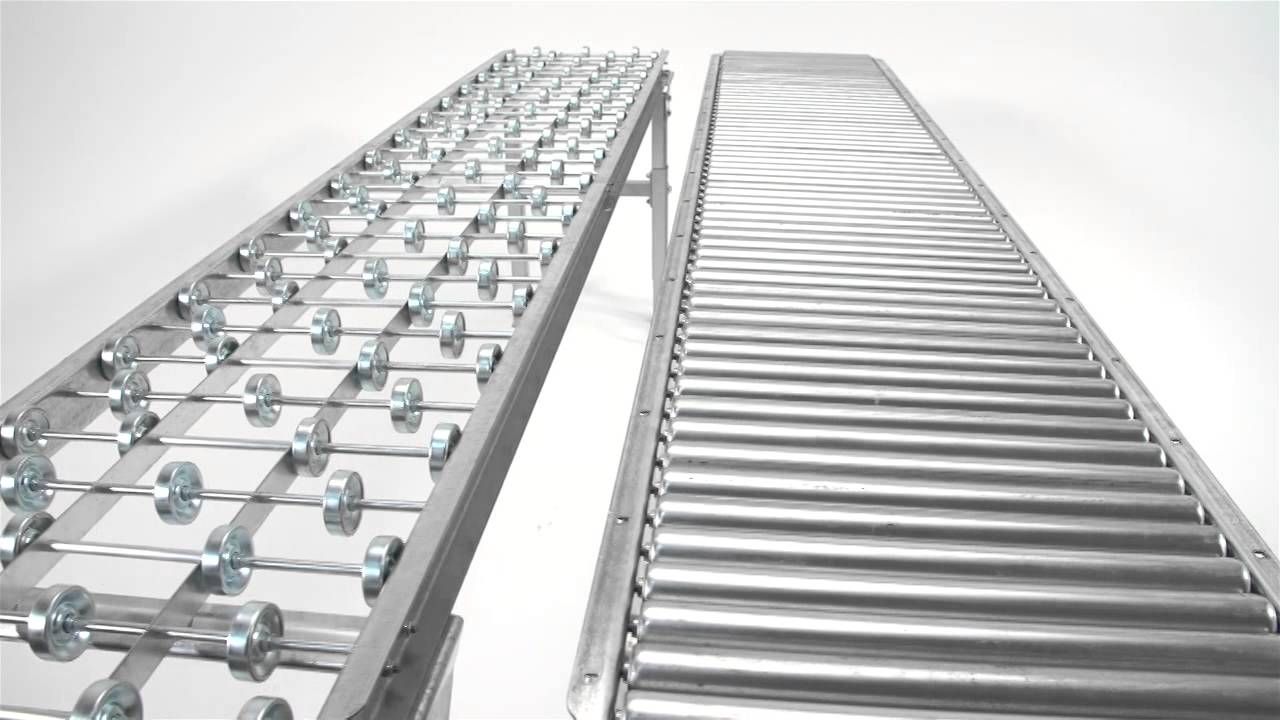
Gravity conveyors are among the simplest and most widely used material handling systems. Unlike powered conveyors, they rely on gravity or a slight incline to move items from one point to another. This makes them a practical choice for many industries where cost efficiency, simplicity, and low maintenance are priorities
How Gravity Conveyors Work
Gravity conveyors operate without motors. Instead, they use gravity or manual force to move materials along rollers or wheels.
Basic working principle:
- Items are placed on the conveyor surface
- A slight incline or manual push initiates movement
- Rollers or wheels reduce friction and guide movement
- Items move toward the discharge end
The effectiveness of a gravity conveyor depends on factors like slope, load weight, and roller design.
Benefits of Gravity Conveyors
1. Low Operational Cost
Since no motors or power sources are required, energy costs are minimal.
2. Simple Design
Fewer components mean easier installation and operation.
3. Low Maintenance
With fewer moving parts, maintenance requirements are reduced.
4. Flexibility in Layout
Systems like flexible gravity conveyors can be adjusted to fit different spaces.
5. Quiet Operation
Gravity systems typically produce less noise compared to powered conveyors.
Limitations to Consider
- Dependence on gravity or manual force
- Limited control over speed
- Not suitable for all materials (especially very light or irregular items)
- Requires proper slope for efficiency
- Less effective for long-distance transport
Understanding these limitations helps in selecting the right application.
Types of Gravity Conveyors
1. Gravity Flow Conveyors
Gravity flow conveyors are designed to move items smoothly along a slightly inclined surface.
Key features:
- Continuous movement
- Efficient for medium to heavy loads
- Common in distribution systems
2. Gravity Fed Conveyors
Gravity fed conveyors rely on manual loading and gravity-driven movement.
Key features:
- Simple operation
- Suitable for short distances
- Often used in assembly or packing areas
3. Gravity Feed Conveyor Systems
These systems are similar to gravity fed conveyors but may include structured layouts and multiple sections.
Applications:
- Packaging lines
- Sorting areas
4. Flexible Gravity Conveyors
Flexible gravity conveyors can expand, contract, and curve to fit different layouts.
Key features:
- Adjustable length
- Ability to handle curved paths
- Easy to reposition
Applications:
- Warehouses
- Loading and unloading zones
5. Gravity Conveyor Belt (Conceptual Use)
While traditional gravity conveyors use rollers or wheels, the term “gravity conveyor belt” is sometimes used to describe systems that rely on gravity-assisted movement.
6. Conveyor Gravity Systems (General Concept)
This broader category includes all systems that use gravity as the primary force for material movement.
Comparison Table: Gravity Conveyor Types
| Type | Best Use Case | Key Advantage | Limitation |
|---|---|---|---|
| Gravity Flow Conveyor | Continuous movement | Smooth flow | Needs proper slope |
| Gravity Fed Conveyor | Short distances | Simple operation | Limited control |
| Flexible Gravity Conveyor | Dynamic layouts | High adaptability | Slightly lower stability |
| Gravity Feed System | Structured workflows | Organized flow | Setup planning required |
Latest Trends and Innovations
1. Modular Conveyor Designs
Modern systems are designed in modular sections, making them easier to expand or reconfigure.
2. Improved Roller Materials
New materials reduce friction and increase durability.
3. Integration with Automated Systems
Gravity conveyors are often combined with automated systems for hybrid workflows.
4. Space Optimization
Flexible designs allow better use of available space in warehouses and facilities.
5. Ergonomic Enhancements
Design improvements aim to reduce manual effort and improve safety.
Key Features to Consider
When evaluating gravity conveyor systems, consider:
- Load type and weight
- Required conveyor length and layout
- Available space
- Roller or wheel type
- Frame material and durability
- Ease of installation and adjustment
- Maintenance requirements
Top Companies and Solutions
Several companies are known for gravity conveyor systems:
- Hytrol Conveyor Company
- Daifuku
- Interroll
- Ultimation Industries
- Ashland Conveyor Products
These organizations offer a range of conveyor solutions, including gravity-based systems.
How to Choose the Right Gravity Conveyor
Step-by-Step Checklist
- Identify the type of items to be moved
- Determine the weight and size of loads
- Assess the required flow direction and speed
- Evaluate space and layout constraints
- Choose between fixed or flexible systems
- Consider future expansion needs
Practical Tips for Use and Maintenance
- Ensure the conveyor is installed at the correct incline
- Keep rollers clean and free of debris
- Regularly inspect for wear and damage
- Avoid overloading the system
- Align sections properly to prevent jams
- Train staff on safe handling practices
FAQs
What is the main advantage of gravity conveyors?
They offer a simple, low-cost way to move materials without requiring power.
When should a flexible gravity conveyor be used?
When the layout changes frequently or requires curved paths.
Are gravity conveyors suitable for all materials?
They are best suited for items with stable shapes and sufficient weight.
How is movement controlled in gravity systems?
Movement depends on slope, load weight, and roller design.
Do gravity conveyors require maintenance?
Yes, but maintenance is generally minimal compared to powered systems.
Conclusion
Gravity conveyors provide a practical and efficient solution for material handling in a wide range of environments. Their simplicity, low operational cost, and adaptability make them a common choice for many applications.
By understanding the differences between gravity flow, gravity fed, and flexible conveyor systems, users can select the most suitable option for their needs. Careful planning, proper installation, and regular maintenance can help ensure reliable performance over time.
A well-chosen gravity conveyor system supports smoother workflows and efficient material movement, making it a valuable part of modern operations.