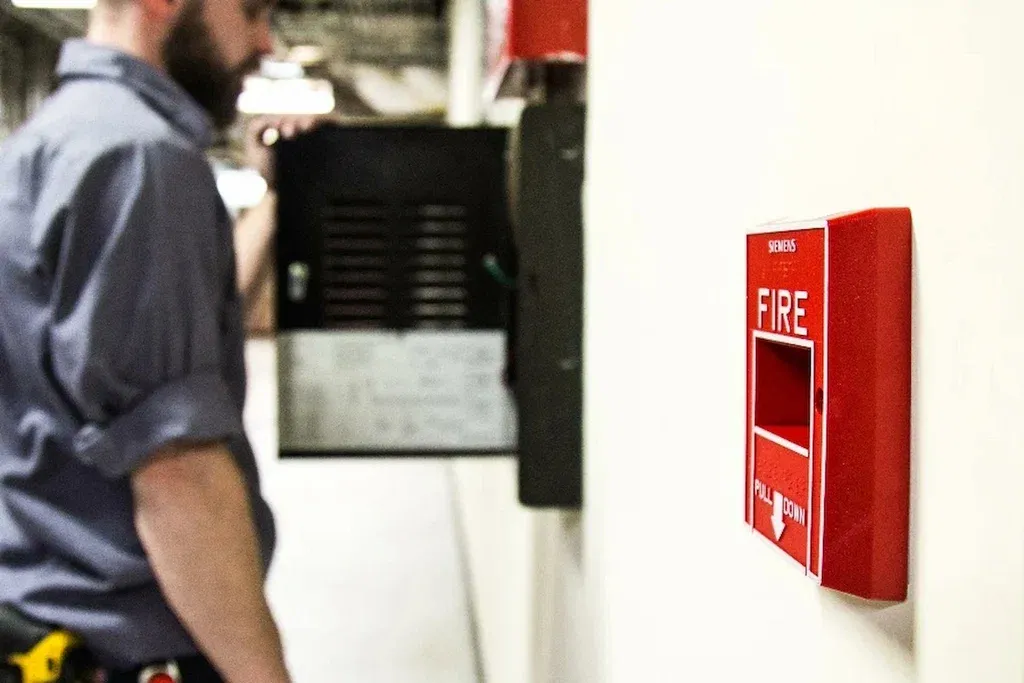
Fire detection systems play a critical role in protecting buildings, people, and assets. Whether in offices, factories, hospitals, warehouses, or retail spaces, early fire detection can significantly reduce damage and improve evacuation safety. Modern fire detection is no longer limited to simple smoke alarms. Today’s systems combine sensors, automated alerts, monitoring networks, and integration with building management systems. As regulations evolve and commercial spaces become more complex, understanding how fire detection works helps businesses make informed decisions about safety planning.
Benefits of fire detection systems
Fire detection systems offer several practical advantages beyond simply sounding an alarm.
Early warning and faster response
The primary benefit is rapid detection. Identifying smoke, heat, or flames early allows occupants to evacuate and emergency services to respond before a fire spreads.
Property and asset protection
In commercial environments, fires can damage machinery, stock, records, and infrastructure. Detection systems help reduce financial losses by triggering suppression systems or alerts quickly.
Regulatory compliance
Many commercial buildings are required to install certified fire detection systems to meet local safety codes and insurance requirements.
Integration with safety infrastructure
Modern systems can connect to sprinkler systems, emergency lighting, access controls, and public address systems, improving coordinated response.
Limitations and practical considerations
While fire detection systems are essential, they also have limitations that should be understood.
Installation and maintenance costs
Large commercial systems can require significant investment in sensors, wiring, panels, and monitoring services.
False alarms
Improper sensor placement, dust, steam, or industrial processes can trigger unwanted alarms, disrupting operations.
Dependence on maintenance
Detection systems only perform reliably when regularly tested and serviced. Poor maintenance can lead to system failure.
Complexity in large facilities
Industrial sites or multi-building campuses may require advanced system design to ensure full coverage.
Types of fire detection systems
Fire detection systems vary based on the type of sensor used and how alarms are communicated.
Smoke detection systems
These are the most widely used systems and are suitable for many commercial environments.
Common types include:
-
Ionization detectors – responsive to fast-flaming fires
-
Photoelectric detectors – effective for smoldering fires
-
Beam detectors – used in large open spaces such as warehouses or atriums
Smoke detectors are often used in offices, schools, hotels, and residential complexes.
Heat detection systems
Heat detectors respond to temperature changes rather than smoke. They are useful in environments where smoke detectors may cause false alarms.
Typical applications include:
-
Kitchens
-
Industrial plants
-
Parking garages
-
Dusty warehouses
Heat detectors can be fixed-temperature or rate-of-rise types.
Flame detection systems
Flame detectors identify infrared or ultraviolet radiation emitted by fire. These systems are often used in high-risk industrial environments.
Common uses include:
-
Oil and gas facilities
-
Chemical plants
-
Aircraft hangars
-
Fuel storage areas
Flame detection systems provide very rapid response in hazardous zones.
Aspirating smoke detection systems
These advanced systems actively draw air through pipes into a detection unit that analyzes particles at a very early stage.
Best suited for:
-
Data centers
-
Server rooms
-
Museums
-
Clean manufacturing environments
They are often used where early detection is critical and even small fires can cause major losses.
Addressable fire alarm systems
Addressable systems allow each detector to be individually identified by the control panel. This makes it easier to locate the source of an alarm.
Advantages include:
-
Faster troubleshooting
-
Precise fire location identification
-
Better monitoring capabilities
These systems are commonly installed in large commercial buildings, hospitals, and campuses.
Commercial uses of fire detection systems
Fire detection is used across many industries, but the system type often depends on the environment.
Office buildings
Typically use smoke detectors combined with manual call points and alarm panels.
Warehouses and logistics centers
May use beam detectors or aspirating systems due to large open spaces and high ceilings.
Manufacturing facilities
Often combine heat detectors, flame detectors, and smoke sensors to match industrial risks.
Healthcare facilities
Require highly reliable addressable systems with integrated evacuation alerts and backup power.
Retail environments
Use standard smoke detection systems but often integrate them with public announcement systems for customer evacuation.
Monitoring methods used in fire detection
Detection alone is not enough; monitoring determines how alerts are handled.
Local alarm monitoring
The system sounds alarms inside the building. This approach relies on occupants or staff to respond.
Remote monitoring centers
Signals are transmitted to a monitoring service that can notify emergency responders automatically.
Integrated building monitoring
Some systems connect to centralized building management platforms that oversee HVAC, access control, and security.
Wireless monitoring networks
Newer systems can transmit alerts through wireless connections, reducing wiring needs and allowing flexible installation.
Comparison table: major fire detection options
| System Type | Detection Speed | Installation Complexity | Maintenance Level | Best For |
|---|---|---|---|---|
| Smoke detectors | Moderate–Fast | Low | Low | Offices, retail, housing |
| Heat detectors | Moderate | Low | Low | Kitchens, garages, industrial areas |
| Flame detectors | Very fast | Medium | Medium | Hazardous industrial zones |
| Aspirating systems | Very early detection | High | Medium | Data centers, archives |
| Addressable systems | Fast with precise location | Medium–High | Medium | Large commercial buildings |
Latest trends and innovations in fire detection
Smart connected alarm systems
Modern fire detection systems increasingly use cloud connectivity and mobile alerts. Facility managers can monitor system status remotely.
AI-assisted detection
Some advanced systems analyze environmental data to reduce false alarms and improve detection accuracy.
Wireless fire detection networks
Wireless sensors allow installation in historic buildings or large facilities where cabling is difficult.
Integration with evacuation guidance
Some systems now provide automated voice instructions or directional evacuation guidance during emergencies.
Key features to consider before choosing a system
When selecting a fire detection system, several factors should guide the decision.
Building size and layout
Large or complex buildings may require addressable or zoned systems to identify alarm locations quickly.
Risk level of the environment
Industrial sites handling flammable materials may require flame detection rather than standard smoke alarms.
Regulatory requirements
Local fire codes and insurance requirements often determine minimum system specifications.
Maintenance accessibility
Choose systems that can be tested, serviced, and repaired easily.
Monitoring preferences
Decide whether you need local alarms, remote monitoring, or integration with security infrastructure.
Examples of widely known fire detection system providers
Many companies manufacture fire detection equipment and integrated alarm systems. Examples often cited in industry comparisons include:
-
Honeywell Fire Systems
-
Siemens Building Technologies
-
Bosch Fire Safety Systems
-
Johnson Controls Fire Protection
-
Eaton Fire Systems
Public product comparisons and technical specifications are typically available on manufacturer websites and safety certification bodies.
How to choose the right fire detection system
Step-by-step selection checklist
1. Assess building risks
-
What type of fire hazards exist?
-
Are flammable materials stored onsite?
-
Is occupancy high or low?
2. Evaluate building structure
-
Ceiling height
-
Room layout
-
Ventilation systems
3. Determine monitoring needs
-
Local alerts only
-
Offsite monitoring
-
Integration with security systems
4. Compare installation complexity
-
Wiring requirements
-
Sensor placement
-
Control panel location
5. Plan for long-term maintenance
-
Testing schedule
-
Spare parts availability
-
Service technician access
Tips for best use and maintenance
Fire detection systems are only effective when properly maintained.
Usage tips
-
Train staff on alarm procedures and evacuation routes
-
Ensure detectors are not blocked or painted over
-
Review system coverage after building renovations
Maintenance tips
-
Test alarms regularly according to safety guidelines
-
Replace batteries and backup power sources on schedule
-
Inspect detectors for dust or contamination
-
Schedule professional servicing annually
FAQs: Common questions about fire detection systems
Are fire detection systems legally required in commercial buildings?
In many regions, yes. Requirements depend on building type, occupancy, and local fire codes.
How often should systems be tested?
Basic checks may be monthly, while professional inspections are often required annually.
Do wireless fire alarms work as well as wired systems?
Wireless systems can be effective when installed properly, but signal reliability and battery maintenance are important considerations.
Can fire detection systems integrate with sprinklers?
Yes. Many modern systems trigger suppression systems automatically when certain conditions are detected.
What causes most false alarms?
Common causes include steam, dust, cooking fumes, improper placement, and lack of maintenance.
Conclusion: A practical approach to fire detection planning
Fire detection systems are a fundamental part of building safety, but choosing the right one requires more than selecting standard smoke alarms. The most effective approach is to evaluate the building’s risk profile, layout, and regulatory requirements before comparing system types.
In many cases, a combination of detectors, monitoring methods, and integrated safety infrastructure provides the best protection. Regular maintenance, staff training, and system testing are equally important to ensure reliability over time.
Understanding these factors helps businesses and property owners select fire detection systems that are practical, compliant, and suited to their specific environment.