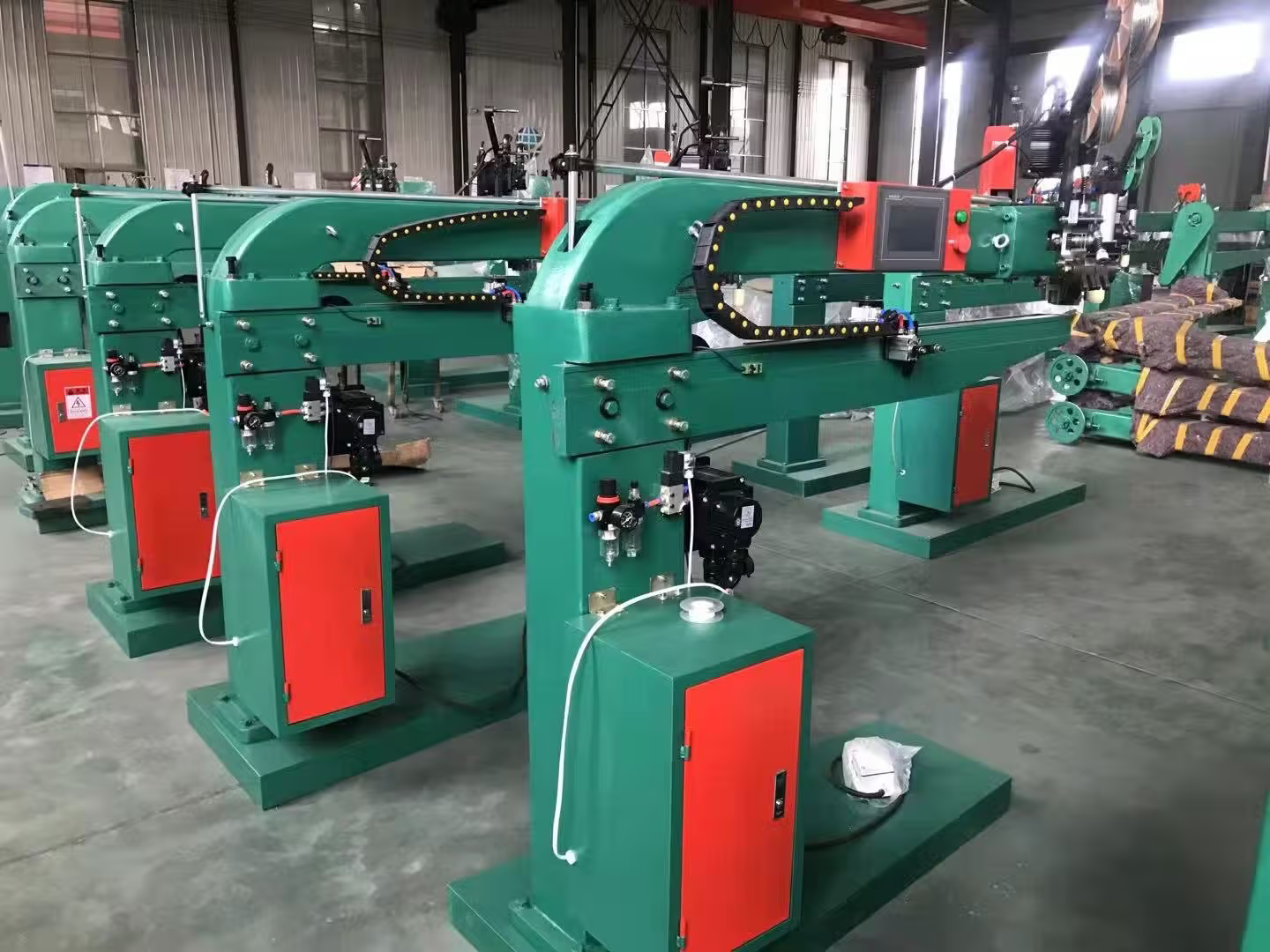
Packaging plays a critical role in protecting goods during storage and transportation, especially in industries that rely on corrugated boxes and cartons. One of the key processes in box manufacturing is stitching, which ensures that the flaps of corrugated boxes are securely joined. This is where box stitching machines come into use.
What Are Box Stitching Machines?
Box stitching machines are mechanical devices used to join the flaps of corrugated boxes or cartons using metal wires or staples. These machines are commonly used in corrugated box manufacturing units and packaging facilities.
They are particularly useful for:
- Heavy-duty packaging
- Large cartons and export boxes
- Situations where strong joints are required
Unlike gluing methods, stitching provides a firm mechanical bond, making it suitable for high-strength packaging needs.
Benefits of Box Stitching Machines
1. Strong and Durable Joints
Stitching creates a secure bond that can withstand heavy loads and rough handling.
2. Suitable for Thick Corrugated Sheets
These machines can handle multi-layer corrugated boards that may not bond well with adhesives.
3. Consistent Output
Machines provide uniform stitching patterns, improving packaging quality.
4. Faster Processing
Compared to manual stitching, automated systems increase productivity.
5. Reduced Dependency on Adhesives
This can be useful in environments where glue application is challenging or costly.
Limitations and Considerations
1. Initial Equipment Cost
Automated stitching machines may require a higher initial investment.
2. Maintenance Needs
Regular maintenance is necessary to ensure proper functioning.
3. Limited Flexibility
Machines are typically designed for specific box sizes or thickness ranges.
4. Visible Stitching
Unlike glue, stitches remain visible, which may not be suitable for all packaging types.
Types of Box Stitching Machines
Box stitching machines can be categorized based on automation level and application.
1. Manual Box Stitching Machines
Manual machines require operator involvement for feeding and positioning.
Features:
- Simple design
- Low cost
- Suitable for small-scale operations
Applications:
- Small packaging units
- Custom or low-volume production
2. Semi-Automatic Box Stitching Machines
These machines automate part of the stitching process while still requiring manual input.
Features:
- Improved efficiency over manual systems
- Better consistency
- Moderate production speed
Applications:
- Medium-scale packaging operations
3. Fully Automatic Box Stitching Machines
Fully automatic machines handle feeding, stitching, and output with minimal human intervention.
Features:
- High production speed
- Consistent quality
- Reduced labor requirements
Applications:
- Large-scale manufacturing
- High-volume packaging lines
4. Single Head and Double Head Stitchers
These machines are classified based on the number of stitching heads.
- Single head stitchers: Suitable for basic stitching tasks
- Double head stitchers: Provide faster output and better efficiency
Comparison Table of Box Stitching Machine Types
| Machine Type | Automation Level | Production Speed | Best Use Case | Cost Level |
|---|---|---|---|---|
| Manual | Low | Low | Small-scale production | Low |
| Semi-automatic | Medium | Medium | Medium-scale operations | Medium |
| Automatic | High | High | Industrial production | High |
| Double head stitcher | High | Very high | High-volume packaging | High |
Working Principles of Box Stitching Machines
Box stitching machines operate using a mechanical fastening process.
Step-by-Step Process
-
Box Positioning
The corrugated box is placed in the machine. -
Feeding Mechanism
The machine aligns the box flaps for stitching. -
Wire Feeding
Metal wire is fed into the stitching head. -
Stitch Formation
The machine forms and inserts staples through the corrugated layers. -
Closing and Output
The stitched box is released for further handling.
This process ensures a strong and consistent joint across all boxes.
Industrial Applications
Box stitching machines are used across multiple industries.
Packaging Industry
Used for sealing corrugated cartons for shipping and storage.
E-commerce and Logistics
Ensures secure packaging for transported goods.
Food and Beverage
Used for bulk packaging of products.
Manufacturing
Supports packaging of industrial goods and components.
Latest Trends and Innovations
Automation and Smart Controls
Modern machines include programmable systems for improved accuracy and efficiency.
High-Speed Stitching Systems
Advanced machines are designed for faster production rates.
Energy-Efficient Designs
New models focus on reducing energy consumption.
Integration with Packaging Lines
Machines can be integrated with other packaging systems for streamlined operations.
Key Features to Consider
| Feature | Importance |
|---|---|
| Stitching speed | Determines output capacity |
| Wire compatibility | Ensures proper stitching |
| Machine size | Affects space requirements |
| Automation level | Impacts productivity |
| Build quality | Ensures durability |
| Safety features | Protects operators |
Major Manufacturers and Industry Solutions
Several companies manufacture box stitching machines and packaging equipment, including:
- Acme Machinery Company
- Friends Engineering Works
- IndiaMART-listed manufacturers and suppliers
- Zhejiang Packaging Machinery firms
- Japanese and European industrial equipment providers
When comparing machines, users typically evaluate:
- Production speed
- Reliability
- Ease of operation
- Maintenance requirements
How to Choose the Right Box Stitching Machine
Step 1: Identify Production Needs
Determine whether your operation is small, medium, or large scale.
Step 2: Consider Box Specifications
Evaluate size, thickness, and material of boxes.
Step 3: Choose Automation Level
Select manual, semi-automatic, or automatic based on output requirements.
Step 4: Assess Budget
Balance initial investment with long-term efficiency.
Step 5: Check Space and Setup
Ensure the machine fits within the available workspace.
Selection Checklist
- Production volume requirements
- Box size and material
- Automation level
- Machine durability
- Maintenance needs
- Operator skill level
Tips for Best Use and Maintenance
Regular Cleaning
Keep the machine free from dust and debris.
Inspect Stitching Heads
Check for wear and replace components when needed.
Proper Lubrication
Ensure smooth operation of moving parts.
Monitor Wire Quality
Use compatible wire for consistent stitching.
Train Operators
Proper training reduces errors and improves efficiency.
Frequently Asked Questions
What is the main purpose of a box stitching machine?
It is used to join corrugated box flaps securely using metal staples.
How is stitching different from gluing?
Stitching uses metal fasteners, while gluing relies on adhesive bonding.
Are automatic machines necessary for small businesses?
Not always. Manual or semi-automatic machines are often sufficient for small operations.
What materials can be stitched?
Primarily corrugated cardboard and carton boards.
How often should maintenance be performed?
Regular maintenance schedules depend on usage but should include periodic inspections and cleaning.
Conclusion
Box stitching machines are an essential part of the packaging process, especially for industries that require strong and durable corrugated boxes. They provide a reliable method for securing cartons, particularly in applications where strength and durability are critical.
Understanding the different types of machines, their working principles, and key features helps in selecting the right solution for specific needs. Whether for small-scale operations or large industrial production, choosing the appropriate machine can improve efficiency and packaging quality.
With advancements in automation and integration, box stitching machines continue to evolve, offering better performance and adaptability for modern packaging requirements.