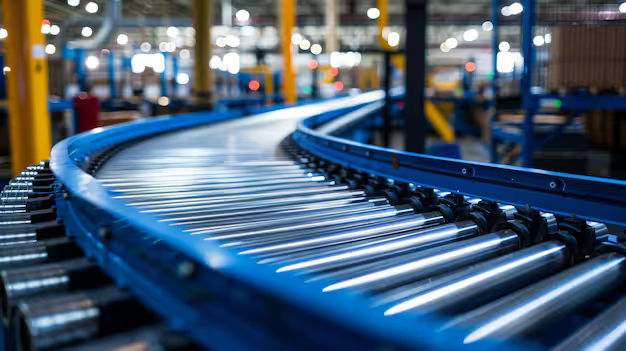
Belt conveyors are among the most widely used material handling systems across industries. From manufacturing plants and warehouses to food processing and logistics centers, these systems help move materials efficiently, safely, and consistently. Their versatility comes from the variety of belt designs and configurations available, each suited to specific tasks and environments.
How Belt Conveyors Work
At a basic level, a belt conveyor consists of a continuous belt loop stretched over pulleys. A motor drives one or more pulleys, causing the belt to move and transport materials from one point to another.
Key components include:
- Belt – The moving surface that carries materials
- Pulleys – Drive and idle rollers that support and move the belt
- Motor and drive system – Provides motion
- Frame – Supports the entire structure
- Rollers or slider bed – Reduces friction and supports load
The design of the belt and support system determines how the conveyor performs in different applications.
Benefits of Belt Conveyors
Belt conveyors are widely used because they offer several practical advantages:
1. Efficient Material Handling
They allow continuous movement of materials, reducing manual handling and improving productivity.
2. Versatility
Different belt types can handle a wide range of materials, from lightweight packages to bulk goods.
3. Smooth Operation
They provide consistent and gentle movement, which is important for fragile or sensitive items.
4. Scalability
Systems can be expanded or modified based on operational needs.
5. Reduced Labor Effort
Automation reduces the need for manual transport and improves workplace safety.
Limitations to Consider
Despite their usefulness, belt conveyors also have some limitations:
- Initial setup cost can be higher compared to simpler handling methods
- Maintenance requirements increase with system complexity
- Limited flexibility in fixed installations
- Material constraints depending on belt type (temperature, weight, shape)
- Potential wear and tear on belts over time
Understanding these factors helps in selecting the right system for long-term use.
Types of Belt Conveyors
1. Slider Belt Conveyor
Slider belt conveyors are one of the most common types. Instead of rollers, the belt slides over a flat surface, usually made of steel or plastic.
Key characteristics:
- Simple design
- Suitable for light to medium loads
- Cost-effective for basic operations
Common uses:
- Packaging lines
- Assembly operations
- Distribution centers
Advantages:
- Lower cost
- Easy installation
- Minimal moving parts
Limitations:
- Higher friction compared to roller systems
- Not ideal for heavy loads
2. Low Profile Belt Conveyor
Low profile conveyors are designed with a compact structure, making them suitable for tight spaces or integration into machinery.
Key characteristics:
- Reduced height
- Lightweight design
- Easy integration
Common uses:
- Electronics manufacturing
- Small part handling
- Automation systems
3. Seamless Conveyor Belt
Seamless belts are manufactured without joints or seams, creating a continuous surface.
Key characteristics:
- Uniform structure
- Smooth surface
- Reduced risk of contamination
Common uses:
- Food processing
- Pharmaceutical applications
- Clean environments
Advantages:
- Hygienic design
- Reduced maintenance at joints
- Longer lifespan in certain applications
Limitations:
- Higher manufacturing cost
- Limited customization compared to segmented belts
4. Circular Conveyor Belt
Circular conveyors operate in a loop, allowing continuous movement along a closed path.
Key characteristics:
- Circular or oval layout
- Continuous operation
- Space-efficient routing
Common uses:
- Airports (baggage handling)
- Warehouses
- Retail and distribution
Advantages:
- Continuous flow
- Efficient space utilization
Limitations:
- Complex installation
- Less flexibility in layout changes
5. Grip Conveyor Belt
Grip belts are designed with textured surfaces to prevent slipping.
Key characteristics:
- High friction surface
- Suitable for inclined transport
Common uses:
- Inclined conveyors
- Material handling in packaging
6. Pleated Conveyor Belt
Pleated belts include raised sections or folds that help contain materials during movement.
Key characteristics:
- Improved material containment
- Suitable for bulk handling
Common uses:
- Agriculture
- Food processing
- Bulk material transport
7. Pocket Belt Conveyor
Pocket conveyors use compartments or pockets to hold materials securely.
Key characteristics:
- Enclosed sections
- Controlled movement
Common uses:
- Vertical transport
- Fragile or loose materials
Comparison Table: Key Conveyor Types
| Conveyor Type | Best For | Key Advantage | Limitation |
|---|---|---|---|
| Slider Belt | Light materials | Simple and cost-effective | Higher friction |
| Low Profile | Tight spaces | Compact design | Limited load capacity |
| Seamless Belt | Hygiene-sensitive areas | No joints | Higher cost |
| Circular Conveyor | Continuous flow systems | Space efficiency | Complex setup |
| Grip Belt | Inclined transport | Prevents slipping | Limited flat use |
| Pleated Belt | Bulk materials | Better containment | Cleaning complexity |
| Pocket Conveyor | Vertical movement | Secure handling | Specialized use only |
Latest Trends and Innovations
The conveyor industry continues to evolve with advancements in technology and design:
1. Smart Conveyor Systems
Integration with sensors and automation allows real-time monitoring and improved efficiency.
2. Energy-Efficient Motors
Modern systems use optimized motors to reduce energy consumption.
3. Modular Designs
Flexible components allow easier customization and upgrades.
4. Hygienic Materials
Improved materials for food and pharmaceutical industries enhance safety and compliance.
5. Automation Integration
Conveyors are increasingly integrated with robotics and AI-driven systems.
Key Features to Consider
When evaluating belt conveyors, consider the following:
- Material type (weight, size, fragility)
- Operating environment (temperature, humidity, cleanliness)
- Load capacity
- Speed requirements
- Maintenance needs
- Space constraints
- Energy consumption
Top Companies and Solutions
Several manufacturers are known for conveyor solutions across industries:
- Hytrol Conveyor Company
- Dorner Manufacturing
- FlexLink
- Interroll
- mk North America
These companies offer a range of conveyor designs, including modular, hygienic, and automated systems.
How to Choose the Right Conveyor
Selecting the right conveyor depends on several practical factors:
Step-by-Step Checklist
- Identify the type of material being transported
- Determine required throughput and speed
- Evaluate space and layout constraints
- Consider environmental conditions
- Assess maintenance capabilities
- Review long-term scalability needs
Practical Tips for Use and Maintenance
- Regularly inspect belts for wear or damage
- Keep the system clean to avoid buildup
- Ensure proper alignment of pulleys and belts
- Lubricate moving components as needed
- Monitor load limits to prevent strain
- Replace worn parts promptly
Proper maintenance helps extend system life and maintain efficiency.
FAQs
What is the most common type of belt conveyor?
Slider belt conveyors are among the most widely used due to their simple design and cost-effectiveness.
When should a seamless belt be used?
Seamless belts are ideal in environments requiring hygiene, such as food processing or pharmaceuticals.
Are circular conveyors suitable for all industries?
They are best for continuous flow systems like baggage handling or warehouse loops but may not suit all layouts.
How do I reduce conveyor maintenance?
Regular inspection, cleaning, and proper usage significantly reduce maintenance needs.
Can conveyors handle different materials?
Yes, but the belt type must match the material’s weight, shape, and environmental conditions.
Conclusion
Belt conveyors play an essential role in modern material handling, offering efficient and reliable transport solutions across industries. From simple slider conveyors to advanced seamless and circular systems, each type serves a specific purpose.
Understanding the differences between these designs helps users choose systems that align with their operational needs. By considering factors such as material type, environment, and system requirements, it is possible to select a conveyor that balances performance, durability, and efficiency.
A well-chosen conveyor system not only improves workflow but also supports long-term operational reliability.