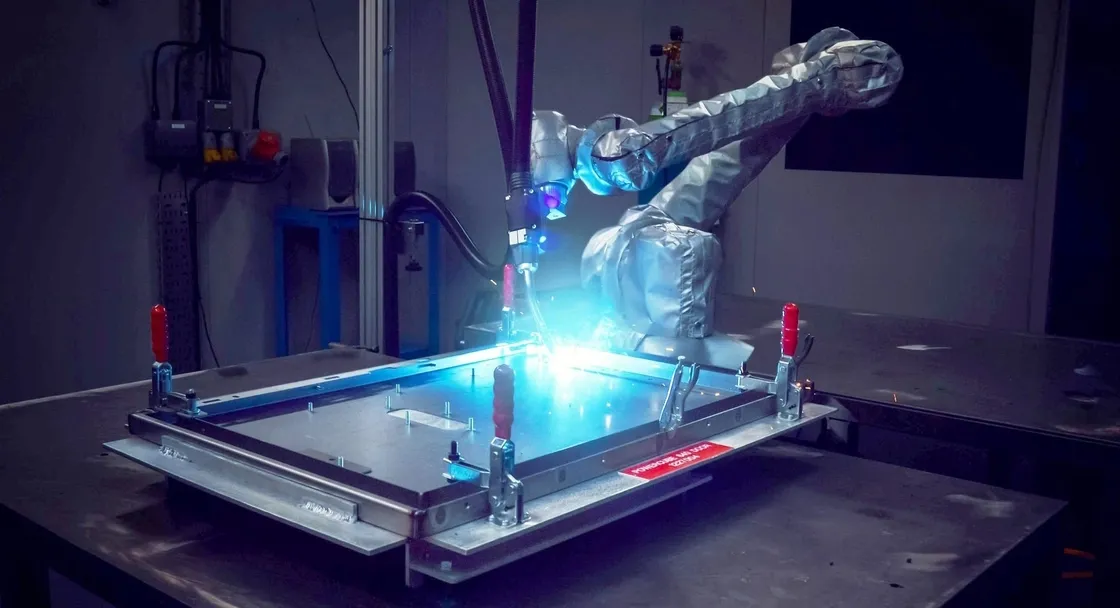
Manufacturing industries are increasingly turning to automation to improve consistency, productivity, and workplace safety. Welding, which has traditionally relied on skilled manual labor, is one of the areas seeing major technological transformation. Automated welding systems and collaborative robot welding solutions are now widely used in sectors such as automotive production, construction equipment manufacturing, shipbuilding, and metal fabrication.
What Are Automated Welding Systems?
Automated welding systems refer to equipment that performs welding operations using programmed controls rather than continuous manual input. These systems can range from fixed-position machines performing repetitive welds to fully robotic welding cells integrated into smart production lines.
Automation can involve:
-
Robotic arms performing weld paths
-
Mechanized welding equipment moving along tracks
-
Sensors monitoring weld quality
-
Software controlling speed, arc stability, and positioning
The level of automation depends on production scale and product complexity. Some systems operate autonomously once programmed, while others still require human supervision.
What Are Cobot Welding Robots?
Collaborative robots, often called cobots, are robotic systems designed to work safely alongside human operators. Unlike traditional industrial robots that require protective cages, cobots include built-in sensors that detect human presence and reduce force or stop movement when necessary.
In welding applications, cobots are often used in small or mid-sized workshops where flexibility is important. They are commonly used for:
-
Low-volume or mixed-product welding
-
Tasks that change frequently
-
Situations where full robotic cells are impractical
-
Supporting skilled welders rather than replacing them
Cobot welding allows operators to guide the robot manually during programming, making setup faster than conventional industrial robots.
Benefits Of Welding Automation
Automated welding technologies offer several operational advantages when implemented correctly.
1. Improved Weld Consistency
Automation reduces human variation. Weld paths, speed, and heat input remain consistent, which improves product quality.
2. Higher Productivity
Robotic systems can operate continuously and maintain steady cycle times. This helps manufacturers meet large production targets.
3. Reduced Material Waste
Automation minimizes errors such as incomplete welds, misalignment, or excessive filler material.
4. Enhanced Workplace Safety
Robots can handle tasks involving high heat, fumes, or hazardous positions, reducing exposure for workers.
5. Easier Production Scaling
Once a system is programmed, additional shifts or higher output levels can be achieved without proportionally increasing labor.
Limitations And Challenges
Despite their benefits, automated welding solutions are not always the best choice for every operation.
1. High Initial Investment
Industrial robotic cells, sensors, and integration costs can be substantial.
2. Setup Complexity
Programming weld paths and configuring fixtures requires technical expertise.
3. Less Suitable For Custom Work
Highly variable or one-off products may still be better suited to manual welding.
4. Maintenance Requirements
Robotic systems require periodic calibration, software updates, and part replacement.
5. Training Needs
Operators must learn system programming, troubleshooting, and safe operation procedures.
Types Of Welding Automation Technologies
1. Fixed Automated Welding Machines
These systems perform repeated welds on identical parts. They are often used in high-volume manufacturing.
2. Industrial Robotic Welding Cells
These include robotic arms, welding torches, fixtures, and control systems. They are ideal for large production runs with consistent product designs.
3. Cobot Welding Systems
Cobots provide flexibility and faster programming. They are suitable for workshops producing smaller batches or changing designs.
4. Track-Mounted Robotic Welders
Robots mounted on rails or tracks can move along large structures such as ship panels or pipelines.
5. Sensor-Guided Welding Systems
These use machine vision or seam-tracking sensors to adjust weld paths automatically, improving precision.
Latest Trends In Welding Automation
Welding automation is evolving rapidly as digital manufacturing technologies improve.
Artificial Intelligence For Weld Optimization
AI-based systems can analyze welding data and adjust parameters in real time to improve weld strength and reduce defects.
Smart Sensors And Vision Systems
Advanced cameras and laser sensors allow robots to detect joint variations and compensate automatically.
Cloud-Connected Production Monitoring
Manufacturers can now track robotic welding performance remotely, monitor downtime, and analyze production efficiency.
Modular Automation Systems
Some modern welding solutions are designed to be expanded gradually, allowing companies to automate step by step.
Easier Programming Interfaces
Graphical programming tools and hand-guided robot teaching are making automation more accessible to smaller workshops.
Key Features To Consider When Evaluating Systems
When assessing welding automation technologies, organizations often evaluate several factors.
Precision And Repeatability
High-quality welds require accurate torch positioning and consistent movement.
Programming Flexibility
Systems should allow adjustments without lengthy downtime.
Safety Mechanisms
Sensors, emergency stops, and collision detection are essential for safe operation.
Integration With Production Lines
Automation works best when it connects smoothly with upstream and downstream processes.
Service And Technical Support
Availability of maintenance expertise can significantly affect system reliability.
Comparison Table: Automated Welding vs Cobot Welding
| Feature | Industrial Robotic Welding | Cobot Welding |
|---|---|---|
| Best For | High-volume production | Small to mid-volume work |
| Setup Time | Longer programming time | Faster teaching process |
| Safety Setup | Often requires guarding | Designed to work near humans |
| Flexibility | Lower once installed | Higher adaptability |
| Investment Cost | Higher initial cost | Often lower entry cost |
| Skill Requirement | Advanced programming needed | Easier for operators to learn |
Examples Of Companies Providing Welding Automation Solutions
Many global manufacturers supply robotic welding technologies and automation systems. These include:
-
ABB Robotics
-
FANUC Robotics
-
Yaskawa Motoman
-
KUKA Robotics
-
Universal Robots (cobot systems)
Manufacturers typically provide system documentation, product specifications, and comparison resources on their public websites. Reviewing these materials can help organizations understand available configurations and capabilities.
How To Choose The Right Welding Automation Option
Selecting the right solution involves evaluating both technical and operational factors.
Step-by-Step Decision Checklist
Production Volume
-
Is the product manufactured in large quantities?
-
Is the design stable or frequently changing?
Product Complexity
-
Are weld paths repetitive?
-
Do parts require multiple welding positions?
Workforce Skills
-
Do operators have automation experience?
-
Is training support available?
Budget Planning
-
Can the organization support upfront investment?
-
Is long-term productivity improvement expected?
Facility Space
-
Is there room for robotic cells or fixtures?
-
Are ventilation and safety requirements manageable?
Tips For Best Use And Maintenance
To maximize system performance, organizations often follow practical operational practices.
Maintain Consistent Part Positioning
Fixtures should hold parts securely so the robot can follow programmed weld paths accurately.
Perform Regular Calibration
Sensors, torch alignment, and motion accuracy should be checked periodically.
Monitor Weld Data
Modern systems can track heat input, cycle time, and defect rates to identify improvement opportunities.
Train Operators Continuously
Even automated systems require skilled supervision for programming, adjustments, and quality checks.
Schedule Preventive Maintenance
Routine inspections help avoid unexpected downtime and prolong system life.
Frequently Asked Questions
Are automated welding systems suitable for small workshops?
Yes, especially cobot welding systems, which are designed for flexibility and lower setup complexity.
Do robots replace skilled welders?
In many cases, robots assist rather than replace workers. Skilled welders may shift toward programming, supervision, and quality inspection roles.
How long does it take to implement welding automation?
Implementation time varies widely. Simple cobot setups may take weeks, while fully integrated robotic cells can require months.
Is automation only useful for large manufacturers?
While large factories benefit significantly, smaller manufacturers are increasingly adopting modular or collaborative systems.
What industries use robotic welding most frequently?
Automotive manufacturing, heavy equipment production, metal fabrication, and shipbuilding are among the most common users.
Conclusion
Automated welding systems and cobot welding robots represent a significant shift in how modern manufacturing approaches metal joining processes. These technologies help improve consistency, enhance safety, and increase productivity, while also introducing new considerations related to cost, integration, and technical expertise.
For organizations producing high volumes of consistent parts, industrial robotic welding cells can offer strong efficiency benefits. For workshops needing flexibility, collaborative robots provide a practical entry point into automation. The right choice depends on production scale, product stability, workforce readiness, and long-term operational goals.
Understanding the capabilities and limitations of each approach allows manufacturers to adopt automation in a way that supports both efficiency and sustainability. When carefully planned and maintained, welding automation technologies can become an important part of modern industrial operations.