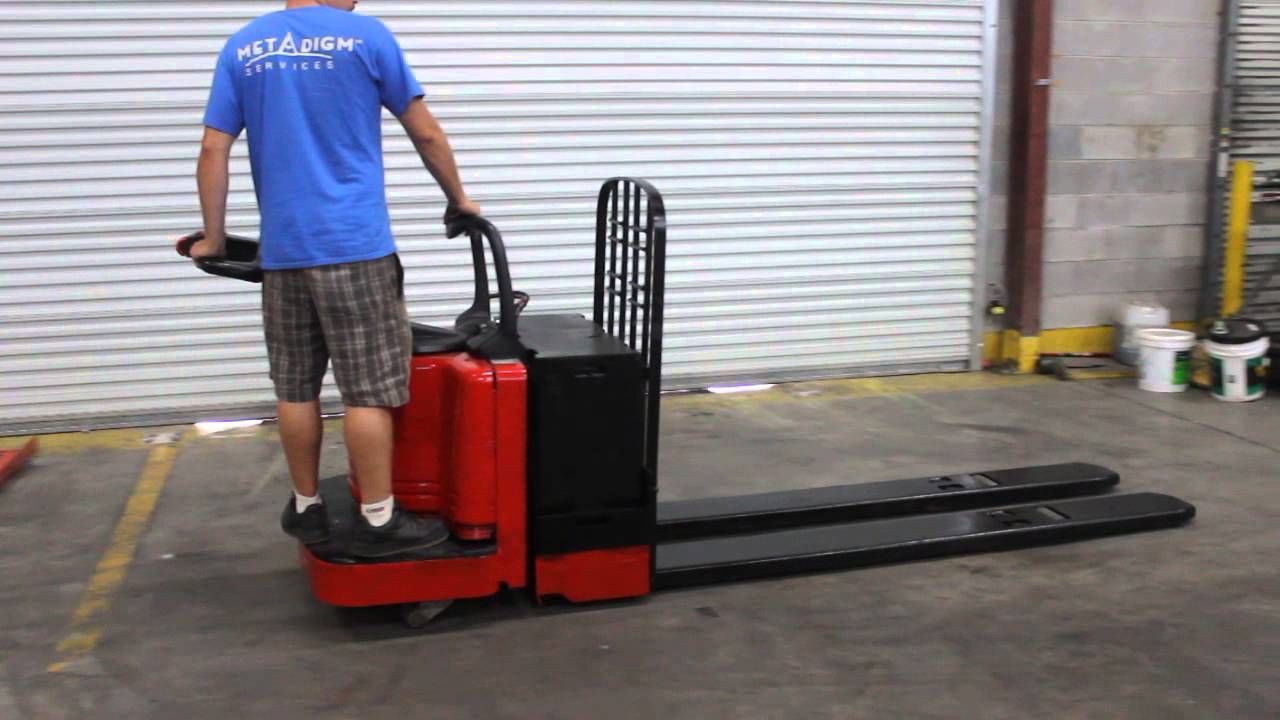
Material handling equipment plays a central role in warehouses, distribution centers, retail backrooms, and manufacturing facilities. Among the most widely used tools are walk behind pallet lifts and electric pallet jacks, which help move palletized goods safely and efficiently. These machines sit between manual pallet trucks and forklifts in terms of capability, offering improved productivity without the size or complexity of larger lifting equipment.
Benefits of Walk Behind Pallet Lifts and Electric Pallet Jacks
1. Reduced physical strain
Unlike manual pallet trucks that require pushing and pumping, electric models rely on motorized drive and lift systems. This significantly lowers the effort needed to move loads and can help reduce worker fatigue and repetitive strain injuries.
2. Improved efficiency and speed
Powered pallet jacks typically travel faster than manual models and allow smoother acceleration and braking. In busy facilities, this can translate into faster loading, unloading, and internal transport processes.
3. Better handling in tight spaces
Walk-behind pallet lifts are compact and designed for narrow aisles, truck loading docks, and small storage areas. Their short turning radius and handle-based controls help operators maneuver in confined environments.
4. Higher productivity for repetitive tasks
Because these machines reduce manual effort and increase transport speed, they are often used in operations with frequent pallet movement, such as retail distribution, food logistics, and parcel sorting.
Limitations to Consider
While useful, powered pallet jacks also have drawbacks.
-
Higher purchase cost than manual trucks
-
Need for battery charging and maintenance
-
Heavier weight, which can reduce maneuverability in some situations
-
Operator training requirements for safe use
-
Downtime during battery replacement or servicing
Electric models can cost several times more than manual alternatives and require battery replacement every few years, adding to lifecycle expenses.
Types of Walk Behind Pallet Lifts and Electric Pallet Jacks
1. Walk Behind Electric Pallet Jack
This is the most common type. The operator walks behind the machine and controls movement using the tiller handle.
Best for
-
Short-distance transport
-
Loading docks
-
Small warehouses
-
Retail storage areas
Advantages
-
Compact size
-
Lower cost than rider models
-
Easy to learn
Limitations
-
Operator must walk
-
Less efficient for long distances
These units are widely used because they balance affordability and productivity.
2. Walk Behind Pallet Lift with Platform
Some walk-behind models include a fold-down platform. Operators can stand on the platform for longer runs and fold it up when working in tight spaces.
Best for
-
Mixed environments
-
Cross-docking facilities
-
Warehouses with both short and long routes
This design offers flexibility between walking and riding operation.
3. Electric Assist Pallet Jack
Electric assist models combine manual steering with powered lifting or propulsion.
Best for
-
Moderate-volume operations
-
Facilities transitioning from manual to powered equipment
-
Small warehouses with limited budgets
These machines reduce strain while keeping costs lower than fully powered models.
4. Electric Scissor Pallet Jack
These units combine pallet transport with lifting capability above standard pallet height.
Best for
-
Ergonomic workstation lifting
-
Assembly lines
-
Packing areas
They allow pallets to be raised to waist height, reducing bending and improving worker comfort.
5. Straddle Pallet Jack
Straddle pallet jacks are designed to handle wider or non-standard pallets.
Best for
-
Mixed pallet sizes
-
Manufacturing environments
-
Specialized handling situations
They help improve stability when dealing with irregular loads.
Key Features to Consider
When comparing models, several design features affect usability and performance.
Safety controls
Modern electric pallet jacks often include:
-
Presence switches that stop movement when released
-
Emergency reverse buttons to prevent crushing accidents
-
Horns and lights for visibility
These built-in controls are designed to reduce workplace risks and improve operator awareness.
Battery technology
Many modern models now use lithium-ion batteries instead of lead-acid.
Benefits of lithium batteries
-
Faster charging
-
Longer service life
-
Stable performance during discharge
This shift is one of the major technological trends in material handling equipment.
Load capacity and runtime
Typical electric pallet jacks:
-
Carry roughly 3,000–8,000 pounds
-
Operate 4–8 hours per charge
-
Lift pallets about 7–8 inches
These specifications make them suitable for most horizontal transport tasks.
Latest Trends and Innovations
1. Lithium-ion battery adoption
Many manufacturers are moving toward lithium batteries due to faster opportunity charging and longer cycle life.
2. Ergonomic handle designs
Newer models feature improved tiller geometry, easier throttle control, and reduced steering effort to minimize operator strain.
3. Integrated safety electronics
Electronic lift limits, anti-rollback braking, and automatic sleep modes are increasingly common features that protect both equipment and operators.
4. Smarter warehouse integration
Some advanced pallet trucks now connect with warehouse management systems, enabling better tracking of equipment usage and maintenance cycles.
Comparison Table: Manual vs Electric vs Assisted Pallet Jacks
| Feature | Manual Jack | Electric Assist | Fully Electric Walk Behind |
|---|---|---|---|
| Physical effort | High | Medium | Low |
| Speed | Slow | Moderate | Faster |
| Cost | Low | Medium | High |
| Maintenance | Minimal | Moderate | Higher |
| Best use | Low volume | Mixed workloads | High-volume operations |
| Training need | None | Basic | Recommended |
Top Companies and Solutions
Several global manufacturers produce pallet jacks and walk-behind pallet lifts used across industries.
Well-known manufacturers include
-
Toyota Material Handling
-
Crown Equipment
-
Yale Materials Handling
-
Raymond Corporation
-
Hyster
These companies provide a wide range of pallet trucks, from basic walk-behind units to advanced rider and automated models, often with detailed specification sheets available publicly on their websites.
When comparing brands, buyers typically look at service support, spare parts availability, battery options, and warranty terms rather than just purchase price.
How to Choose the Right Option
Step 1: Evaluate your workplace layout
-
Narrow aisles favor walk-behind units
-
Large facilities may need platform or rider models
Step 2: Consider load weight and frequency
-
Occasional transport may suit electric assist
-
Continuous heavy use usually requires fully powered units
Step 3: Think about operator comfort
-
Long shifts benefit from powered drive
-
Repetitive lifting favors scissor-lift models
Step 4: Review charging infrastructure
-
Lead-acid batteries require ventilation and maintenance
-
Lithium batteries support faster charging
Checklist: Selecting the Right Pallet Jack
Use this quick checklist before choosing equipment:
-
What is the average pallet weight?
-
How far are pallets moved daily?
-
Are aisles narrow or wide?
-
Is vertical lifting needed?
-
How many hours per shift will it run?
-
Is charging space available?
-
Are operators trained or new?
This simple evaluation helps match equipment type to real operational needs.
Tips for Best Use and Maintenance
Safe operation tips
-
Always keep hands and feet inside the truck footprint
-
Maintain clear visibility in the travel direction
-
Sound the horn at intersections
-
Avoid carrying passengers
These practices are commonly recommended in operator safety guidance to prevent accidents.
Maintenance tips
-
Inspect wheels and forks regularly
-
Keep batteries charged properly
-
Check emergency stop switches before use
-
Clean debris from moving parts
-
Schedule periodic servicing
Routine inspections can extend equipment lifespan and reduce unexpected downtime.
Frequently Asked Questions
Are electric pallet jacks difficult to operate?
Most models are designed with intuitive controls and are easy to learn. However, training is still recommended for safety and proper handling.
How long does the battery last?
Typical runtime is between four and eight hours per charge, depending on usage intensity and battery type.
When should a company upgrade from manual to electric?
Organizations usually switch when pallet movement becomes frequent, loads grow heavier, or worker fatigue becomes a concern.
Can these machines replace forklifts?
They handle horizontal transport well but cannot match forklifts for high vertical stacking or extremely heavy loads.
Are lithium batteries worth it?
They often provide faster charging, longer life, and less maintenance, which can benefit high-use operations.
Conclusion
Walk behind pallet lifts and electric pallet jacks provide a practical middle ground between manual pallet trucks and forklifts. They improve efficiency, reduce physical strain, and support safer material movement in a wide range of industries. By understanding available types, key features, and workplace needs, organizations can select equipment that fits their workflow without unnecessary complexity.
Choosing the right pallet handling solution is less about picking the most advanced machine and more about matching the equipment to real operational requirements. When selected thoughtfully and maintained properly, these tools can support smoother logistics, safer workplaces, and more consistent productivity over time.